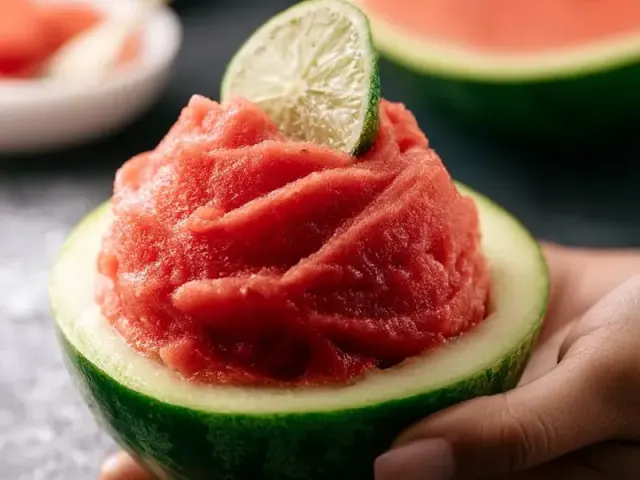
3-Ingredient Watermelon Sorbet Recipe – Easy & Refreshing
The first time I made watermelon sorbet, I ended up with a block of icy pink concrete. The flavor was there, but the texture was all wrong—crunchy instead of silky, more like a popsicle that had melted and refrozen. That’s when I learned the secret: freeze the fruit first, then blend. It changes everything.

This 3-ingredient watermelon sorbet is the summer dessert I turn to again and again. It’s dairy-free, naturally gluten-free, and comes together without an ice cream maker. The key is a simple ratio: 4 cups frozen watermelon to 1/2 cup sugar and 2 tablespoons lime juice. That little bit of lime does more than add acidity—it keeps the sorbet from tasting flat and helps the sugar dissolve evenly.
Why This Method Works
Most sorbet recipes start with a simple syrup (sugar dissolved in water) that you chill, then churn. That’s fine, but it adds water—and water means more ice crystals. By using frozen watermelon as your base, you skip the extra liquid. The natural fruit sugars concentrate as they freeze, giving you a deeper, truer watermelon flavor.
The lime juice is non-negotiable here. It brightens the sweetness and lowers the freezing point just enough to keep the sorbet scoopable, not rock-hard. If you skip it, you’ll notice the difference: a dull, flat taste and a harder freeze.
Choosing Your Watermelon
Look for a seedless watermelon that feels heavy for its size. That’s a sign of high water content and ripeness. If you can only find one with seeds, remove them before freezing—they’ll add bitterness if blended in. The flesh should be deep pink, not pale, for the most vibrant color and flavor.
Cut the watermelon into 1-inch cubes. This size freezes evenly and blends smoothly. If your cubes are too large, they’ll take longer to freeze and may not break down completely in the blender.
Step-by-Step: The Technique
Freeze the Watermelon
Spread the cubes in a single layer on a parchment-lined baking sheet. This prevents them from clumping into one solid mass. Freeze for at least 2 hours, or until the cubes are firm to the touch. You can freeze them overnight if you’re planning ahead—just transfer the frozen cubes to a zip-top bag once solid.