
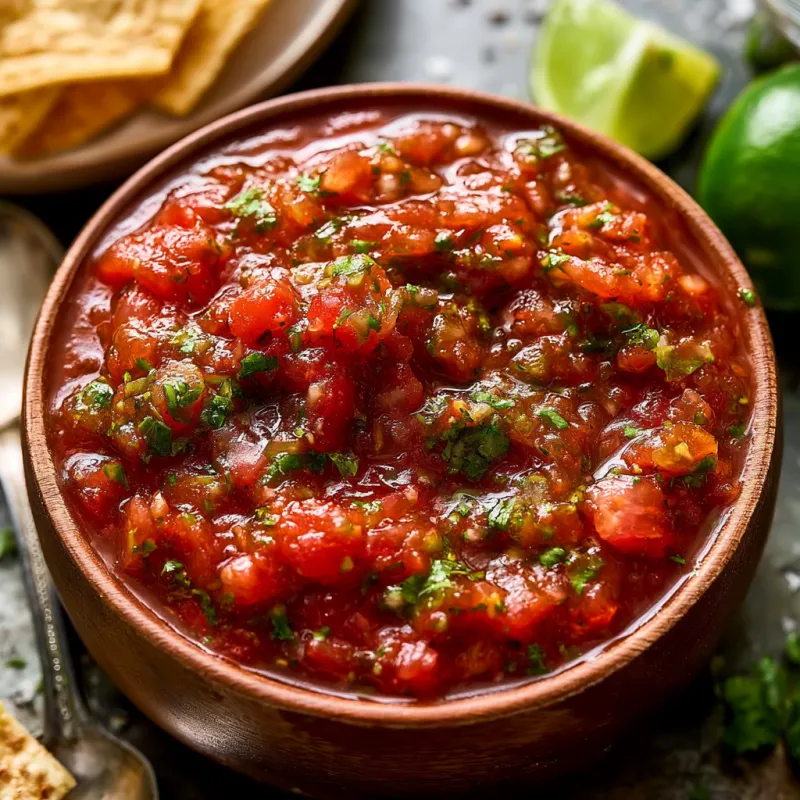
There’s a specific sound a good salsa makes when it hits the chip. Not a wet splat, not a drippy slide—a confident, chunky thwack. That sound is what I chase every time I make blender salsa. And after dozens of batches, I’ve nailed the technique.

This isn’t a smooth, watery puree that soaks through a chip in seconds. It’s a fresh, chunky salsa with distinct pieces of tomato and onion, held together by a bright, savory lime-cumin dressing. The secret is in how you use the blender—pulse, don’t run.
Why the Blender Wins Over Knife-Chopping
Hand-chopping salsa is a labor of love. But for a Tuesday night taco craving, the blender does the same job in 90 seconds. The trick is understanding that a blender is a tool for pulsing, not pureeing. When you run a blender continuously, the blades create a vortex that pulls everything into a homogenized liquid. You lose the individual textures of tomato, onion, and jalapeño.
Pulsing in short bursts—one second each—lets you control the chop. You get a coarse, uneven texture where some pieces are pea-sized and others are slightly larger. That’s exactly what you want. Think of it like using a food processor, but with less cleanup.
The Right Tomato Ratio Makes the Salsa
I keep the ratio at 4 medium Roma tomatoes to 1/2 medium onion. Roma tomatoes are key here. They have denser flesh, fewer seeds, and less water than beefsteak or vine tomatoes. That means your salsa stays chunky and doesn’t turn into tomato juice after a day in the fridge.
If you can only find large tomatoes, use 3 instead. And never peel or seed them for this recipe. The skins add a subtle texture and the seeds contribute a slight bitterness that balances the acidity. Trust the process.
Jalapeño: Heat Control in Your Hands
The jalapeño is where you make the salsa yours. For a mild salsa, cut the stem off, slice the pepper in half lengthwise, and scrape out the white membranes and seeds with a small spoon. Those membranes contain most of the capsaicin—the compound that brings the heat. For a medium heat, leave the seeds and membranes intact but use only one pepper. For a serious kick, add a second jalapeño or swap in a serrano.
Safety note: After handling chiles, wash your hands with soap and warm water. Avoid touching your eyes, nose, or face. If you’re sensitive, wear disposable kitchen gloves.
The Acid Balance: Lime and Cumin
Two tablespoons of fresh lime juice is the sweet spot. Bottled lime juice has a flat, metallic taste that dulls the salsa. Fresh lime juice brings brightness and a floral note that lifts the tomatoes. The 1/4 teaspoon of ground cumin is non-negotiable. It adds a warm, earthy depth that makes the salsa taste like it’s been simmering for hours—without any cooking.
Add the salt at the beginning. Salt draws moisture out of the tomatoes and onions, creating a light, flavorful juice that coats every piece. If you salt at the end, the salsa tastes dry and separate.
The Step Most People Skip (and Why They Shouldn’t)
After you pulse the salsa, let it rest for 5 minutes before serving. I know it’s tempting to dive in immediately. But that short rest allows the salt to fully penetrate the vegetables, the lime to mellow, and the cumin to bloom. The difference is noticeable: the salsa tastes cohesive, not like separate ingredients that just met.
During the rest, you’ll see a small amount of clear liquid separate at the bottom. That’s normal. Stir it back in before serving. It’s flavor, not waste.
Common Blender Salsa Mistakes to Avoid
Over-blending: This is the number one mistake. Pulse no more than 6 times. If you want a finer salsa, pulse 2 more times. Any more and you’ll have a puree.
Using a food processor: A food processor chops unevenly—some pieces get pulverized while others stay huge. A blender’s blade design creates a more uniform chop when pulsed. Stick with the blender.
Skipping the garlic: One small garlic clove adds a subtle pungency that rounds out the flavor. Don’t use more than one or it will overpower the tomatoes.
How to Serve and Store
This salsa is at its peak within the first 24 hours. After that, the tomatoes soften and release more liquid. It’s still good, just not as chunky. Store it in an airtight container in the refrigerator for up to 3 days. Do not freeze—the texture turns mushy upon thawing.
Serve it with tortilla chips, over grilled chicken or fish, on tacos, or stirred into scrambled eggs. It’s also excellent as a topping for black bean soup or a simple grain bowl.
The Takeaway
A great blender salsa comes down to three things: pulse, don’t run; use Roma tomatoes; and let it rest. Follow those rules, and you’ll get that satisfying chunky thwack with every chip. No chef’s knife required.
Frequently Asked Questions
Can I use canned tomatoes instead of fresh?
Yes, but the texture and flavor will differ. Use one 14.5-ounce can of fire-roasted diced tomatoes, drained. The salsa will be softer and slightly smoky. Reduce the salt to 1/4 teaspoon since canned tomatoes often contain salt.
How do I make this salsa less spicy?
Remove the seeds and white membranes from the jalapeño before adding it to the blender. For even less heat, use only half a jalapeño or substitute a small green bell pepper for a mild, fresh flavor without the spice.
Why is my salsa watery?
Watery salsa usually comes from over-blending. The blender’s continuous action breaks down cell walls and releases tomato juice. Always pulse in short bursts. Also, choose Roma tomatoes—they have firmer flesh and fewer seeds than beefsteak or vine tomatoes.
Can I make this salsa ahead of time?
Absolutely. It tastes even better after an hour in the fridge as the flavors meld. Store in an airtight container for up to 3 days. Stir before serving, as some liquid will naturally separate.
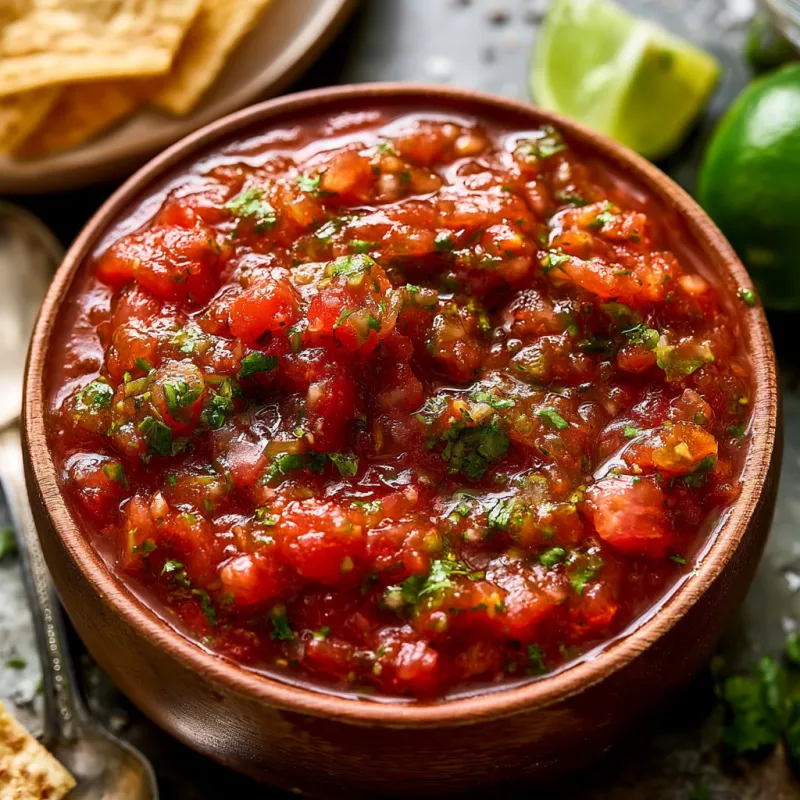
5-Minute Blender Salsa
Ingredients
Equipment
Method
- Core the Roma tomatoes and cut them into quarters. No need to peel or seed.
- Add the tomato quarters, chopped onion, jalapeño, cilantro, lime juice, salt, cumin, and garlic to the blender jar.
- Pulse the blender in short bursts—about 5 to 6 pulses of 1 second each. Do not run continuously. Scrape down the sides with a rubber spatula.
- Check the texture after pulsing. The salsa should be chunky, with visible pieces of tomato and onion. If you prefer it finer, pulse 2 to 3 more times.
- Transfer the salsa to a bowl. Taste and adjust salt or lime juice. Let it rest for 5 minutes before serving—the flavors meld and deepen.
- Serve immediately or refrigerate in an airtight container for up to 3 days.
Notes
Serving ideas: With tortilla chips, over tacos, on grilled chicken or fish, or as a topping for scrambled eggs.
Allergen note: This recipe is gluten-free, dairy-free, and nut-free. For specific dietary needs, consult a qualified professional.
Safety: Use a cutting board with a damp towel underneath to prevent slipping when chopping the jalapeño. Wash hands thoroughly after handling chiles.
Common mistake: Do not over-blend or run the blender continuously—that creates a watery puree. Pulse only.