
The first time you pull this Lemon Lavender Cake from the oven, the kitchen smells like a spring garden after rain — bright citrus cutting through soft, floral warmth. That scent is exactly what I aim for when I develop a layer cake: a balance that feels special without being fussy.

This cake pairs a tender, moist lemon crumb with a silky lavender buttercream and a tangy lemon curd filling. The key is technique — how you handle the lavender, the temperature of your ingredients, and the order of mixing. Get those right, and you’ll have a cake that tastes as good as it looks.
Key Ratio: Lavender and Lemon
The biggest mistake with lavender in baking is using too much. It quickly turns from floral to soapy. I keep the ratio at 1 tablespoon ground culinary lavender buds per 1 1/2 cups of sugar in the cake, and 1 1/2 teaspoons ground lavender per 4 cups powdered sugar in the buttercream. That gives a gentle floral note without overwhelming the lemon.
Always use culinary-grade dried lavender buds. Grind them with a mortar and pestle or clean spice grinder until they’re a fine powder. Whole buds can be tough in the crumb and release uneven flavor.
Technique: Building the Cake Batter
Start with room-temperature ingredients — butter, eggs, and buttermilk. Cold ingredients don’t emulsify properly, leaving you with a dense, greasy crumb. I let my butter sit out for an hour, and I set the eggs and buttermilk on the counter for 30 minutes before mixing.
Here’s the step that makes a difference: rub the lemon zest and ground lavender into a tablespoon of the sugar before adding it to the batter. Use your fingertips to work the zest into the sugar until it’s fragrant and slightly damp. This releases the essential oils and distributes the flavor evenly throughout the cake.
When you add the buttermilk and lemon juice, the batter may look slightly curdled — that’s fine. The acid reacts with the baking soda to create a tender crumb. Just fold gently until no streaks of flour remain.
Lemon Curd: The Bright Middle Layer
You can use store-bought lemon curd in a pinch, but homemade is worth the extra 15 minutes. The texture is silkier, and you control the tartness. I use a 1:1 ratio of lemon juice to sugar by volume, with three egg yolks plus one whole egg for richness without being too thick.
Cook the curd over a double boiler, whisking constantly. The target temperature is 170°F (77°C) — use an instant-read thermometer. Below that, it won’t thicken properly; above, you risk scrambled eggs. When it coats the back of a spoon and holds a line when you run your finger through it, it’s done.
Strain the curd through a fine-mesh sieve to catch any cooked bits. Press plastic wrap directly onto the surface to prevent a skin from forming, then chill for at least 2 hours. It will continue to thicken as it cools.
Lavender Buttercream: Light and Floral
This is a classic American buttercream, but I add ground lavender and a splash of heavy cream for a smoother, less sweet finish. Beat the butter alone for a full 2 minutes before adding sugar — this aerates it and makes the frosting light.
Add the powdered sugar gradually on low speed to avoid a cloud of sugar dust. Once it’s all in, beat on medium-high for 3 minutes. That extra time creates a fluffy, spreadable texture. If the buttercream is too stiff, add milk a teaspoon at a time. If it’s too soft, chill it for 10 minutes before using.
Assembling the Cake
Level the cooled cake layers with a serrated knife so they stack flat. Place the first layer on your serving plate. Spread a thin layer of buttercream, then pipe a ring of buttercream around the edge. This ring acts as a dam to hold the lemon curd in place. Spoon about 1/3 cup of curd into the center and spread it evenly within the ring.
Top with the second layer, then apply a thin crumb coat. Chill the cake for 20 minutes — this sets the crumbs and makes the final coat easier. Apply the final layer of buttercream, smoothing with an offset spatula. Decorate with fresh lavender sprigs, lemon zest curls, or a few edible flowers.
Common Mistakes to Avoid
- Overmixing the batter: Mix until just combined. Overmixing develops gluten and makes the cake tough.
- Skipping the strain on lemon curd: Even if you whisk carefully, a few bits can sneak through. Straining guarantees a silky texture.
- Using too much lavender: Stick to the ratio above. More lavender doesn’t mean more flavor — it means bitter, soapy cake.
- Frosting a warm cake: The buttercream will melt and slide off. Let the cake cool completely, at least 1 hour.
Storage and Serving
This cake keeps well in the refrigerator for up to 3 days. The flavors actually meld and deepen after a day. Let slices sit at room temperature for 15 minutes before serving — the buttercream softens and the lemon curd becomes more fluid.
If you’re making this ahead, bake the cake layers and make the curd a day in advance. Wrap the cooled layers tightly in plastic wrap and store at room temperature. Keep the curd in the fridge. Assemble and frost the day you plan to serve.
Takeaway
A great Lemon Lavender Cake is about balance — enough lavender to whisper, not shout, and enough lemon to cut through the sweetness. Use precise ratios, room-temperature ingredients, and a gentle hand with the mixing, and you’ll have a cake that feels both elegant and approachable. That’s the kind of baking I love: technique that serves the flavor, not the other way around.
Frequently Asked Questions
Can I use dried lavender from a tea bag or garden?
Yes, but ensure it’s culinary-grade lavender, not potpourri or decorative lavender, which may contain chemicals. Grind the buds finely to avoid a soapy taste or tough bits in the cake.
Why did my lemon curd turn out lumpy?
Lumpy curd usually means the eggs cooked too quickly or weren’t whisked constantly. Keep the heat low (simmer, not boil) and whisk continuously. Straining through a fine-mesh sieve will fix any lumps.
Can I make this cake gluten-free?
Yes, substitute the all-purpose flour with a 1:1 gluten-free baking blend that contains xanthan gum. The crumb may be slightly more tender, so handle with care. For specific dietary needs, consult a qualified professional.
How do I store leftover lemon lavender cake?
Store in an airtight container in the refrigerator for up to 3 days. Let slices sit at room temperature for 15 minutes before serving to soften the buttercream and brighten the flavors.
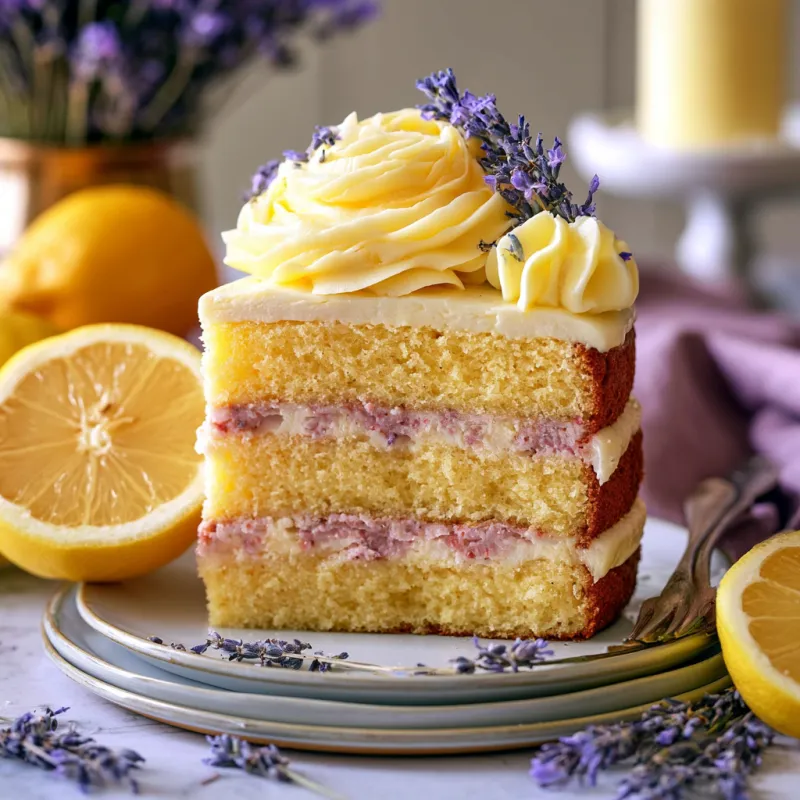
Lemon Lavender Cake
Ingredients
Equipment
Method
- Preheat oven to 350°F (177°C). Grease two 9-inch round cake pans, line bottoms with parchment, and dust with flour.
- In a medium bowl, whisk together flour, baking powder, baking soda, and salt.
- In a small bowl, combine ground lavender buds and lemon zest with 1 tablespoon of the sugar; rub together with fingers to release oils. Set aside.
- In a large bowl, beat butter and remaining sugar on medium speed until light and fluffy, about 3 minutes. Add eggs one at a time, beating well after each. Beat in vanilla.
- Reduce speed to low. Add flour mixture in three additions, alternating with buttermilk, beginning and ending with flour. Mix until just combined. Fold in lemon juice and the lavender-zest mixture.
- Divide batter evenly between prepared pans. Bake for 22-25 minutes, until a toothpick inserted in center comes out clean or with a few moist crumbs. Cool in pans 10 minutes, then turn out onto a rack to cool completely.
- For the lemon curd: In a heatproof bowl, whisk lemon juice, sugar, egg yolks, egg, and salt. Set over a pot of simmering water (bowl should not touch water). Whisk constantly until thickened, about 8-10 minutes, reaching 170°F (77°C) on an instant-read thermometer. Remove from heat; whisk in butter pieces until smooth. Strain through a fine-mesh sieve. Press plastic wrap directly onto surface; chill at least 2 hours.
- For the lavender buttercream: Beat butter on medium-high until creamy, about 2 minutes. Gradually add powdered sugar, beating on low. Add cream, vanilla, and ground lavender; beat on medium-high for 3 minutes until light and fluffy. Add milk as needed for spreadable consistency.
- To assemble: Place one cake layer on a serving plate. Spread a thin layer of buttercream, then pipe a ring of buttercream around the edge. Fill center with lemon curd (about 1/3 cup). Top with second layer. Crumb coat, then chill 20 minutes. Apply final coat of buttercream. Decorate as desired.