
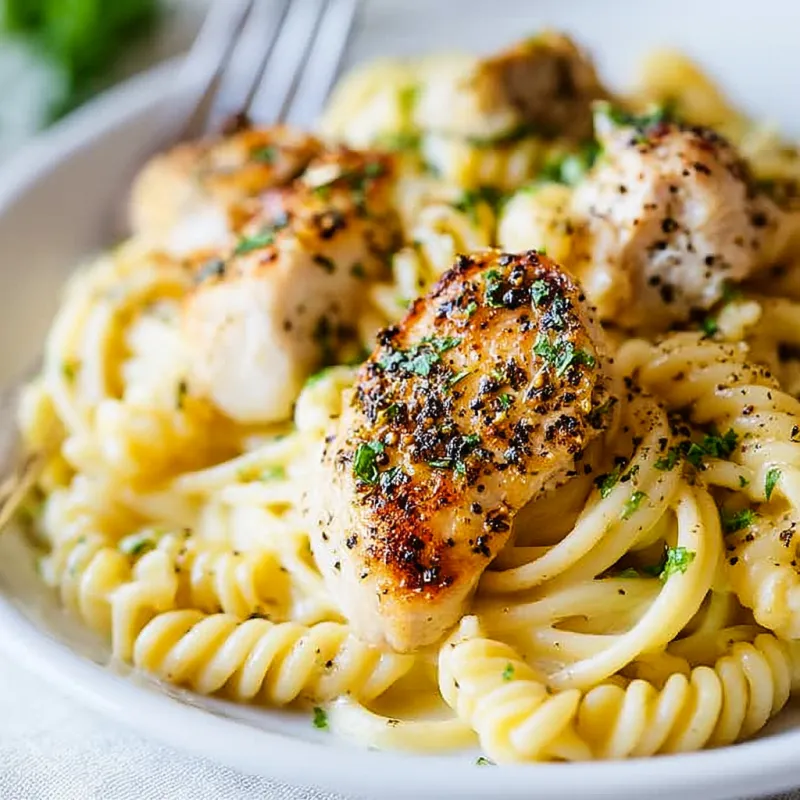
I have a thing for pasta that clings. Not a thin, watery sauce that slides off, but a creamy, emulsified one that coats every nook and cranny. That is what this lemon pepper chicken pasta delivers: a tangy, peppery cream sauce that grabs onto the pasta, with tender chicken throughout. The key is building the sauce properly — starting with a quick roux, using heavy cream, and finishing with bright lemon zest and cracked black pepper.

Why This Method Works
The technique here is a stovetop cream sauce, but with a few deliberate moves that separate it from a basic alfredo. First, I sear the chicken until it forms a deep golden crust. That browning adds a savory, nutty flavor that balances the bright lemon. Second, I make a quick roux with butter and flour. This stabilizes the cream sauce, preventing it from breaking or becoming greasy. Finally, I finish with both lemon zest and juice — the zest provides a clean, aromatic citrus note, while the juice adds the necessary acidity to cut through the richness.
Choosing Your Chicken
Boneless, skinless chicken breasts work well here because they cook quickly and slice neatly. But you can also use boneless thighs for a richer flavor. If you are short on time, a rotisserie chicken is a fine shortcut — just skip the browning step and add the shredded meat at the end to warm through. Whichever you use, make sure the chicken is dry before it hits the pan. Pat it with paper towels. Moisture is the enemy of a good sear; wet chicken will steam, not brown.
Building the Sauce, Step by Step
Once the chicken is out and resting, you build the sauce in the same skillet. Those browned bits left behind — the fond — are pure flavor. Do not clean the pan. Melt the butter over medium heat, add the garlic, and cook just until fragrant. Thirty seconds is enough; burnt garlic turns bitter.
Sprinkle in the flour and whisk constantly for a full minute. This cooks out the raw flour taste and creates a roux that will thicken the sauce smoothly. Then pour in the chicken broth slowly, whisking all the while. Lumps form when you add liquid too fast or stop whisking. Keep going until it is smooth and slightly thickened, about 2 minutes.
Now reduce the heat to low. Stir in the heavy cream, lemon zest, lemon juice, and lemon pepper seasoning. This is where the sauce transforms from a simple white sauce into something bright and punchy. Taste it at this point. The lemon should be present but not sour, the pepper should have a gentle warmth. Adjust by adding more lemon juice or pepper a little at a time.
The Pasta Water Trick
Here is a detail that matters: cook the pasta one minute short of al dente, and reserve some of the starchy pasta water before draining. That starchy water is liquid gold. When you toss the pasta with the sauce, it helps the sauce cling to every piece. If the sauce feels too thick, add a splash of pasta water and toss again. The starch also helps emulsify the sauce, giving it a silky, cohesive texture that plain water cannot achieve.
Putting It All Together
Add the drained pasta, sliced chicken, and Parmesan to the skillet. Toss everything gently with tongs or a wooden spoon until the pasta is evenly coated and the chicken is distributed. The Parmesan melts into the sauce, adding a subtle saltiness and body. Serve immediately, because cream sauces thicken as they sit. Garnish with fresh parsley for a pop of color and a touch of freshness.
Common Mistakes to Avoid
- Boiling the cream: Once cream is added, keep the heat low. A boil can cause the sauce to separate into greasy liquid and solids.
- Skipping the zest: Lemon juice alone gives acidity, but the zest provides the true lemon flavor. Use a microplane and only the yellow part — the white pith is bitter.
- Overcooking the pasta: Mushy pasta ruins the texture. Cook to al dente, and remember it will cook a little more when tossed with the hot sauce.
Make It Your Own
This recipe is a solid base. You can add a handful of baby spinach in the last minute of cooking — it wilts into the sauce beautifully. Or toss in some halved cherry tomatoes for a burst of sweetness. For heat, a pinch of red pepper flakes goes well with the lemon and pepper. And if you want a lighter version, swap the heavy cream for half-and-half; the sauce will be thinner but still flavorful.
The Takeaway
Lemon pepper chicken pasta is a weeknight dinner that delivers on both speed and flavor. The technique is straightforward: sear the chicken, build a roux-based cream sauce, finish with fresh lemon and pepper. The result is a cohesive, satisfying dish that tastes bright and rich at the same time. No shortcuts on the zest, no skipping the pasta water, and no boiling the cream. Follow those three rules, and you will have a dinner worth repeating.
Frequently Asked Questions
Can I use rotisserie chicken instead of cooking fresh chicken?
Yes. Shred or chop about 3 cups of rotisserie chicken meat. Skip the browning step. Add the chicken to the sauce along with the pasta in step 8. Warm it through for 1-2 minutes before serving.
What is lemon pepper seasoning, and can I make it at home?
Lemon pepper seasoning is a blend of dried lemon zest, black pepper, and often salt, garlic powder, and onion powder. To make your own: mix 2 tablespoons finely grated dried lemon zest (or store-bought dried lemon peel), 1 tablespoon coarsely ground black pepper, 1 teaspoon garlic powder, and 1 teaspoon salt. Store in an airtight jar for up to 3 months.
How do I keep the cream sauce from curdling?
Use heavy cream, not milk, because its higher fat content is more stable. Keep the heat at low or medium-low when adding the cream and do not let the sauce boil after the cream is added. Stir constantly. If the sauce does separate, whisk in a splash of cold cream or broth to try to bring it back together.
Can I use a different pasta shape?
Absolutely. Short shapes like penne, rigatoni, or fusilli hold the sauce well. Long noodles like fettuccine or linguine also work. Adjust the cooking time according to the package for al dente.
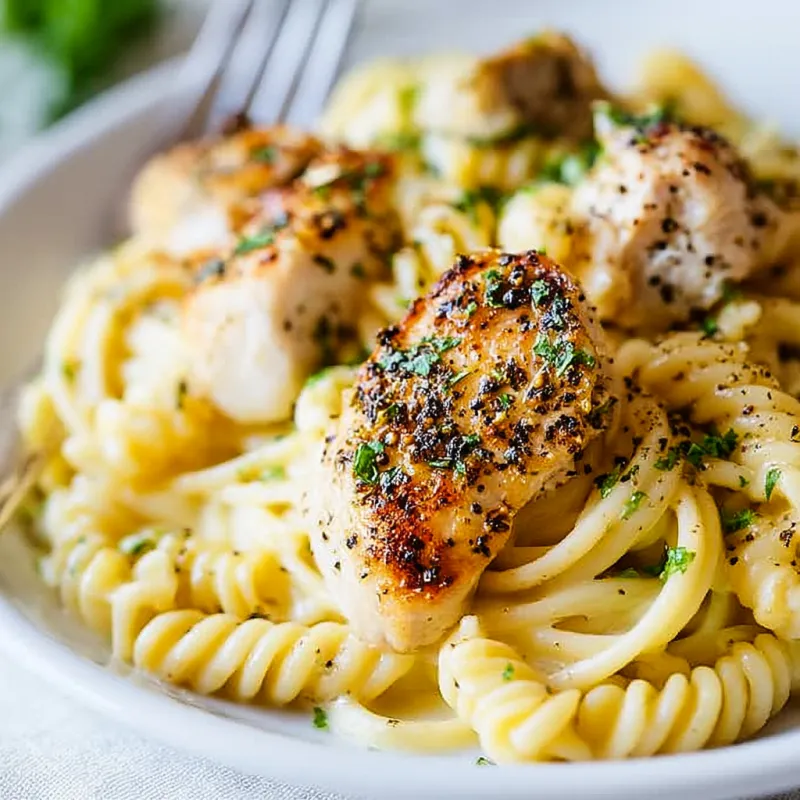
Lemon Pepper Chicken Pasta
Ingredients
Equipment
Method
- Bring a large pot of water to a rolling boil. Add 1 tablespoon kosher salt, then add the pasta. Cook 1 minute less than the package directions for al dente. Reserve 1/2 cup pasta water before draining. Drain and set aside.
- While the pasta cooks, pat the chicken breasts dry with paper towels. Season both sides with 1 teaspoon salt and 1/2 teaspoon black pepper.
- Heat olive oil in a large skillet over medium-high heat until shimmering. Add the chicken breasts in a single layer. Cook without moving for 5-6 minutes, until the bottom is deep golden brown. Flip and cook another 5-6 minutes, until the internal temperature reaches 165°F at the thickest part. Transfer chicken to a cutting board and let rest for 5 minutes. Slice into bite-sized strips or cubes.
- Reduce the skillet heat to medium. Add butter. Once melted, add garlic and cook, stirring constantly, for 30 seconds until fragrant. Do not let it brown.
- Sprinkle the flour over the garlic and butter. Whisk constantly for 1 minute to cook out the raw flour taste. The mixture will form a thick paste (a roux).
- Slowly pour in the chicken broth while whisking vigorously to prevent lumps. Bring to a simmer; the sauce will thicken slightly, about 2 minutes.
- Reduce heat to low. Stir in the heavy cream, lemon zest, lemon juice, and lemon pepper seasoning. Whisk until smooth. Simmer gently for 1 minute — do not let it boil or the cream may separate.
- Add the drained pasta, sliced chicken, and Parmesan cheese to the skillet. Toss to coat evenly. If the sauce is too thick, add reserved pasta water 1 tablespoon at a time until it reaches a silky consistency that coats the pasta.
- Taste and adjust seasoning with salt or more lemon juice if needed. Serve immediately, garnished with parsley if using.