
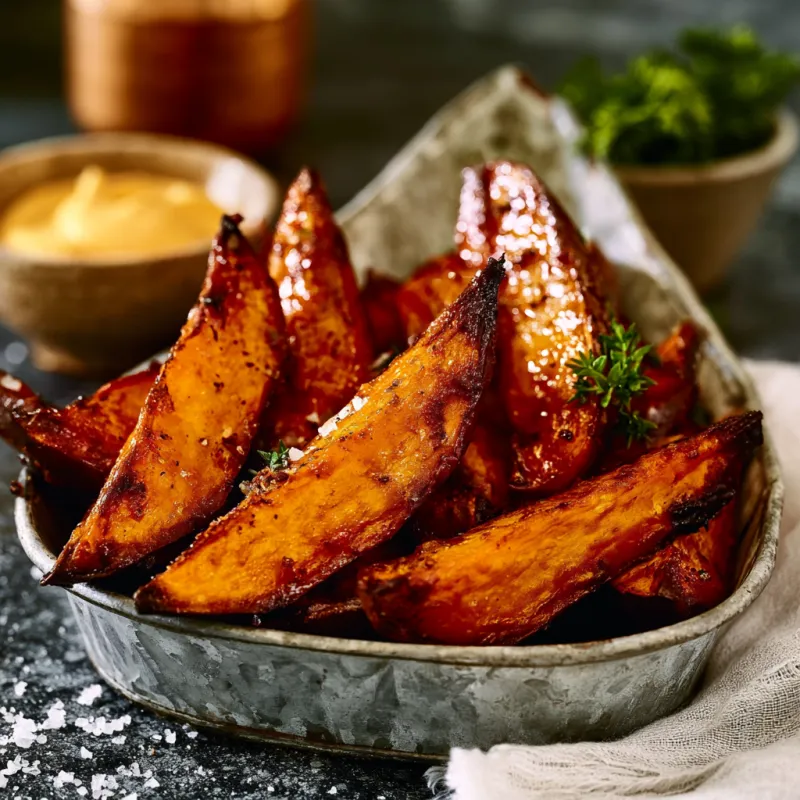
The first time I pulled a tray of baked sweet potato wedges from the oven and actually heard them crackle, I knew I had cracked the code. Not limp. Not mushy. Not that sad, steamed texture that makes you wonder why you didn’t just order fries. These wedges come out with a thin, shattery crust and a creamy, sweet interior. The secret is a cold-water soak and a dusting of cornstarch—two steps that cost nothing but change everything.

Why Sweet Potato Wedges Go Soft (And How to Fix It)
Sweet potatoes have more sugar and moisture than regular potatoes. That’s what makes them taste so good—and what makes them tricky to crisp. When you bake them without preparation, the moisture turns to steam inside the oven, and the sugars caramelize before the exterior has a chance to set. The result? A soft, sticky exterior instead of a firm, crispy one.
Here’s the fix in three parts:
- Soak them. Ten minutes in cold water pulls out surface starch. That starch would otherwise turn into a gummy layer during baking.
- Dry them well. After the soak, pat the wedges completely dry. Any water left on the surface creates steam, which prevents browning.
- Add cornstarch. A light coating of cornstarch absorbs moisture from the surface as the wedges bake, creating a thin, crispy shell. I keep the ratio at about 1 tablespoon of cornstarch per large sweet potato.
The Right Cut for Even Cooking
Cutting sweet potatoes into wedges seems straightforward, but thickness matters. Wedges that are too thin burn before the center cooks. Wedges that are too thick end up soft all over. I aim for about ½ inch at the thickest part.
Here’s my method: Slice off a thin piece from one side of the potato so it sits flat on the cutting board. This prevents rocking. Cut the potato in half crosswise (not lengthwise), then stand each half on its flat end and cut into wedges. This gives you wedges that are roughly the same size, so they bake evenly.
The Temperature and Timing Sweet Spot
425°F (220°C) is the temperature that works best for me. It’s hot enough to brown the exterior quickly without burning the sugars. If your oven runs cool, bump it to 435°F. If it runs hot, stick with 415°F. An oven thermometer is worth having—mine revealed my oven runs 25°F cooler than the dial says.
Bake for 15 minutes, then flip. This is non-negotiable. Flipping ensures both sides get direct contact with the hot pan. After flipping, bake for another 10 minutes. The wedges are done when the edges are deep golden brown and the centers yield easily to a fork. If you want extra-crispy edges, leave them in for 2-3 more minutes, but watch closely—sweet potato sugar burns fast.
Seasoning That Complements, Not Overpowers
Sweet potatoes are naturally sweet, so I keep the seasoning simple. Smoked paprika adds a subtle smokiness that balances the sweetness. Garlic powder brings savory depth. Salt is essential—it draws out a little moisture during baking and helps the crust form. If you like heat, a pinch of cayenne works beautifully. Avoid sugar-based rubs; they’ll burn before the wedges are done.
Toss the wedges gently after adding the seasonings. You want an even coating, not a clump of paprika in one spot.
Pan Setup: Don’t Skimp on Space
Use a large, rimmed baking sheet. Line it with parchment paper or a silicone mat for easy cleanup. Arrange the wedges in a single layer with at least ½ inch between each piece. If they touch, they trap steam and soften. If you’re making a double batch, use two pans and rotate them halfway through baking.
Common Mistakes and How to Avoid Them
Skipping the soak
This is the most common shortcut, and it always leads to softer wedges. The soak takes ten minutes. Use that time to preheat the oven and clean up your cutting board.
Not drying thoroughly
Even after the soak, moisture clings to the surface. A clean kitchen towel works better than paper towels—it absorbs more. If you’re in a hurry, spread the wedges on a towel and roll them up gently.
Overcrowding the pan
Wedges need room to breathe. If you cram them onto one sheet, they steam. Use two sheets or bake in batches. The extra few minutes are worth the texture payoff.
Takeaway
Baked sweet potato wedges can be just as satisfying as fried ones when you give them the right preparation. A cold-water soak, a cornstarch coating, a hot oven, and enough space on the pan—that’s all it takes. Once you’ve made them this way, you’ll never go back to the limp version. Try them alongside a burger, a piece of grilled fish, or just on their own with your favorite dip.
Frequently Asked Questions
Why are my sweet potato wedges soggy?
Soggy wedges usually come from two things: too much moisture or overcrowding the pan. Soaking the wedges in cold water and drying them thoroughly removes excess starch. Cornstarch also helps absorb moisture during baking. Always arrange them in a single layer with space between each wedge.
Do I need to peel sweet potatoes for wedges?
No—leaving the skin on helps the wedges hold their shape and adds a bit of fiber and nutrients. Just scrub the potatoes well before cutting. The skin also gets slightly crispy in the oven, which adds texture.
Can I use a different oil?
Yes. Avocado oil works well because it has a high smoke point. Coconut oil adds a subtle sweetness. Avoid olive oil with too low a smoke point—use a light or refined olive oil if possible.
How do I reheat leftover wedges?
Reheat in a 400°F oven for 5-7 minutes on a baking sheet. The microwave will make them soft, so avoid it if you want crispiness. An air fryer at 375°F for 3-4 minutes also works well.
What dipping sauces go well with these wedges?
These wedges pair beautifully with chipotle mayo, garlic aioli, or a simple lime-cilantro yogurt sauce. For a classic option, try ketchup mixed with a dash of hot sauce.
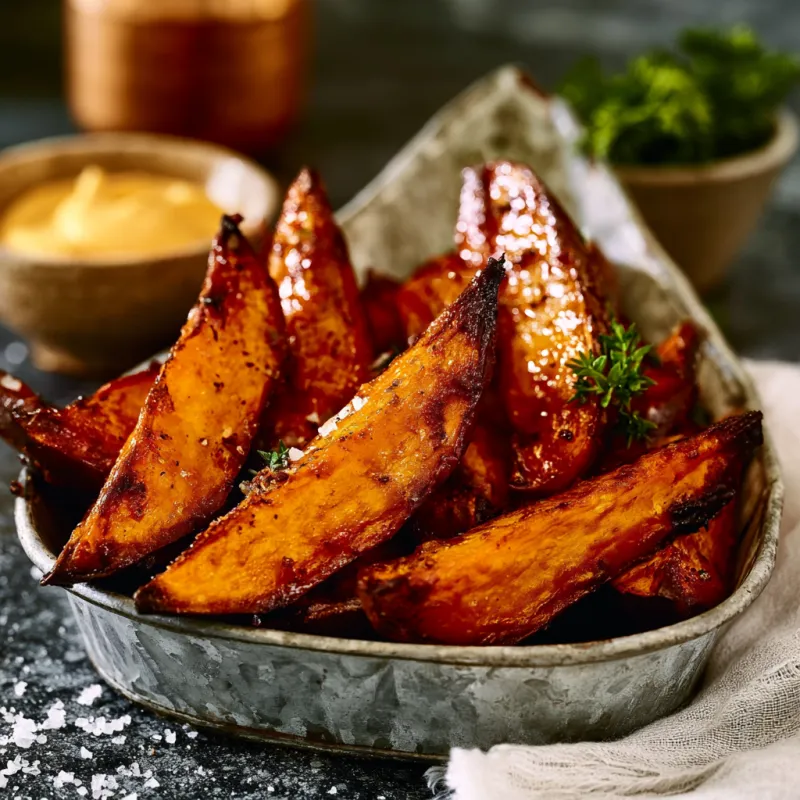
Baked Sweet Potato Wedges
Ingredients
Equipment
Method
- Preheat your oven to 425°F (220°C). Line a large baking sheet with parchment paper or a silicone mat.
- Scrub the sweet potatoes well. Do not peel—the skin helps hold the wedges together and adds fiber. Cut each potato in half crosswise, then cut each half into ½-inch thick wedges. Aim for even thickness so they cook uniformly.
- Place the wedges in a large bowl and cover with cold water. Let them soak for 10 minutes. This removes excess surface starch, which is the number one cause of soggy wedges.
- Drain the wedges in a colander and pat them very dry with a clean kitchen towel or paper towels. Moisture is the enemy of crispiness—take a moment to blot thoroughly.
- Return the dry wedges to the bowl. Sprinkle the cornstarch over them and toss gently until every wedge is lightly coated. The cornstarch creates a thin, crispy shell as it bakes.
- Drizzle the oil over the wedges and toss again. Add the smoked paprika, garlic powder, salt, pepper, and cayenne if using. Toss until evenly coated.
- Arrange the wedges in a single layer on the prepared baking sheet. Do not overcrowd—they need space for hot air to circulate. If they touch, they steam instead of crisp. Use two sheets if needed.
- Bake for 15 minutes, then flip each wedge with a spatula. Bake for another 10 minutes, or until the wedges are golden brown and crispy on the edges. The centers should be tender when pierced with a fork.
- Let them rest on the baking sheet for 2 minutes before serving. This allows the crust to set. Serve hot.