
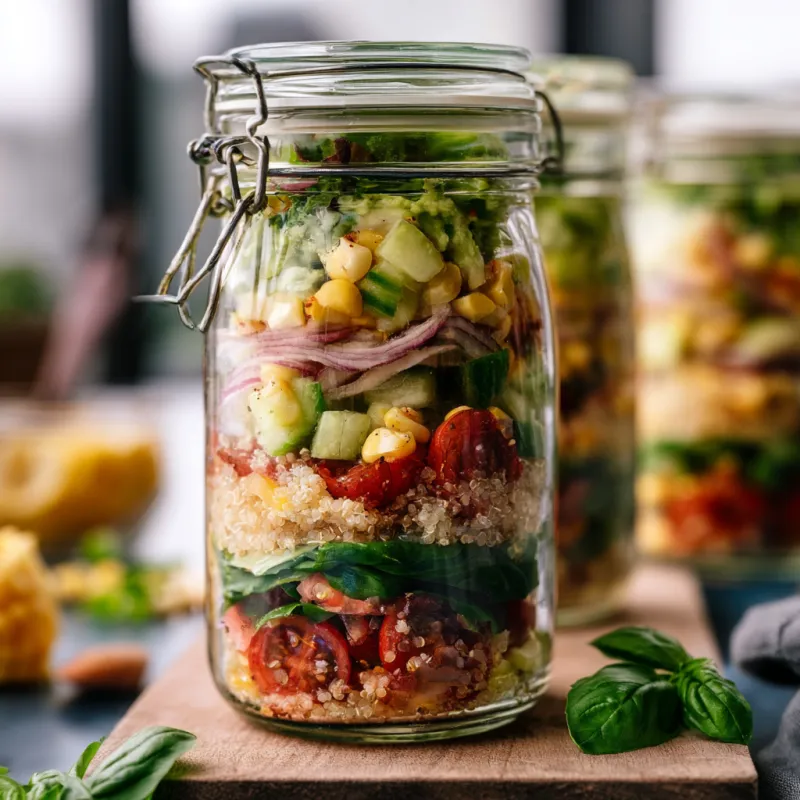
There’s a trick to making a salad jar that doesn’t turn into a soggy mess by Wednesday. It’s not about fancy equipment or expensive ingredients. It’s about the order you stack things in. I build these jars with the dressing sitting at the bottom, separated from the greens by a barrier of sturdy vegetables. That barrier is everything.

Here’s the method: start with the dressing. Then add ingredients that can sit in that dressing without turning to mush—cherry tomatoes, cucumber, red onion. Then a layer of something that absorbs a little but stays intact, like feta or chickpeas. Only then do you add the greens, packed in loosely but full to the top. The greens never touch the dressing until you’re ready to eat. That’s the whole secret.
Why the Dressing Goes on the Bottom
Moisture is the enemy of crisp greens. When dressing sits on top of lettuce for hours, the leaves wilt, release water, and turn into a sad, translucent mess. By putting the dressing at the bottom of the jar, you create a physical barrier. The vegetables above it act like a sponge—they sit in the dressing, marinate a little, and stay flavorful. The greens on top stay dry and crisp.
I keep the ratio at about 2 tablespoons of vinaigrette per pint jar. That’s enough to coat everything when you shake it, but not so much that the greens drown. If you’re using a thicker dressing, like a tahini or yogurt-based one, reduce to 1½ tablespoons. Thicker dressings don’t spread as evenly and can leave clumps.
Choosing Your Layers
Not all vegetables are created equal in a jar. Some release water over time (cucumber, zucchini, bell pepper) and others hold up better (cherry tomatoes, carrots, snap peas). Here’s what I do:
Bottom layer (in the dressing): cherry tomatoes, cucumber, red onion, bell pepper strips, or cooked beans. These can sit in dressing for days without getting mushy. Avoid avocado or soft cheese here—they’ll break down into the dressing.
Middle layer (the barrier): feta, goat cheese, chickpeas, cooked quinoa, or diced hard-boiled eggs. These add texture and protein, and they keep the dressing from wicking upward into the greens.
Top layer (the greens): arugula, spinach, kale, or spring mix. Pack them in gently but full. Don’t press down. The air trapped between the leaves helps keep them crisp. If you’re using kale, massage it with a little olive oil and salt first—it softens the leaves and makes them more tender without getting soggy.
Finishing touch: nuts, seeds, or croutons go on top of the greens, right before sealing. That way they stay crunchy until you shake the jar.
How to Eat It
When you’re ready for lunch, shake the jar vigorously for about 10 seconds. The dressing travels up through the layers, coating everything. Or you can dump the contents into a bowl and stir. I prefer the shake method—it’s one less dish to wash, and the dressing distributes more evenly.
If you’re eating on the go, just shake and eat straight from the jar. Wide-mouth jars make this easy. Regular mouth jars work too, but you’ll have to dig with a fork.
Common Mistakes to Avoid
I’ve made all of these. Learn from my errors.
Packing the greens too tight. Squeezing them in crushes the leaves and releases moisture. They’ll wilt faster. Fill the jar full, but gently.
Using wet greens. Wash and dry your greens thoroughly before layering. Any extra water on the leaves accelerates spoilage. A salad spinner is your best friend here. If you don’t have one, pat the leaves dry with a clean kitchen towel.
Adding avocado or egg too early. These ingredients don’t last more than 2 days in a jar. If you want them, add them the morning you plan to eat the jar, or eat those jars first.
Skipping the salt. A pinch of salt on the greens before sealing helps season the salad evenly. But don’t overdo it—the dressing and feta already bring salt.
The Takeaway
Summer lunch salad jars are about smart stacking, not complicated recipes. Dressing on the bottom, sturdy veggies next, a barrier layer, then greens on top. That’s it. You can mix and match based on what’s in your fridge. The method stays the same. Build them on Sunday, grab one each morning, and you’ll have a crisp, satisfying lunch all week.
Frequently Asked Questions
How long do salad jars stay fresh?
Up to 5 days in the fridge if you keep the dressing at the bottom and use sturdy greens like arugula or kale. More delicate greens like butter lettuce may only last 3 days. Always store jars upright.
Can I use a different dressing?
Yes, but avoid creamy dressings if you need the jar to last more than 2 days—they can thin out and seep through layers. Vinaigrettes work best for longer storage.
What if I don’t have wide-mouth jars?
Regular mouth jars work, but it’s harder to layer and get the salad out without crushing the greens. Wide-mouth pint jars are ideal. You can also use any airtight container with a tight seal.
Summer Lunch Salad Jars
Ingredients
Equipment
Method
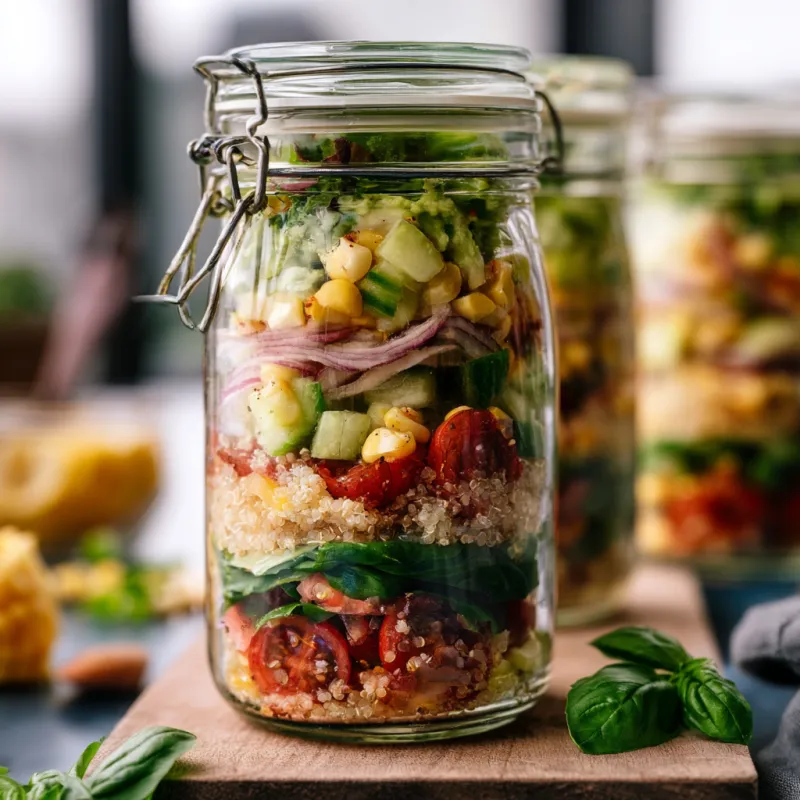
- In each clean wide-mouth pint jar, pour 2 tablespoons of dressing into the bottom.
- Add a layer of cherry tomatoes (about 1/4 cup per jar). These are sturdy and won't get soggy.
- Add cucumber dice (about 1/4 cup per jar).
- Add red onion slices (about 2 tablespoons per jar).
- Sprinkle feta cheese (about 2 tablespoons per jar) on top of the veggies.
- Add chickpeas or white beans (about 2 tablespoons per jar).
- Gently pack in the mixed greens, filling to the top. Do not press them down hard—just a light fill.
- Sprinkle sunflower seeds or pepitas on top of the greens.
- Seal the jar tightly and refrigerate. When ready to eat, shake the jar well to coat everything with dressing, or dump into a bowl.