
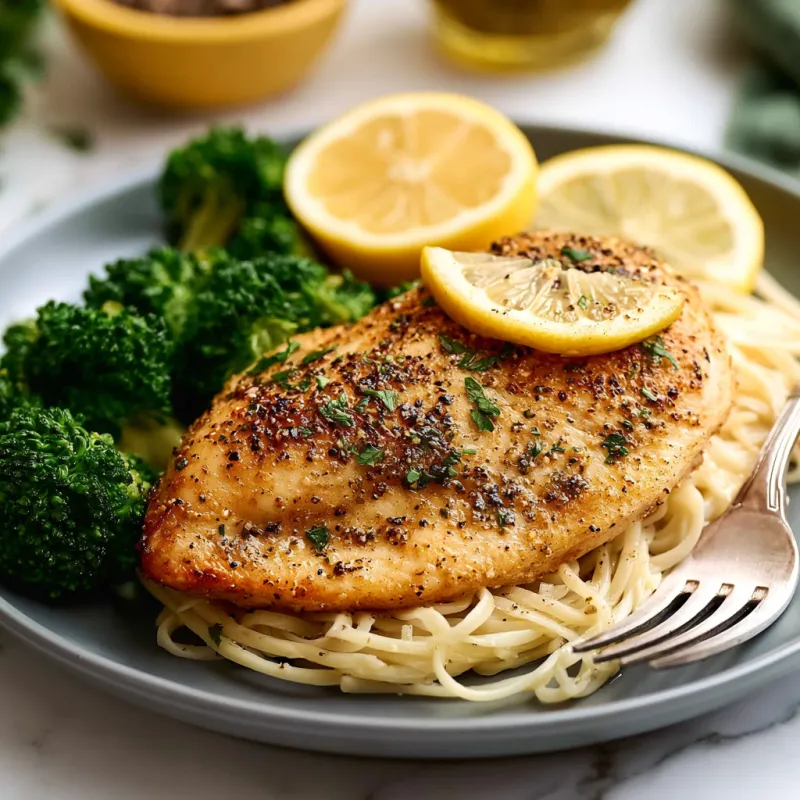
I have a rule for weeknight dinners: the plate should look like a complete meal without me running around like I’m short-order cooking for myself. This lemon pepper chicken dinner plate does exactly that. The chicken gets a crackling crust of lemon and pepper, the potatoes turn crisp-edged and fluffy inside, and a simple salad cuts through the richness. It’s a plate that feels put-together but takes less than 40 minutes.

The Right Way to Season Lemon Pepper Chicken
Most lemon pepper seasoning blends are mostly pepper and salt, with a whisper of lemon. That’s fine for a quick shake, but for a dinner plate that stands on its own, I build the flavor in layers. I start with a store-bought lemon pepper seasoning as the base—about 1 tablespoon for four breasts—but I add extra lemon zest and a squeeze of juice at the end. The zest goes into the butter basting stage, where the heat releases its oils. The juice hits the pan after the sear, so it doesn’t burn.
Here’s the ratio I stick to: 1 tablespoon seasoning plus the zest and juice of one lemon for every four servings. That gives you a bright, peppery crust with a real lemon finish, not just a vague citrus suggestion. If you’re using a seasoning that’s heavy on salt, dial back the added salt to 1/2 teaspoon. Taste your seasoning first—it makes a difference.
Building the Plate: Timing Is Everything
I start the potatoes first because they need the longest time in the oven. While they roast, I prep and sear the chicken. By the time the potatoes are done, the chicken is finishing in the oven. The salad takes exactly 90 seconds to toss. That’s the rhythm: potatoes go in, chicken hits the pan, salad waits.
Roasted Potatoes: The Reliable Side
Baby potatoes are my go-to because they need no peeling. Halve them so they’re about the same size—this matters for even cooking. Toss them with oil, salt, and pepper, then spread them in a single layer on a sheet pan. Crowding them will steam instead of roast. At 425°F, they need 25–30 minutes. Flip them once at the 15-minute mark so both sides get golden. You’ll know they’re ready when a fork slides in with no resistance and the edges look crisp.
Pan-Searing Chicken: The Make-or-Break Step
Pat the chicken dry. I cannot stress this enough. Wet chicken steams, not sears. A dry surface means a golden, crunchy crust in under 5 minutes. I use a cast-iron skillet because it holds heat evenly, but any heavy-bottomed pan works. Heat the oil until it shimmers—that’s your cue. Lay the chicken in presentation side down and leave it alone. No poking, no sliding. After 4–5 minutes, it should release easily. If it sticks, it’s not ready.
Flip and cook for another 3–4 minutes, then add the butter, garlic, and zest. Tilt the pan and spoon the butter over the chicken for about a minute. This basting step locks in moisture and builds flavor. Then squeeze the lemon juice over everything and slide the pan into the oven. Five to seven minutes later, your chicken should hit 160°F on an instant-read thermometer. It will climb to 165°F as it rests.
Common Mistakes and How to Avoid Them
The biggest mistake I see is skipping the rest. If you slice into the chicken right out of the oven, the juices run onto the cutting board and you get dry meat. Five minutes on a board, loosely tented with foil, makes all the difference. Another mistake: using too much lemon pepper seasoning. It’s potent, and a heavy hand can make the chicken taste bitter. Stick to the ratio above.
For the potatoes, the most common error is under-seasoning. Potatoes need salt. Be generous. And don’t skip the flip—it’s the difference between one crispy side and two.
Putting It All Together
While the chicken rests, toss the greens with a simple vinaigrette. I use 3 parts olive oil to 1 part lemon juice, plus salt and pepper. That’s it. The acidity echoes the lemon in the chicken and keeps the plate balanced. Arrange the potatoes, chicken, and salad on each plate. Spoon any pan juices over the chicken—that’s liquid gold.
This is a dinner plate that works for a Tuesday night or a casual dinner with friends. It’s honest food: well-seasoned chicken, properly roasted potatoes, and a fresh green side. No shortcuts that sacrifice flavor, no techniques that require a culinary degree. Just a solid, repeatable method that delivers every time.
Takeaway
The key to this lemon pepper chicken dinner plate is layering the lemon flavor—seasoning, zest, and juice at different stages—and nailing the sear. Pair it with potatoes that are actually crispy and a salad that cuts through the richness, and you’ve got a complete meal that feels like more than the sum of its parts. Try it once, and you’ll have it memorized.
Frequently Asked Questions
Can I use chicken thighs instead of breasts?
Yes, boneless skinless thighs work well. Adjust the cooking time: sear for 4 minutes per side, then roast for 8–10 minutes until internal temperature reaches 175°F for the best texture.
What if I don’t have lemon pepper seasoning?
Make your own: mix 1 tablespoon lemon zest, 1 teaspoon black pepper, 1/2 teaspoon salt, and 1/2 teaspoon garlic powder. Use immediately. Store-bought blends often contain sugar, which can burn; homemade avoids that.
How do I keep the chicken from drying out?
Two things: don’t overcook (pull at 160°F and let rest) and use the butter-basting step. The fat and acid keep the meat moist. Also, pounding the chicken to even thickness helps it cook evenly.
Can I make this all in one pan?
Yes, if you have a large enough skillet. Roast the potatoes first, remove them, then cook the chicken. Return potatoes to the skillet to warm through before serving. Not quite one-pan, but close.
Lemon Pepper Chicken Dinner Plate
Ingredients
Equipment
Method
- Preheat your oven to 425°F. Toss the halved baby potatoes with 1 tablespoon olive oil, a pinch of salt, and a few grinds of black pepper. Spread them in a single layer on a sheet pan. Roast for 25–30 minutes, flipping halfway, until golden and tender when pierced with a fork.
- While the potatoes roast, prepare the chicken. Pat the chicken breasts dry with paper towels — this is key for a good sear. In a small bowl, combine the lemon pepper seasoning, kosher salt, garlic powder, and black pepper. Sprinkle this mixture evenly over both sides of each breast.
- Heat the remaining 1 tablespoon olive oil in a 12-inch cast-iron skillet over medium-high heat until it shimmers. Carefully place the chicken breasts in the skillet, presentation side down. Cook without moving for 4–5 minutes, until a deep golden crust forms. Flip and cook for another 3–4 minutes.
- Reduce the heat to medium. Add the butter, minced garlic, and lemon zest to the skillet. Tilt the pan and spoon the melting butter over the chicken for about 1 minute. The garlic should become fragrant but not brown.
- Squeeze the lemon juice over the chicken. Transfer the skillet to the oven (if your skillet is oven-safe; otherwise, transfer chicken to a baking dish). Roast for 5–7 minutes, until the internal temperature at the thickest part reads 160°F. The chicken will carry over to 165°F as it rests.
- Remove the skillet from the oven. Transfer chicken to a cutting board and let rest for 5 minutes. Do not skip this — it keeps the juices inside.
- While the chicken rests, toss the mixed greens with the vinaigrette. Arrange the salad, roasted potatoes, and chicken on plates. Spoon any pan juices over the chicken and garnish with parsley.