
The first time I made fruit kabobs for a group of kids, I learned a hard lesson: fruit browns fast, and kids notice. Bananas turned gray, apples looked rusty, and the whole platter looked tired within twenty minutes. That’s when I started using a simple citrus-honey dip that does double duty—it keeps the fruit bright and adds a creamy, sweet finish. These kids’ summer fruit kabobs are my go-to for playdates, birthday parties, or just a hot afternoon when you want something cold and colorful without turning on the oven.

Why This Method Works
The trick is the acid. A teaspoon of fresh lime juice in the yogurt dip stops enzymatic browning on bananas and apples. The honey adds sweetness that kids love, and the yogurt provides a cool, tangy contrast to the fruit. I keep the ratio at 2 tablespoons honey to 1/4 cup yogurt—any more honey and it overpowers the fruit. The lime is non-negotiable; bottled juice won’t give the same fresh zing or anti-browning effect.
Choosing the Right Fruit
Firm fruit holds up best on a skewer. Watermelon should be cut into 1-inch cubes—any smaller and they fall apart when threaded. Pineapple needs to be ripe but still firm; if it’s too soft, it slides off the stick. Strawberries halved lengthwise create a flat surface that stays put. Blueberries and grapes are naturally skewer-friendly. Bananas are the only soft fruit I use, and only because kids love them. The lime dip keeps them from turning brown for about two hours.
What to Avoid
Skip apples, pears, and peaches—they brown too quickly even with the dip. Raspberries and blackberries are too delicate; they crush when you push the skewer through. Overripe mango or melon turns mushy. Stick to the list above and you’ll get clean, colorful skewers every time.
Assembly Technique
Soak wooden skewers in water for 10 minutes before using. This prevents them from splintering when you push through fruit. Thread in a repeating pattern: grape, pineapple, strawberry, watermelon, banana, blueberry. That’s one full cycle. Leave about half an inch of skewer exposed at each end so little hands can hold them without touching fruit. For toddlers, cut fruit into flat, coin-sized pieces and serve in a bowl with the dip—no skewers needed.
The Dip That Does More
Plain yogurt is the base—Greek yogurt works too, but it’s thicker and may need a splash of milk to thin. Mix in honey and lime juice until smooth. Taste it: the lime should be bright but not sour. If it’s too tart, add a little more honey. This dip is also great for dunking other fruit or even drizzling over pancakes. Make it a day ahead and refrigerate; just whisk again before serving.
Timing and Serving
Assemble the kabobs no more than two hours before serving. Arrange them on a platter in a single layer—don’t stack, or the bottom ones get squished. Serve the dip in a small bowl in the center. If you’re taking these to a party, transport the kabobs on a tray covered with plastic wrap and keep the dip in a separate container. Add the dip at the last minute.
Common mistake to avoid: Don’t cut fruit too small. Pieces under 3/4 inch slide around on the skewer and are hard for kids to bite off. Keep pieces uniform in size so the kabobs look neat and eat evenly.
Takeaway
These kids’ summer fruit kabobs are about as simple as it gets—no heat, no fuss, just fresh fruit and a dip that does the heavy lifting. The lime-honey yogurt keeps everything bright and tasty for hours. Make them for a playdate, a picnic, or just a Tuesday afternoon when the kids need something fun to eat. They’ll eat the fruit without a single complaint.
Frequently Asked Questions
Can I use frozen fruit for these kabobs?
I don’t recommend frozen fruit. It releases too much water as it thaws, making the kabobs slippery and the fruit mushy. Stick with fresh fruit for the best texture and appearance.
How do I keep bananas from turning brown on the kabobs?
Dip banana slices in the lime juice from the dip recipe (or a little extra) before threading. The acid slows oxidation. You’ll see a slight tang, but it blends well with the honey-yogurt dip.
What’s the best way to cut fruit for young children?
For toddlers, cut fruit into flat, coin-sized pieces about 1/2 inch thick—avoid round shapes like whole grapes, which are a choking hazard. You can also skip the skewers entirely and serve the fruit pieces in a bowl with the dip.
Can I make these kabobs ahead of time?
Yes, assemble them up to 2 hours ahead and keep covered in the fridge. Add the dip just before serving. The lime in the dip also helps keep the fruit from browning.
What other fruits work well on these skewers?
Mango, kiwi, cantaloupe, honeydew, and orange segments all work. Avoid very soft fruits like overripe peaches or raspberries—they fall apart. Stick to firm, bite-sized pieces.
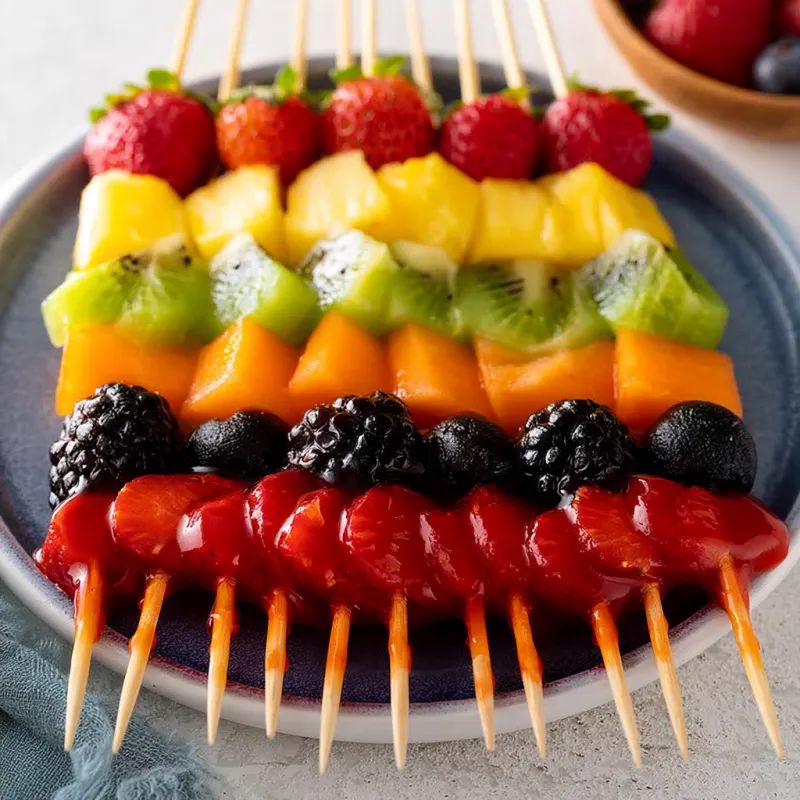
Kids' Summer Fruit Kabobs
Ingredients
Equipment
Method
- Soak wooden skewers in water for 10 minutes to prevent splintering (skip if using reusable metal skewers).
- Prepare all fruit: watermelon and pineapple into 1-inch cubes, strawberries halved, grapes whole, blueberries whole, banana sliced into 1/2-inch rounds.
- In a small bowl, whisk together yogurt, honey, and lime juice until smooth. Set aside.
- Thread fruit onto skewers in alternating colors: start with a grape, then pineapple, strawberry, watermelon, banana, blueberry, and repeat. Leave 1/2 inch of skewer exposed at each end for easy handling.
- Arrange kabobs on a platter and serve immediately with the yogurt-lime dip on the side.
- For make-ahead, refrigerate assembled kabobs (without dip) up to 2 hours. Add dip just before serving.