
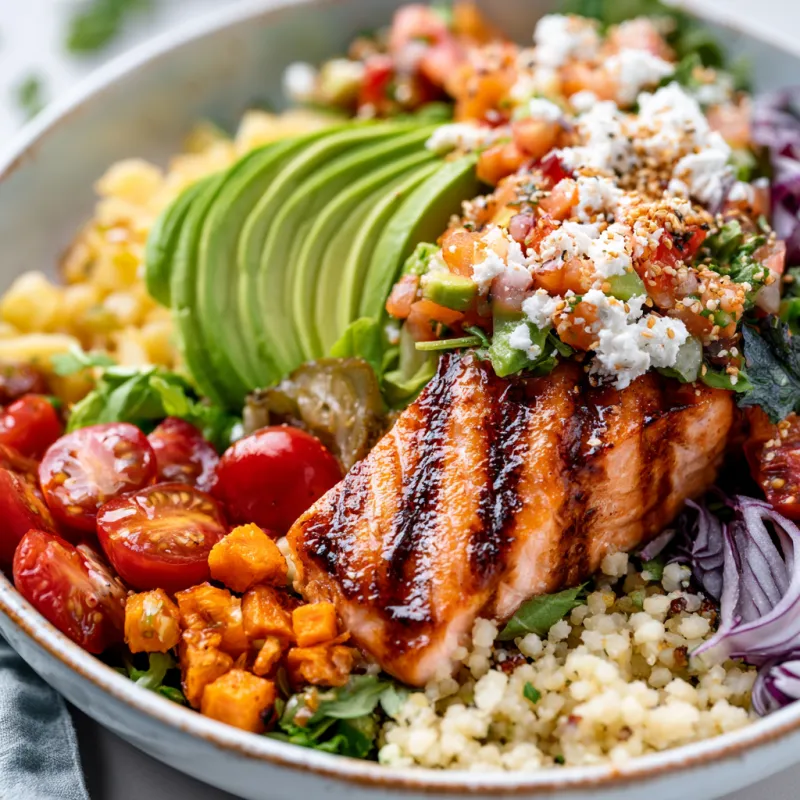
The smell of salmon hitting a hot skillet—that sizzle, the edges turning golden—is one of the quickest ways to turn a Tuesday into something special. A healthy summer salmon bowl is exactly that: fast, satisfying, and full of bright flavors that don’t weigh you down. I keep the ratio simple—about equal parts protein, grain, and vegetables—so every bite feels balanced.

Why This Bowl Works
This isn’t a fussy recipe. It’s built on technique that gives you consistently flaky salmon and a dressing that ties everything together without overpowering the fresh ingredients. The key is searing the salmon properly: a hot pan, dry fish, and patience. Don’t move the fillet for the first few minutes. That’s how you get a crisp, golden crust while the inside stays tender.
Choosing and Preparing the Salmon
Look for fillets that are about 1 inch thick at the thickest part. This ensures even cooking. Wild-caught salmon has a firmer texture and richer flavor, but farmed Atlantic works well too—just reduce the cooking time by about a minute per side, as it’s often thinner and more delicate.
Pat the salmon dry with paper towels. This step is non-negotiable. Any moisture on the surface will steam instead of sear, and you’ll end up with gray, soft fish instead of that beautiful golden crust. Season generously with salt and pepper right before cooking.
The Perfect Sear
Heat a nonstick skillet over medium-high heat until a drop of water dances across the surface. Add the oil and swirl to coat. Place the salmon skin-side down (if using skin-on) or presentation-side down (if skinless). Listen for that immediate sizzle—if it’s quiet, the pan isn’t hot enough.
Cook without moving for 4 minutes. Use a thin spatula to peek underneath. The skin should be deep golden and crispy. Flip gently and cook another 3 to 4 minutes for medium (internal temperature 125°F) or 5 to 6 minutes for well-done (145°F). For food safety, the FDA recommends 145°F, but many prefer the texture at 125°F. Either is fine as long as you use a reliable thermometer.
Let the salmon rest on a plate for 2 minutes before flaking. This redistributes the juices so the fish stays moist.
Building the Bowl
Start with a warm base of cooked rice—brown rice adds nuttiness, but white rice is perfectly fine. Pile on mixed greens for freshness, then cherry tomatoes, diced cucumber, and thinly sliced red onion. The vegetables should be crisp and cold, contrasting with the warm salmon and rice.
I add a generous handful of fresh cilantro or parsley. Herbs aren’t just garnish here; they brighten every bite and cut through the richness of the fish.
The Dressing: Simple but Smart
Greek yogurt makes this dressing creamy without being heavy. Whisk it with fresh lemon juice, a touch of extra-virgin olive oil, minced garlic, and a tiny bit of honey. The honey balances the acidity of the lemon. Taste and adjust—you want it tangy but not puckering.
This dressing doubles as a sauce for the salmon and a light coating for the vegetables. Drizzle it over everything just before serving.
Common Mistake to Avoid
Don’t overdress the bowl. Start with a tablespoon per serving and add more as needed. You can always add, but you can’t take away. A soggy bowl loses all its textural appeal.
Make It Your Own
This bowl is endlessly adaptable. Swap the rice for quinoa or cauliflower rice. Use any crunchy vegetable you have—bell peppers, shredded carrots, radishes. Add avocado for extra creaminess. The dressing works with any combination.
For a dairy-free version, skip the yogurt and whisk together 2 tablespoons olive oil, 1 tablespoon lemon juice, 1 teaspoon Dijon mustard, and a pinch of salt. It’s just as bright and pairs beautifully with the salmon.
Storing Leftovers
Store the components separately in airtight containers in the refrigerator. The salmon and rice keep for 2 days, the vegetables for 1 day (they lose crunch after that), and the dressing for 3 days. To reheat, warm the salmon gently in a skillet over low heat or in the microwave at 50% power. Add the dressing fresh.
Takeaway
A healthy summer salmon bowl is about technique, not complexity. Dry the fish, get the pan hot, and build your bowl with contrast—warm and cool, crisp and tender, tangy and rich. That’s how you turn simple ingredients into a dinner you’ll actually look forward to.
Frequently Asked Questions
Can I use frozen salmon for this bowl?
Yes. Thaw it completely in the refrigerator overnight, then pat very dry before searing. Frozen salmon releases more moisture, so you may need an extra minute per side to get a good crust.
What can I substitute for rice?
Quinoa, cauliflower rice, or a bed of extra greens work well. For a low-carb option, use zucchini noodles or simply pile the vegetables and salmon over lettuce.
How do I know when the salmon is cooked through?
Use an instant-read thermometer: 125°F for medium (still slightly translucent in the center), 145°F for well-done (opaque throughout). The fish should flake easily with a fork when done.
Can I make the dressing ahead of time?
Absolutely. The dressing stays fresh in the fridge for up to 3 days. Stir or shake before using, as it may separate slightly.
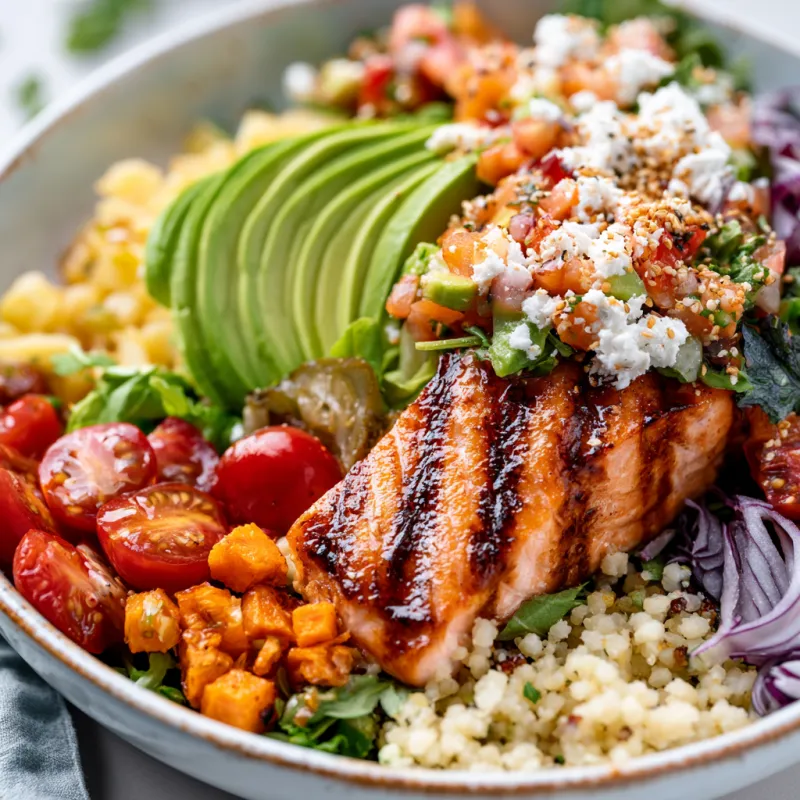
Healthy Summer Salmon Bowl
Ingredients
Equipment
Method
- Pat salmon dry with paper towels. Season both sides with salt and pepper.
- Heat 1 tablespoon olive oil in a nonstick skillet over medium-high heat until shimmering.
- Place salmon skin-side down (if skin-on) and cook 4 minutes without moving. The skin should be golden and crispy.
- Flip salmon and cook 3-4 minutes more for medium (internal temperature 125°F) or 5-6 minutes for well-done (145°F).
- Transfer salmon to a plate and let rest 2 minutes. Flake into large chunks with a fork.
- In a small bowl, whisk yogurt, lemon juice, extra-virgin olive oil, garlic, honey, and a pinch of salt until smooth.
- Divide rice between two bowls. Top with greens, tomatoes, cucumber, red onion, and cilantro.
- Arrange salmon chunks on top. Drizzle with yogurt dressing. Serve immediately.