
The first time you get it right, you’ll know. The garlic turns pale gold, not brown. The oil slicks each strand of spaghetti without pooling at the bottom of the bowl. And the whole thing comes together in the time it takes to boil water.

Spaghetti aglio e olio is deceptively simple. Just garlic, olive oil, pasta, and a little heat. But the technique matters more than the ingredient list suggests. I’m going to walk you through the method that gives you a silky, emulsified sauce every time—no cream, no butter, no cheese required (though Parmesan is welcome).
The Golden Ratio
I keep the ratio at 6 tablespoons of olive oil per 1 pound of pasta. That might sound like a lot, but it’s not. The oil needs to coat 16 ounces of spaghetti, and some of it will stay in the pan or get absorbed. With less oil, the pasta feels dry. With more, it gets greasy. Six tablespoons hits the sweet spot.
Use a good extra-virgin olive oil here. Not the most expensive bottle in your cabinet, but one you like the taste of. The oil is the backbone of the dish.
Toast the Garlic, Don’t Burn It
Slice 8 cloves of garlic as thinly as you can. A sharp knife helps. Thin slices toast evenly and release their flavor into the oil without turning bitter.
Heat the oil in a 12-inch skillet over medium-low. Add the garlic and red pepper flakes. The flakes bloom in the warm oil, infusing it with gentle heat. Stir the garlic often. You want it to sizzle softly, not aggressively. After about 3 to 4 minutes, the garlic will turn a pale, translucent gold. That’s your cue. The second it starts to brown, pull the pan off the heat.
Common mistake: rushing this step with high heat. The garlic will brown on the outside but stay raw in the center, and the oil will taste scorched. Low and slow is the way.
The Pasta Water Trick
Cook your spaghetti in well-salted water—1 tablespoon of salt per 4 quarts of water. Taste the water; it should be as salty as the sea. The pasta absorbs salt as it cooks, seasoning it from the inside out.
Drain the pasta 1 minute before the package says it’s done. It will finish cooking in the skillet. Before you drain, scoop out 1 cup of the starchy pasta water. That starch is what helps the oil and water emulsify into a creamy sauce.
Emulsify in the Skillet
Add the drained spaghetti directly to the skillet with the garlic oil. Turn the heat to medium. Using tongs, toss the pasta vigorously. Add the pasta water a few tablespoons at a time. As you toss, you’ll see the oil and water come together—it will look glossy and cling to the pasta, not pool separately.
You’ll likely use about 1/2 cup of pasta water total. If the pasta starts to look dry, add a little more. If it looks soupy, keep tossing over heat until some of the water evaporates. The goal is a shiny, cohesive sauce that lightly coats each strand.
This step takes about 1 minute. Watch for the visual cue: the bottom of the skillet should have a thin, creamy film, not a puddle of oil.
Finish and Serve
Take the pan off the heat. Toss in the chopped parsley. Taste and add a pinch of salt if needed—the pasta water usually provides enough. Serve immediately, with freshly grated Parmesan on the side if you like.
The Parmesan is optional. Traditional aglio e olio doesn’t include cheese, but it’s a common addition. If you skip it, the dish is naturally vegan.
Storage and Reheating
This pasta is best eaten right away. If you have leftovers, store them in an airtight container in the fridge for up to 2 days. To reheat, add the pasta to a skillet with a splash of water and toss over medium heat until the sauce comes back together. Microwaving will dry it out.
Takeaway: Spaghetti aglio e olio is a lesson in restraint. Use good oil, toast the garlic gently, and emulsify with pasta water. Nail those three things, and you’ll have a perfect bowl of pasta from a handful of pantry staples.
Frequently Asked Questions
Why is my aglio e olio greasy?
The oil and water haven’t emulsified. The fix is to toss the pasta with the oil over medium heat, adding pasta water a little at a time, until the sauce coats the noodles and looks creamy, not oily.
Can I use pre-minced garlic?
Freshly sliced garlic is best. Pre-minced garlic is often dry and can burn faster, leading to a bitter taste. Thin, even slices toast more gently and evenly.
How do I keep garlic from burning?
Use medium-low heat and watch closely. The garlic should sizzle gently and turn pale gold. If it browns quickly, your heat is too high. Remove the pan from the burner if needed.
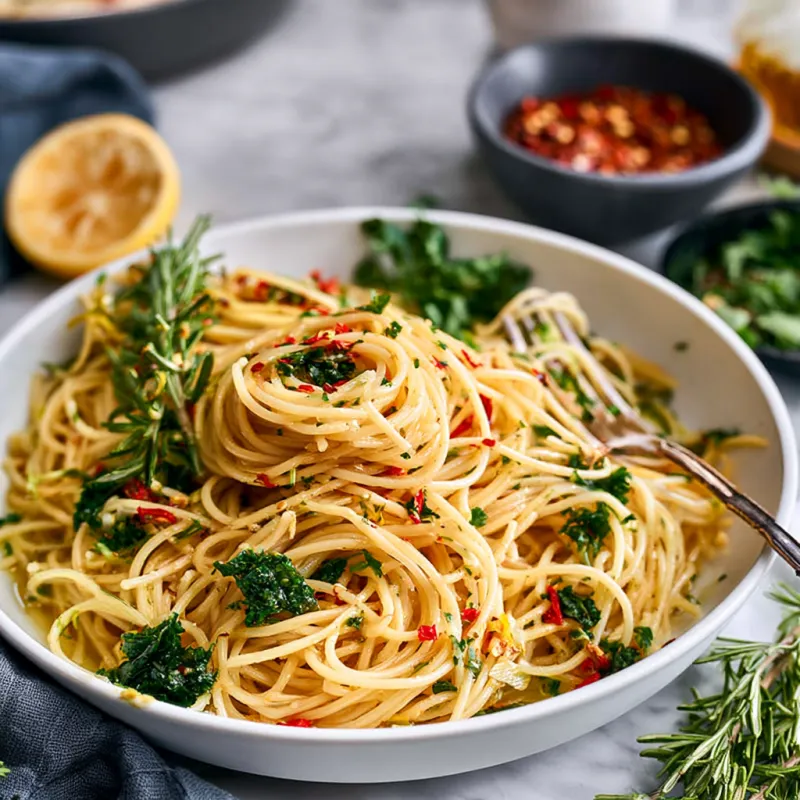
Classic Spaghetti Aglio e Olio
Ingredients
Equipment
Method
- Bring a large pot of well-salted water to a rolling boil. Use 1 tablespoon salt per 4 quarts water.
- Add spaghetti and cook until 1 minute shy of al dente (about 1 minute less than package directions). Stir occasionally.
- While pasta cooks, heat olive oil in a 12-inch skillet over medium-low heat. Add sliced garlic and red pepper flakes. Cook slowly, stirring often, until garlic is fragrant and just golden—about 3-4 minutes. Do not let it brown or burn. If it darkens too fast, remove pan from heat briefly.
- When pasta is done, reserve 1 cup of pasta water, then drain spaghetti.
- Add drained spaghetti to the skillet with the garlic oil. Increase heat to medium. Toss with tongs for 1 minute, adding pasta water a few tablespoons at a time, until the sauce emulsifies and coats each strand. You'll likely use about 1/2 cup total. The pasta should look glossy, not greasy.
- Remove from heat. Toss in parsley. Taste and add salt if needed (the pasta water usually provides enough). Serve immediately with Parmesan on the side.