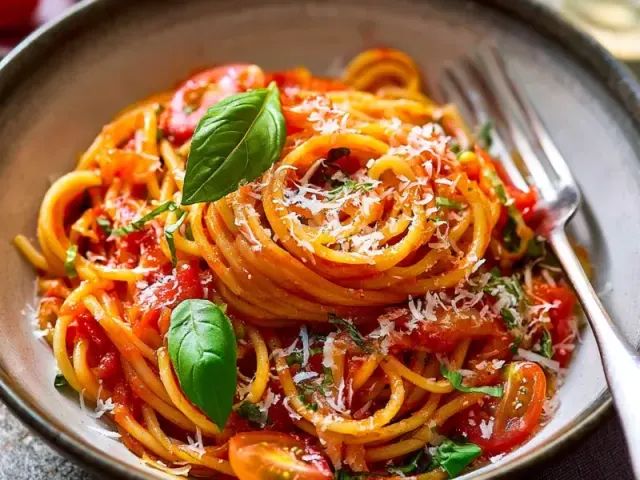
Authentic Pasta Pomodoro: Simple Sauce, Perfectly Balanced
There’s something about a bowl of pasta pomodoro that stops me mid-bite. The sauce is bright, almost sweet, with a gentle tang from ripe tomatoes and a whisper of garlic. No heavy cream, no meat, no long list of spices. Just a few ingredients, handled with care. That’s the whole point.

Authentic pasta pomodoro isn’t about throwing canned sauce on noodles. It’s about coaxing the best from fresh tomatoes, good olive oil, and basil. The technique matters more than the number of ingredients. Get the timing right, and the sauce clings to every strand of pasta like it was made for it.
Choose the Right Tomatoes
Roma tomatoes are my go-to for pomodoro. They’re meaty, with fewer seeds and less water than beefsteak or vine tomatoes. San Marzano tomatoes, if you can find them fresh, are even better — sweeter and less acidic. The key is ripeness. A ripe tomato gives slightly under gentle pressure and smells sweet at the stem. Underripe tomatoes make a tart, thin sauce.
Blanching and Peeling
I blanch the tomatoes first. It sounds like a fussy step, but it takes less than a minute and makes a real difference. Cut a small X on the bottom of each tomato, drop them into boiling water for 30-45 seconds, then transfer to an ice bath. The skins slip right off. Without the skins, the sauce is silky, not fibrous. Once peeled, I core the tomatoes and crush them by hand over a bowl to catch every drop of juice. That juice is flavor.
The Sauce: Simple, Patient, Precise
Heat the olive oil in a large skillet over medium heat. I use a 12-inch skillet — wide enough for the sauce to reduce evenly. Add the sliced garlic and red pepper flakes if you want a gentle warmth. Cook for exactly one minute, stirring. The garlic should be fragrant and just starting to turn pale gold. Brown garlic turns bitter, and that bitterness will carry through the whole dish. If you see color beyond pale gold, pull the pan off the heat and start over.
Add the crushed tomatoes and their juices. Stir in a teaspoon of kosher salt. Bring the sauce to a gentle simmer — you should see small bubbles breaking the surface, not a rolling boil. Lower the heat and cook uncovered for 15-18 minutes. Stir every few minutes. You’ll notice the sauce thickening slightly, and the olive oil will begin to separate and float on top. That’s a good sign. It means the water has cooked off and the flavors have concentrated. Taste the sauce. It should be bright, not flat. Adjust salt if needed.
Cook the Pasta Right
While the sauce simmers, cook the pasta. Use a large pot with at least 4 quarts of water per pound of pasta. Salt the water generously — it should taste like the sea. Spaghetti is classic, but any long pasta works. Cook until al dente, about one minute less than the package directions. The pasta will finish cooking in the sauce, so it needs to be slightly firm.
Before draining, reserve one cup of the starchy pasta water. This is your secret weapon. The starch helps the sauce cling to the pasta and gives it a silky finish.
Marry the Pasta and Sauce
Drain the pasta and transfer it directly to the skillet with the sauce. Don’t rinse the pasta — you want that starch. Turn the heat to medium. Add about a quarter cup of the reserved pasta water and toss everything together with tongs or a wooden spoon. Keep tossing for 60 to 90 seconds. The sauce will thicken and coat each strand. If it looks dry, add a splash more pasta water. If it looks soupy, cook another 30 seconds. The goal is a sauce that clings, not pools.
Remove the pan from the heat. Tear the fresh basil leaves — don’t chop them, tearing releases the oils without bruising — and toss them through the pasta. The warmth will wilt them slightly. Serve immediately, with grated Parmigiano-Reggiano on the side. Let everyone add their own cheese.
Common Pitfalls and Fixes
- Sauce too watery: Your tomatoes were too juicy or you didn’t simmer long enough. Cook the sauce another 5 minutes, or drain some liquid before adding pasta.
- Sauce too thick: Add more pasta water, a tablespoon at a time, until it loosens. Remember, the sauce will tighten as it cools.
- Garlic burned: Start over. Burnt garlic ruins the whole dish. Keep the heat medium and stir constantly.
- Pasta gummy: You overcooked it or didn’t use enough water. Always cook al dente and don’t overcrowd the pot.
Final Takeaway
Authentic pasta pomodoro is a lesson in restraint. Use the best tomatoes you can find, handle them gently, and respect the timing. The result is a dish that tastes like summer, even in the middle of winter. It’s quick enough for a weeknight, but elegant enough to serve guests. And once you’ve made it this way, you’ll never reach for a jar again.
Frequently Asked Questions
What is the difference between pomodoro sauce and marinara?
Pomodoro sauce is simpler and brighter, made with just tomatoes, garlic, olive oil, and basil, simmered briefly to keep the tomato flavor fresh. Marinara often includes onions, herbs like oregano, and a longer simmer for a deeper flavor. Pomodoro is lighter and quicker.
Can I use canned tomatoes for this recipe?
Yes, high-quality canned San Marzano tomatoes are a great substitute. Use one 28-ounce can whole peeled tomatoes, crush them by hand, and skip the blanching step. Drain off some of the liquid if the sauce seems too watery.
Why does my pomodoro sauce taste bitter?
Bitterness usually comes from burnt garlic or over-reduced tomatoes. Cook garlic only until fragrant and pale gold, not brown. Also, avoid simmering the sauce too long — 15-18 minutes is enough. Adding a pinch of sugar can balance bitterness if needed.
Authentic Pasta Pomodoro

A simple, bright tomato sauce with garlic, basil, and olive oil, tossed with al dente pasta. This authentic pomodoro relies on ripe tomatoes and careful timing, not heavy spices or cream.
- large pot
- colander
- large skillet (12-inch)
- chef's knife
- cutting board
- wooden spoon
- box grater
- 1 ½ pounds ripe Roma or San Marzano tomatoes (about 6-8 medium)
- 3 tablespoons extra-virgin olive oil
- 4 cloves garlic (thinly sliced)
- ½ teaspoon red pepper flakes (optional, for heat)
- 1 pound dried spaghetti or other long pasta
- 1 teaspoon kosher salt (plus more for pasta water)
- 6-8 fresh basil leaves (torn)
- Freshly grated Parmigiano-Reggiano (for serving)
- Bring a large pot of water to a rolling boil. Add 2 tablespoons salt per 4 quarts water.
- While water heats, prepare the tomatoes. Cut a small X on the bottom of each tomato. Drop them into the boiling water for 30-45 seconds, until the skins start to peel. Transfer to a bowl of ice water. Peel, core, and crush the tomatoes by hand into a bowl. Reserve all juices.
- In a large skillet, heat olive oil over medium heat. Add garlic and red pepper flakes (if using). Cook for 1 minute until fragrant and garlic is pale gold — do not brown it.
- Add the crushed tomatoes and their juices to the skillet. Stir in 1 teaspoon salt. Bring to a gentle simmer, then reduce heat to low. Cook uncovered for 15-18 minutes, stirring occasionally, until the sauce thickens slightly and the oil separates on the surface. Taste and adjust salt.
- Meanwhile, cook pasta in the boiling water until al dente, about 1 minute less than package directions. Reserve 1 cup of pasta water before draining.
- Drain the pasta and transfer directly to the skillet with the sauce. Add a splash of pasta water (about ¼ cup) and toss over medium heat for 60-90 seconds, until the sauce clings to the pasta. Add more pasta water if needed to loosen.
- Remove from heat. Add torn basil and toss gently. Serve immediately with grated Parmigiano-Reggiano on the side.
Storage: Refrigerate leftover sauce (without pasta) in an airtight container for up to 4 days, or freeze for 3 months. Reheat gently and toss with fresh pasta. For a gluten-free version, use your favorite gluten-free pasta and cook according to package directions. This recipe contains dairy (cheese) — omit cheese for a dairy-free meal. When handling hot oil or boiling water, use oven mitts and keep handles turned inward.
Recipe: Authentic Pasta Pomodoro
Equipment
- large pot
- colander
- large skillet (12-inch)
- chef's knife
- cutting board
- wooden spoon
- box grater
Ingredients
- 1 ½ pounds ripe Roma or San Marzano tomatoes (about 6-8 medium)
- 3 tablespoons extra-virgin olive oil
- 4 cloves garlic (thinly sliced)
- ½ teaspoon red pepper flakes (optional, for heat)
- 1 pound dried spaghetti or other long pasta
- 1 teaspoon kosher salt (plus more for pasta water)
- 6-8 fresh basil leaves (torn)
- Freshly grated Parmigiano-Reggiano (for serving)
Instructions
- Bring a large pot of water to a rolling boil. Add 2 tablespoons salt per 4 quarts water.
- While water heats, prepare the tomatoes. Cut a small X on the bottom of each tomato. Drop them into the boiling water for 30-45 seconds, until the skins start to peel. Transfer to a bowl of ice water. Peel, core, and crush the tomatoes by hand into a bowl. Reserve all juices.
- In a large skillet, heat olive oil over medium heat. Add garlic and red pepper flakes (if using). Cook for 1 minute until fragrant and garlic is pale gold — do not brown it.
- Add the crushed tomatoes and their juices to the skillet. Stir in 1 teaspoon salt. Bring to a gentle simmer, then reduce heat to low. Cook uncovered for 15-18 minutes, stirring occasionally, until the sauce thickens slightly and the oil separates on the surface. Taste and adjust salt.
- Meanwhile, cook pasta in the boiling water until al dente, about 1 minute less than package directions. Reserve 1 cup of pasta water before draining.
- Drain the pasta and transfer directly to the skillet with the sauce. Add a splash of pasta water (about ¼ cup) and toss over medium heat for 60-90 seconds, until the sauce clings to the pasta. Add more pasta water if needed to loosen.
- Remove from heat. Add torn basil and toss gently. Serve immediately with grated Parmigiano-Reggiano on the side.