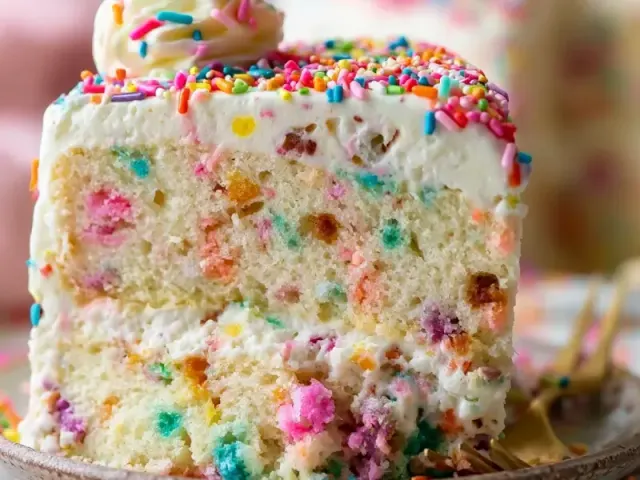
Birthday Funfetti Ice Cream Cake: No-Churn & Easy
The first time I made a birthday funfetti ice cream cake, I was chasing that perfect cross-section: a thin layer of tender vanilla cake, a thick band of creamy no-churn ice cream studded with bright sprinkles, and a cloud of whipped topping on top. No gummy ice cream, no soggy cake, no melting disaster before you even get it to the table. After a few rounds of testing, I landed on a method that delivers clean slices and a texture that stays firm but scoopable straight from the freezer. The trick is in the ratios—just enough cake to anchor the layers, and a no-churn ice cream that freezes creamy, not icy.

Why This Method Works
The key to this birthday funfetti ice cream cake is building layers that freeze at different rates without compromising texture. The cake base is baked and fully cooled, so it doesn't soak up moisture from the ice cream and turn mushy. The no-churn ice cream uses sweetened condensed milk—its sugar content lowers the freezing point, keeping the ice cream soft and scoopable even after hours in the freezer. Whipping the heavy cream to stiff peaks adds air, which prevents large ice crystals from forming. The result is a slice that cuts cleanly and tastes like a birthday party in every bite.
Choosing the Right Pan
A 9-inch springform pan is non-negotiable here. The removable ring lets you unmold the cake without disturbing the layers. If you use a standard cake pan, you'll struggle to get the cake out in one piece. Line the pan with plastic wrap before assembling—this creates a smooth surface and makes lifting the frozen cake out effortless.
Step-by-Step: The Cake Base
Mixing the Batter
Start with room-temperature ingredients. Cold butter won't cream properly, and cold milk can cause the batter to curdle. Beat the butter and sugar until light and fluffy—this takes a full 3 minutes on medium speed. You're looking for a pale, airy mixture that holds its shape when you stop the mixer. Add the eggs one at a time, beating well after each. Scrape the bowl and beaters to ensure even incorporation.
When you add the dry ingredients and milk, mix on low speed just until the flour disappears. Overmixing develops gluten, which makes the cake tough. The batter should be thick but spreadable. Fold in the sprinkles with a rubber spatula—don't overmix or the colors will bleed.