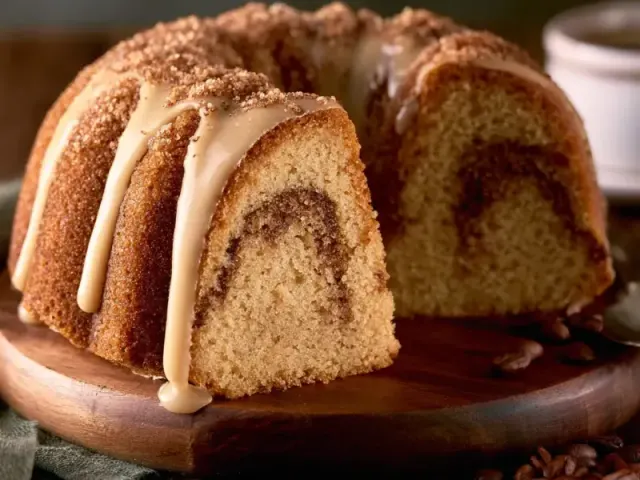
Brown Sugar Bundt Coffee Cake with Cinnamon Swirl
The smell of brown sugar warming in the oven is one of those simple pleasures that makes a kitchen feel like home. This bundt coffee cake delivers that aroma in spades, with a tender, moist crumb and a ribbon of cinnamon-brown sugar running through the middle. The secret? Sour cream. It keeps the cake exceptionally soft and adds a subtle tang that balances the sweetness.

Why Brown Sugar and Sour Cream Work Together
Brown sugar brings more than just sweetness. Its molasses content adds moisture and a faint caramel depth that white sugar can't match. Sour cream does double duty: the fat tenderizes the gluten network, while the acidity reacts with the baking soda to create a fine, even crumb. The result is a cake that stays moist for days—if it lasts that long.
Getting the Swirl Right
The cinnamon-brown sugar swirl is where many coffee cakes go wrong. A dry sprinkle of sugar and cinnamon tends to sink or burn. Instead, I make a paste with melted butter. This keeps the swirl suspended in the middle of the cake and creates distinct, gooey pockets of flavor. Just stir the brown sugar, cinnamon, and melted butter together until it forms a thick, spreadable mixture.
How to Layer the Batter
Start with half the batter spread evenly in the greased bundt pan. Drop the cinnamon paste by spoonfuls over the batter—don't try to spread it. Use a butter knife to make a few gentle figure-eight motions through the batter. You want streaks, not a fully blended mixture. Top with the remaining batter and smooth it gently. Over-swirling will muddy the layers.
The Right Pan and Prep
A 10-inch bundt pan is standard for this recipe. Grease it generously, using a pastry brush to get butter into every ridge and crevice. I prefer a baking spray that contains flour—it releases the cake cleanly every time. Never use a nonstick spray alone on a bundt pan; it can leave a residue that causes sticking.
Temperature and Doneness
Bake at 350°F (175°C). The cake is done when a wooden skewer inserted near the center comes out clean or with a few moist crumbs attached—not wet batter. The top will be deep golden brown and the edges will pull away slightly from the pan. Start checking at 45 minutes. Oven temperatures vary, so trust the skewer more than the timer.
Cooling Is Not Optional
Let the cake rest in the pan on a wire rack for exactly 15 minutes. This allows the structure to set. If you turn it out too soon, the cake can tear. If you wait too long, condensation can make it stick. After 15 minutes, invert the pan onto the rack and lift it off gently. If any pieces stick, let the cake cool a bit more, then tap the pan firmly.
The Glaze
A simple vanilla glaze adds a polished finish. Whisk powdered sugar with milk and vanilla until smooth and pourable. Drizzle over the completely cooled cake. For a thicker glaze, add more sugar; for a thinner one, add a drop more milk. Let it set for about 10 minutes before slicing.
Common Mistakes to Avoid
Overmixing the batter develops gluten and makes the cake tough. Mix just until the flour disappears. A few small lumps are fine.
Skipping the room-temperature ingredients can cause the batter to curdle or bake unevenly. Set butter, eggs, and sour cream out 30 minutes before starting.
Using a dark nonstick pan will brown the outside too quickly before the center is done. If that's all you have, reduce the oven temperature by 25°F and check earlier.
Serving and Storing
This cake is excellent on its own with coffee, but a dollop of lightly sweetened whipped cream or a scoop of vanilla ice cream takes it over the top. Store leftovers at room temperature in an airtight container for up to three days. You can also wrap the unglazed cake tightly and freeze it for up to two months. Thaw overnight in the refrigerator, then bring to room temperature before glazing.
Takeaway: A great coffee cake doesn't need fussy ingredients. Brown sugar, sour cream, and a careful hand with the swirl technique are all it takes for a tender, flavorful bundt that disappears slice by slice.
Frequently Asked Questions
Can I use light brown sugar instead of dark?
Yes, light brown sugar works well and gives a milder molasses flavor. Dark brown sugar will produce a more intense, deeper flavor.
Why does this recipe use sour cream?
Sour cream adds moisture and a slight tang that balances the sweetness of the brown sugar. It also helps create a tender, fine crumb by tenderizing the gluten.
How do I keep the cake from sticking to the pan?
Grease the bundt pan very thoroughly with butter or a baking spray that contains flour. Pay special attention to the center tube and all the ridges. Let the cake cool in the pan for exactly 15 minutes before inverting.
Brown Sugar Bundt Coffee Cake

A tender, moist bundt coffee cake with a deep brown sugar and cinnamon swirl, finished with a simple vanilla glaze.
- 10-inch bundt pan
- stand mixer or hand mixer
- mixing bowls
- whisk
- rubber spatula
- cooling rack
- For the cake:
- 2 ½ cups 310g all-purpose flour
- 1 teaspoon baking powder
- ½ teaspoon baking soda
- ½ teaspoon salt
- 1 cup 226g unsalted butter, softened
- 1 ½ cups 300g packed light brown sugar
- 3 large eggs (room temperature)
- 1 teaspoon vanilla extract
- 1 cup 240g full-fat sour cream, room temperature
- For the cinnamon swirl:
- ⅓ cup 67g packed light brown sugar
- 1 tablespoon ground cinnamon
- 2 tablespoons unsalted butter (melted)
- For the glaze:
- 1 cup 120g powdered sugar
- 2 tablespoons milk
- ½ teaspoon vanilla extract
- Preheat oven to 350°F (175°C). Generously grease a 10-inch bundt pan with butter or nonstick spray, making sure to get into all the crevices.
- In a medium bowl, whisk together flour, baking powder, baking soda, and salt. Set aside.
- In a large bowl, beat the softened butter and brown sugar on medium speed until light and fluffy, about 3 minutes. Scrape down the bowl.
- Add eggs one at a time, beating well after each addition. Beat in the vanilla.
- With the mixer on low, add the flour mixture in three additions, alternating with the sour cream in two additions, beginning and ending with flour. Mix just until combined. Do not overmix.
- In a small bowl, stir together the swirl ingredients until a paste forms.
- Spoon half the batter into the prepared pan and spread evenly. Drop spoonfuls of the cinnamon mixture over the batter, then use a knife to gently swirl it in. Top with remaining batter and smooth the top.
- Bake for 45-50 minutes, until a skewer inserted near the center comes out clean or with a few moist crumbs. The top should be golden brown.
- Cool in the pan on a wire rack for 15 minutes. Invert onto the rack and cool completely.
- Whisk glaze ingredients until smooth. Drizzle over cooled cake.
Store at room temperature in an airtight container for up to 3 days. For longer storage, wrap tightly and freeze for up to 2 months. Thaw overnight in the refrigerator. If you need a dairy-free option, substitute the sour cream with plain dairy-free yogurt and use a plant-based butter. Always check your ingredients for allergens like wheat, dairy, and eggs. For safe handling, be careful when inverting the hot pan.
Recipe: Brown Sugar Bundt Coffee Cake
Equipment
- 10-inch bundt pan
- stand mixer or hand mixer
- mixing bowls
- whisk
- rubber spatula
- cooling rack
Ingredients
- For the cake:
- 2 ½ cups 310g all-purpose flour
- 1 teaspoon baking powder
- ½ teaspoon baking soda
- ½ teaspoon salt
- 1 cup 226g unsalted butter, softened
- 1 ½ cups 300g packed light brown sugar
- 3 large eggs (room temperature)
- 1 teaspoon vanilla extract
- 1 cup 240g full-fat sour cream, room temperature
- For the cinnamon swirl:
- ⅓ cup 67g packed light brown sugar
- 1 tablespoon ground cinnamon
- 2 tablespoons unsalted butter (melted)
- For the glaze:
- 1 cup 120g powdered sugar
- 2 tablespoons milk
- ½ teaspoon vanilla extract
Instructions
- Preheat oven to 350°F (175°C). Generously grease a 10-inch bundt pan with butter or nonstick spray, making sure to get into all the crevices.
- In a medium bowl, whisk together flour, baking powder, baking soda, and salt. Set aside.
- In a large bowl, beat the softened butter and brown sugar on medium speed until light and fluffy, about 3 minutes. Scrape down the bowl.
- Add eggs one at a time, beating well after each addition. Beat in the vanilla.
- With the mixer on low, add the flour mixture in three additions, alternating with the sour cream in two additions, beginning and ending with flour. Mix just until combined. Do not overmix.
- In a small bowl, stir together the swirl ingredients until a paste forms.
- Spoon half the batter into the prepared pan and spread evenly. Drop spoonfuls of the cinnamon mixture over the batter, then use a knife to gently swirl it in. Top with remaining batter and smooth the top.
- Bake for 45-50 minutes, until a skewer inserted near the center comes out clean or with a few moist crumbs. The top should be golden brown.
- Cool in the pan on a wire rack for 15 minutes. Invert onto the rack and cool completely.
- Whisk glaze ingredients until smooth. Drizzle over cooled cake.