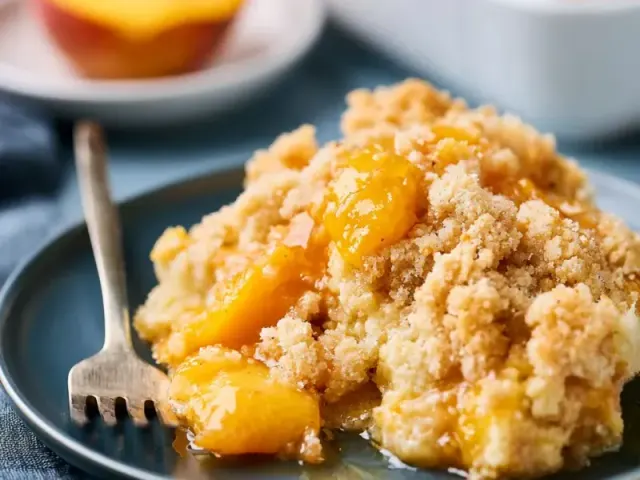
Classic Peach Cobbler with a Buttermilk Biscuit Topping
There's a moment, about 35 minutes into baking, when the kitchen fills with the scent of caramelized peaches and toasted butter. The biscuit topping turns a deep amber, and the fruit syrup starts to bubble up around the edges, thick and glossy. That's when you know it's right.

This classic peach cobbler is built on a simple ratio: three parts fruit to one part sugar, plus a tangy buttermilk biscuit that stays tender on the inside and crisp on top. The method matters more than the ingredients list. Here's how to get it perfect every time.
Choosing the Right Peaches
For the best texture and flavor, use fresh, ripe but firm peaches. They should yield slightly to pressure at the stem end but not feel mushy. Freestone peaches are easiest to slice — the pit comes away cleanly. If you can only find clingstone, just slice around the pit. The skin can stay on or be peeled; I prefer peeling for a smoother texture. To peel easily, score a small X on the bottom of each peach, blanch in boiling water for 30 seconds, then plunge into ice water. The skin slips right off.
The Thickener Balance
Peaches release a lot of juice as they bake. Cornstarch is my thickener of choice because it creates a clear, glossy syrup without clouding the flavor. The ratio is 2 tablespoons cornstarch per 6 cups of sliced fruit. If you use frozen peaches, increase to 3 tablespoons. Let the fruit sit with the sugar and cornstarch for a full 10-15 minutes before baking — this step hydrates the starch and prevents lumps.
Building the Biscuit Topping
Cold butter is non-negotiable. Cut it into cubes and keep it in the fridge until you're ready. When you cut the butter into the flour, you're creating small pockets of fat that will steam and separate in the oven, giving you flaky layers. Stop when the mixture looks like coarse sand with a few pea-sized butter bits remaining. Overworking creates a tough biscuit.
Buttermilk adds acidity, which reacts with the baking soda to create lift and a tender crumb. If you don't have buttermilk, make a quick substitute: add 1 tablespoon lemon juice or white vinegar to a measuring cup, then fill to the 3/4 cup mark with whole milk. Let it sit for 5 minutes before using.
A Note on Pan Size
A 9x13-inch baking dish is ideal. It gives enough surface area for the fruit to cook evenly and the topping to brown. A deeper dish will result in a longer bake time and a risk of undercooked topping. If you use an 8x8-inch dish, reduce the fruit to 4 cups and halve the topping recipe, and expect about 35 minutes of baking.