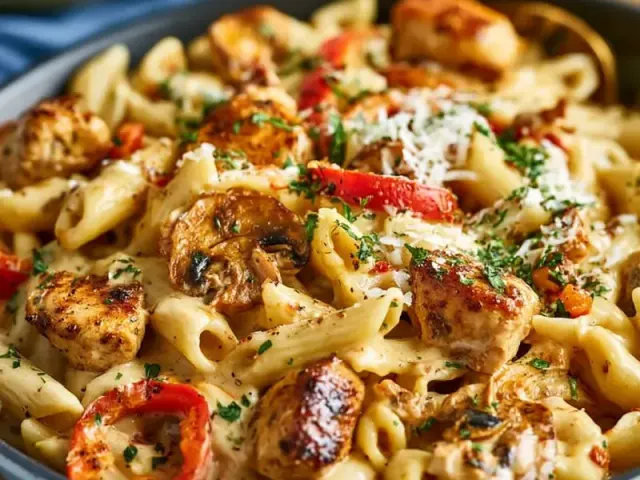
Creamy Cajun Chicken Pasta Recipe for Weeknights
When the skillet hits the heat, the first thing you'll smell is garlic hitting butter. Then the Cajun seasoning – a tangle of paprika, cayenne, oregano, and thyme – blooms into something darker, deeper. This isn't just creamy pasta with a dusting of red spice. It's a one-pan meal where the sauce builds from the pan drippings, the vegetables soften into the cream, and every bite of chicken carries that blistered, blackened edge.

Why This Method Works
Most creamy Cajun pasta recipes dump the seasoning into the cream and hope for the best. That gives you a sauce that tastes raw and powdery. I bloom the spice blend in butter after the aromatics have softened. Blooming – heating dry spices in fat for about 45 seconds – releases their essential oils and toasts the paprika and cayenne just enough to remove the raw edge. The result is a sauce that tastes complex, not dusty.
The Chicken: Don't Skip the Pound
Chicken breasts of uneven thickness cook unevenly. The thin end dries out while the thick end stays underdone. Pound each breast between two sheets of plastic wrap to an even ½-inch thickness. You'll get a consistent sear in exactly 4 minutes per side over medium-high heat. Use an instant-read thermometer: 160°F is your pull temperature. Carryover cooking will take it to a safe 165°F while it rests.
The Sauce Order Matters
After the chicken rests, you build the sauce in the same pan. Onion and bell pepper first – let them soften until the onion turns translucent and the pepper strips start to char at the edges. That char adds a subtle sweetness that balances the heat. Then garlic, just 30 seconds, then the Cajun seasoning. Stir it constantly. You'll see the color deepen from brick red to a richer mahogany. That's the bloom.
Chicken broth goes in next. Scrape up every browned bit from the bottom – that's concentrated flavor from the chicken sear. Let the broth reduce by half before adding the cream. This step concentrates the broth and prevents the final sauce from being watery.
Cooking the Pasta in the Sauce
Drop the dry pasta directly into the cream sauce. Don't cook it separately. The pasta releases starch as it simmers, which thickens the sauce naturally and helps it cling to every piece. Use a 12-inch skillet with high sides – a Dutch oven works too. The sauce should just cover the pasta. If it looks too thick, add a splash of warm water or broth. Stir twice during cooking to prevent sticking. When the pasta is al dente, the sauce will be thick enough to coat the back of a spoon without being gloppy.
Finishing Touches That Matter
Take the pan off the heat before adding Parmesan. If you add it over a direct flame, the cheese can seize and turn grainy. Stir it in gently until melted, then add the sliced chicken and any juices from the resting plate. Let the dish rest for two minutes – this lets the sauce settle and the flavors marry. A squeeze of lemon juice at the end cuts through the richness without making it taste sour. Fresh parsley adds a green note that breaks up the deep red-brown of the sauce.
Common Mistake: Overcooking the Cream
Heavy cream can handle a simmer, but not a hard boil. If you see large bubbles breaking the surface, the cream is boiling and the fat will start to separate. Keep the heat at medium-low after adding cream. You want small, lazy bubbles around the edges of the pan. If you need to speed things up, cover the pan – the trapped steam will cook the pasta without scorching the sauce.
Make It Your Own
This recipe works with any short pasta – penne, rigatoni, or cavatappi. For a leaner version, swap half the cream for evaporated milk (not sweetened condensed). The sauce will be thinner but still creamy. Add a handful of spinach in the last two minutes of cooking if you want extra greens. And if you prefer more vegetables, toss in sliced mushrooms with the onion and bell pepper.
The Takeaway: The difference between good creamy Cajun chicken pasta and great one is in the bloom. Take the extra 45 seconds to toast the spice blend in butter, and the whole dish lifts. Everything else – the even chicken, the reduced broth, the pasta cooked in the sauce – builds on that one moment of attention. It's a weeknight dinner that tastes like you spent twice the time.
Frequently Asked Questions
Can I use milk instead of heavy cream?
You can, but the sauce will be thinner and may curdle if you boil it. For a better substitute, use half-and-half or a mix of 1 cup whole milk plus 2 tablespoons melted butter. Add it at the end off heat to prevent curdling.
How do I make this pasta less spicy?
The heat comes from the cayenne in the Cajun seasoning. Use a mild Cajun blend or reduce the amount to 1½ tablespoons. You can also add 2 tablespoons of tomato paste with the garlic for sweetness that balances heat without changing the texture.
Why did my cream sauce turn grainy?
Grainy sauce usually means the cream was boiled too hard or the Parmesan was added too quickly over high heat. Keep the heat at a gentle simmer after adding cream, and stir in Parmesan off heat. Pre-shredded cheese contains anti-caking agents that can cause graininess – grate your own from a block for the smoothest result.
Creamy Cajun Chicken Pasta

A one-pan weeknight pasta with juicy blackened chicken and a velvety cream sauce, finished with bell peppers and Parmesan. The secret is blooming the Cajun spice in butter before adding liquid.
- 12-inch heavy-bottomed skillet or Dutch oven
- tongs
- wooden spoon
- chef's knife
- cutting board
- measuring spoons
- instant-read thermometer
- 1 ½ lbs boneless skinless chicken breasts (about 2 large, pounded to even ½-inch thickness)
- 1 tablespoon olive oil
- 2 teaspoons kosher salt (divided)
- 1 teaspoon black pepper (divided)
- 2 tablespoons unsalted butter
- 1 medium yellow onion (finely diced (about 1 cup))
- 1 red bell pepper (thinly sliced (about 1 cup))
- 3 cloves garlic (minced)
- 3 tablespoons homemade or store-bought Cajun seasoning (see note)
- 1 cup low-sodium chicken broth
- 1 ½ cups heavy cream
- 8 oz dried penne or rigatoni
- ½ cup freshly grated Parmesan cheese (about 2 oz)
- 2 tablespoons fresh parsley (chopped)
- 1 teaspoon fresh lemon juice (optional, to brighten)
- Season chicken breasts all over with 1 teaspoon salt and ½ teaspoon pepper. Heat olive oil in a 12-inch heavy skillet over medium-high until shimmering. Add chicken and cook 4-5 minutes per side until golden brown and internal temperature reaches 160°F (carryover will take it to 165°F). Transfer to a plate; tent with foil.
- Reduce heat to medium. Add butter to the skillet. Once melted, add onion and bell pepper. Cook 4 minutes, stirring occasionally, until softened and lightly browned.
- Add garlic and cook 30 seconds until fragrant. Sprinkle Cajun seasoning over the vegetables and stir constantly for 45 seconds until the spices become fragrant and slightly darker – this is the bloom that deepens flavor and removes raw spice powder taste.
- Pour in chicken broth. Scrape up any browned bits from the bottom of the pan. Bring to a simmer and let reduce by half, about 2 minutes.
- Add heavy cream and remaining 1 teaspoon salt and ½ teaspoon pepper. Stir to combine. Bring to a gentle simmer, then add the dry pasta. Reduce heat to medium-low, cover, and cook 10-12 minutes, stirring twice, until pasta is al dente and sauce has thickened enough to coat the back of a spoon. If the sauce gets too thick before pasta is done, add a splash of warm water or broth.
- While pasta cooks, slice the rested chicken into ½-inch strips.
- Remove skillet from heat. Stir in Parmesan until melted. Add sliced chicken and any accumulated juices. Toss gently to combine. Let rest 2 minutes for sauce to settle.
- Stir in parsley and lemon juice if using. Serve immediately.
Storage: Refrigerate leftovers in an airtight container for up to 3 days. Reheat gently on the stovetop with a splash of milk or broth to loosen the sauce; avoid microwaving on high as cream sauce can break. Freezing is not recommended because the cream sauce may separate upon thawing. For a lighter version, substitute half the cream with evaporated milk (not sweetened condensed) – the sauce will be thinner but still creamy. Common allergens: dairy (butter, cream, Parmesan); gluten (pasta – use gluten-free pasta and check Cajun seasoning blend). Always check internal temperature of chicken with an instant-read thermometer; 165°F is safe. Handle the hot skillet with oven mitts when stirring.
Recipe: Creamy Cajun Chicken Pasta
Equipment
- 12-inch heavy-bottomed skillet or Dutch oven
- tongs
- wooden spoon
- chef's knife
- cutting board
- measuring spoons
- instant-read thermometer
Ingredients
- 1 ½ lbs boneless skinless chicken breasts (about 2 large, pounded to even ½-inch thickness)
- 1 tablespoon olive oil
- 2 teaspoons kosher salt (divided)
- 1 teaspoon black pepper (divided)
- 2 tablespoons unsalted butter
- 1 medium yellow onion (finely diced (about 1 cup))
- 1 red bell pepper (thinly sliced (about 1 cup))
- 3 cloves garlic (minced)
- 3 tablespoons homemade or store-bought Cajun seasoning (see note)
- 1 cup low-sodium chicken broth
- 1 ½ cups heavy cream
- 8 oz dried penne or rigatoni
- ½ cup freshly grated Parmesan cheese (about 2 oz)
- 2 tablespoons fresh parsley (chopped)
- 1 teaspoon fresh lemon juice (optional, to brighten)
Instructions
- Season chicken breasts all over with 1 teaspoon salt and ½ teaspoon pepper. Heat olive oil in a 12-inch heavy skillet over medium-high until shimmering. Add chicken and cook 4-5 minutes per side until golden brown and internal temperature reaches 160°F (carryover will take it to 165°F). Transfer to a plate; tent with foil.
- Reduce heat to medium. Add butter to the skillet. Once melted, add onion and bell pepper. Cook 4 minutes, stirring occasionally, until softened and lightly browned.
- Add garlic and cook 30 seconds until fragrant. Sprinkle Cajun seasoning over the vegetables and stir constantly for 45 seconds until the spices become fragrant and slightly darker – this is the bloom that deepens flavor and removes raw spice powder taste.
- Pour in chicken broth. Scrape up any browned bits from the bottom of the pan. Bring to a simmer and let reduce by half, about 2 minutes.
- Add heavy cream and remaining 1 teaspoon salt and ½ teaspoon pepper. Stir to combine. Bring to a gentle simmer, then add the dry pasta. Reduce heat to medium-low, cover, and cook 10-12 minutes, stirring twice, until pasta is al dente and sauce has thickened enough to coat the back of a spoon. If the sauce gets too thick before pasta is done, add a splash of warm water or broth.
- While pasta cooks, slice the rested chicken into ½-inch strips.
- Remove skillet from heat. Stir in Parmesan until melted. Add sliced chicken and any accumulated juices. Toss gently to combine. Let rest 2 minutes for sauce to settle.
- Stir in parsley and lemon juice if using. Serve immediately.