Easy Cinnamon Coffee Cake with Perfect Crumb Topping
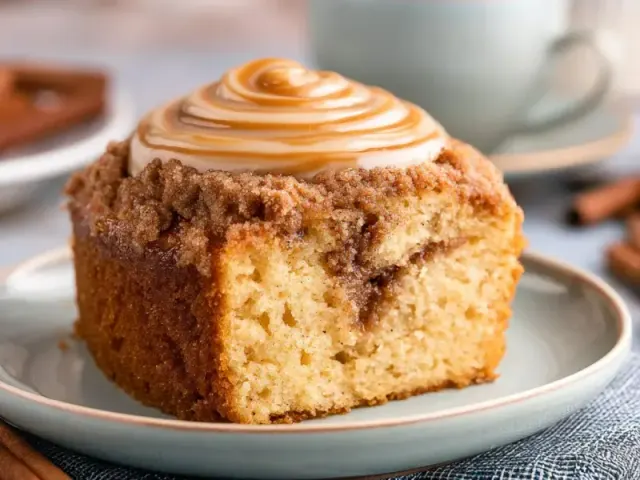
The first thing you notice when this cake comes out of the oven is the smell. Warm cinnamon, butter, and something almost caramel-like from the brown sugar in the streusel. The top is a thick, craggy layer of crumb — not a shy sprinkle, but a generous blanket that cracks and crumbles as you cut into it.

I make this cake often, and I've learned that the quality of the crumb topping makes or breaks the whole thing. Too dry, and it falls off. Too wet, and it sinks into the batter. The ratio I keep at 2:1:1 — two parts flour, one part butter, one part sugar (by weight). That gives you clumps that hold their shape during baking but stay tender and sandy when you bite into them.
The Crumb Topping: Getting the Texture Right
Start by whisking the dry ingredients for the topping together. Use a fork, not a spoon, to stir in the melted butter. You want to see distinct clumps, from pea-sized to walnut-sized. If the mixture looks like wet sand, add another tablespoon of flour. If it's powdery and dry, drizzle in a teaspoon more butter. The clumps should hold together when pinched but break apart easily.
Set the topping aside while you make the cake batter. This gives the flour time to absorb the butter, which helps the crumbs stay distinct in the oven.
The Cake Batter: Room Temperature Matters
For a tender, even crumb, every ingredient that comes from the fridge needs to sit out for about 30 minutes. Cold butter won't cream properly with the sugar, and cold sour cream will seize the batter, leaving you with dense patches. I set the egg, sour cream, and milk on the counter before I even measure the flour.
Cream the butter and sugar until the mixture is pale and fluffy — about 2 to 3 minutes on medium speed. You're building the structure here. Scrape the bowl once during this step. Add the egg and vanilla, then the sour cream. The batter may look a little curdled at this point; that's the sour cream separating from the fat, and it will come back together once you add the flour.
Add the dry ingredients in three additions, alternating with the milk. Start and end with the flour. Mix only until the last streak disappears. Overmixing develops gluten, which makes the cake tough instead of tender.