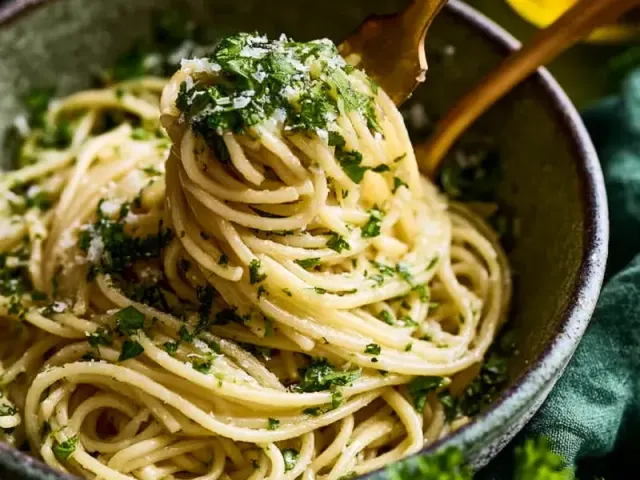
Easy Garlic Butter Pasta in 10 Minutes
The smell of garlic hitting warm butter is one of those kitchen moments that stops me mid-step every time. It's sharp at first, then softens into something rich and nutty. And when that butter wraps around a tangle of hot pasta, with a little salty cheese and a flick of red pepper? That's a weeknight win in under 10 minutes.

But easy doesn't mean sloppy. A great garlic butter pasta isn't greasy or bland. The sauce should cling to every strand, not pool in the bottom of the bowl. The garlic should be golden and mellow, never scorched or bitter. And the whole thing needs to come together faster than you can decide what to watch on Netflix.
Here's how I do it — with a technique that turns simple ingredients into a silky, satisfying meal.
Why This Method Works
The secret to a non-greasy garlic butter sauce is emulsification. Butter is mostly fat, and pasta water is mostly starch. When you combine them with heat and vigorous tossing, the starch molecules grab onto the fat molecules and suspend them in a creamy, stable sauce. No separation. No slick of butter sitting on top.
I keep the ratio at about 3 tablespoons of butter to 1/2 cup of pasta water for 8 ounces of pasta. That gives you enough sauce to coat every strand without making it heavy. If you double the recipe, double the butter but only increase the water by half — you can always add more.
Choose the Right Pasta
Long, thin shapes are your best friend here. Spaghetti, linguine, or angel hair all work beautifully because the sauce clings evenly to their surface. Short shapes like penne or rigatoni can work, but you'll need to toss them longer in the skillet to get the same coating.
Cook the pasta 1 minute shy of the package's al dente time. It will finish cooking in the sauce, absorbing flavor and releasing more starch into the pan. That extra starch helps thicken the sauce even further.
How to Build the Sauce
Step 1: Slice, Don't Mince
Thinly slice the garlic cloves instead of mincing them. Sliced garlic releases its flavor more gently and is less likely to burn in the hot butter. Aim for even slices about 1/16-inch thick — thin enough to soften quickly, but thick enough to handle a minute in the pan without turning black.
Step 2: Low and Slow Butter
Melt the butter over medium-low heat. You want it to foam gently, not sizzle aggressively. If the butter browns before the garlic goes in, your heat is too high. The foam means the butter's water content is evaporating, which concentrates its flavor. Let it foam for about 30 seconds before adding the garlic.