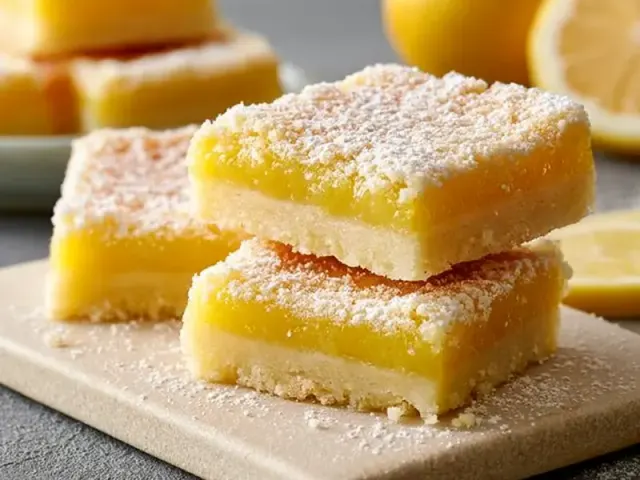
Easy Lemon Bars with a Perfectly Tangy Filling
There’s something about that first bite of a lemon bar—the way the buttery shortbread crust shatters, then gives way to a smooth, tart-sweet filling that practically hums with citrus. For years, I chased the perfect ratio: a crust that holds together without being tough, a filling that slices cleanly without being gummy. This version nails it. The trick is in the balance of flour to butter in the crust and the precise amount of flour in the filling to keep it silky, not stiff.

Why This Ratio Works
The crust here uses a 3:1 ratio of flour to butter by weight (190g flour to 170g butter). That’s enough butter to make it tender, but not so much that it shrinks or turns greasy. The confectioners’ sugar in the crust adds a subtle sweetness and a finer crumb than granulated sugar would. For the filling, I keep the flour at just ⅓ cup—enough to set the eggs and lemon juice without making it pasty. The eggs provide structure, the sugar balances the acid, and the flour acts as a gentle stabilizer. This is the same technique I use for a classic lemon curd, but baked into a bar form.
Key Techniques for a Perfect Crust
Cold butter is non-negotiable here. Cut it into small cubes and work it into the dry ingredients quickly with your fingertips or a pastry blender. You want some pea-sized bits of butter remaining—those melt during baking, creating steam pockets that give the crust a light, short texture. Press the dough evenly into the pan. I use the bottom of a flat measuring cup to get an even layer. Pre-bake the crust until the edges are just turning golden, about 18-20 minutes. A pale crust will turn soggy once the filling is added.
The Filling: Smooth and Set
Whisk the eggs and sugar first until they’re thick and pale—this incorporates air and helps the filling set up evenly. Then add the flour, lemon zest, and juice. The mixture will be thin, almost like a loose batter. Don’t whisk too vigorously after adding the flour; you just want it smooth, not aerated. Pour it over the warm crust. The warmth helps the filling start setting from the bottom up, preventing a soggy layer. Bake until the center is just set—it should wobble slightly when you jiggle the pan, but not ripple like liquid. If you see bubbles forming on the surface, you’ve overbaked it slightly; they’ll still taste good, but the texture will be less silky.
Cooling and Slicing Without the Mess
Let the bars cool completely at room temperature first, then refrigerate for at least 2 hours. This step is crucial: the filling needs time to firm up fully. I often make these a day ahead and let them chill overnight. When you’re ready to slice, lift the entire block out using the parchment overhang. Use a large chef’s knife and wipe the blade clean between each cut. For the prettiest presentation, dust with confectioners’ sugar just before serving—if you do it too early, the sugar will dissolve into the filling.
Common Mistakes and How to Avoid Them
Mistake #1: A soggy crust. This happens if you don’t pre-bake the crust long enough or if you pour the filling onto a hot crust that hasn’t cooled slightly. Let the crust rest for 5 minutes after baking.
Mistake #2: A rubbery filling. Overbaking causes the eggs to toughen. Pull the bars when the center is just set, not firm. Residual heat will finish the cooking as they cool.
Mistake #3: Cloudy or dull flavor. Bottled lemon juice is the culprit. Fresh-squeezed juice gives that bright, clean tartness. Zest the lemons before juicing—you’ll get the oils from the zest, which carry intense lemon flavor.
Variations to Try
Once you have the basic method down, you can play with the flavor. Swap half the lemon juice for lime juice for a key lime bar. Add a teaspoon of lavender buds to the crust for a floral note. Or top the cooled bars with a thin layer of white chocolate ganache for extra richness. The base ratio stays the same.
Takeaway
These easy lemon bars deliver the bright, tangy flavor and tender texture you’re after, without fussy steps or special equipment. The key is respecting the ratios and the cooling time. Make them for a spring brunch, a summer picnic, or just because a little citrus can brighten any day.
Frequently Asked Questions
Why did my lemon bars turn out runny?
The most common cause is underbaking. The filling should be just set in the center—it will still jiggle slightly but not be liquid. Also, be sure to measure your flour correctly (spoon and level, not scoop) and use fresh lemon juice, not bottled, for the right acidity and pectin balance.
Can I use bottled lemon juice?
I recommend fresh lemon juice for the brightest flavor. Bottled juice often has preservatives and a duller taste. If you're in a pinch, you can use it, but the bars won't have that same vibrant, tangy kick.
How do I get clean, neat slices?
Chill the bars thoroughly—at least 2 hours in the fridge. Lift them out using the parchment overhang, then use a large, sharp chef's knife. Wipe the blade clean with a damp paper towel between each cut. For extra precision, you can dip the knife in hot water and dry it before slicing.
Can I make lemon bars ahead of time?
Absolutely. They actually taste better the next day after the flavors meld. Bake, cool, and refrigerate uncovered for 1 hour, then cover and keep chilled for up to 2 days before serving. Dust with sugar just before serving.
Easy Lemon Bars

A simple, foolproof recipe for lemon bars with a buttery shortbread crust and a bright, tangy lemon filling that sets up perfectly for clean slices.
- 9x13-inch baking pan
- mixing bowls
- electric mixer or whisk
- zester
- juicer
- fine-mesh strainer
- parchment paper
- For the crust: 1 ½ cups (190g all-purpose flour)
- ½ cup 60g confectioners' sugar
- ¾ cup 170g unsalted butter, cold and cut into small cubes
- ¼ teaspoon salt
- For the filling: 4 large eggs (room temperature)
- 1 ⅓ cups 265g granulated sugar
- ⅓ cup 45g all-purpose flour
- 1 tablespoon lemon zest (from 2-3 lemons)
- ⅔ cup 160ml fresh lemon juice (from 4-5 lemons)
- ¼ teaspoon salt
- For dusting: 2-3 tablespoons confectioners' sugar
- Preheat your oven to 350°F (175°C). Line a 9x13-inch baking pan with parchment paper, leaving overhang on two sides for easy lifting.
- Make the crust: In a medium bowl, whisk together the flour, confectioners' sugar, and salt. Cut in the cold butter using a pastry blender or your fingertips until the mixture resembles coarse meal with pea-sized butter bits. Press evenly into the prepared pan. Bake for 18-20 minutes, until the edges are just golden. Remove and let cool for 5 minutes.
- Meanwhile, make the filling: In a large bowl, whisk the eggs until frothy. Add the granulated sugar and whisk until thick and pale, about 1 minute. Whisk in the flour, lemon zest, lemon juice, and salt until smooth. The mixture will be thin—that’s correct.
- Pour the filling over the warm crust. Bake for 20-25 minutes, until the center is just set and no longer jiggles when you tap the pan. The edges should be lightly golden.
- Cool completely in the pan on a wire rack, then refrigerate for at least 2 hours (or overnight) for clean slicing. Lift out using the parchment, dust with confectioners' sugar, and cut into squares.
Storage: Keep lemon bars in an airtight container in the refrigerator for up to 5 days. For longer storage, freeze the bars (without sugar dusting) between layers of parchment paper for up to 3 months. Dust with sugar after thawing. Common allergens: Contains wheat (gluten), dairy, and eggs. For a dairy-free option, substitute the butter with a high-quality vegan butter stick (not spreadable margarine). For a gluten-free version, use a 1:1 gluten-free flour blend in both crust and filling—be sure to let the bars set fully in the fridge. Always use a sharp knife and clean it between cuts for neat edges. The filling is acidic; avoid using aluminum pans to prevent a metallic taste.
Recipe: Easy Lemon Bars
Equipment
- 9x13-inch baking pan
- mixing bowls
- electric mixer or whisk
- zester
- juicer
- fine-mesh strainer
- parchment paper
Ingredients
- For the crust: 1 ½ cups (190g all-purpose flour)
- ½ cup 60g confectioners' sugar
- ¾ cup 170g unsalted butter, cold and cut into small cubes
- ¼ teaspoon salt
- For the filling: 4 large eggs (room temperature)
- 1 ⅓ cups 265g granulated sugar
- ⅓ cup 45g all-purpose flour
- 1 tablespoon lemon zest (from 2-3 lemons)
- ⅔ cup 160ml fresh lemon juice (from 4-5 lemons)
- ¼ teaspoon salt
- For dusting: 2-3 tablespoons confectioners' sugar
Instructions
- Preheat your oven to 350°F (175°C). Line a 9x13-inch baking pan with parchment paper, leaving overhang on two sides for easy lifting.
- Make the crust: In a medium bowl, whisk together the flour, confectioners' sugar, and salt. Cut in the cold butter using a pastry blender or your fingertips until the mixture resembles coarse meal with pea-sized butter bits. Press evenly into the prepared pan. Bake for 18-20 minutes, until the edges are just golden. Remove and let cool for 5 minutes.
- Meanwhile, make the filling: In a large bowl, whisk the eggs until frothy. Add the granulated sugar and whisk until thick and pale, about 1 minute. Whisk in the flour, lemon zest, lemon juice, and salt until smooth. The mixture will be thin—that’s correct.
- Pour the filling over the warm crust. Bake for 20-25 minutes, until the center is just set and no longer jiggles when you tap the pan. The edges should be lightly golden.
- Cool completely in the pan on a wire rack, then refrigerate for at least 2 hours (or overnight) for clean slicing. Lift out using the parchment, dust with confectioners' sugar, and cut into squares.