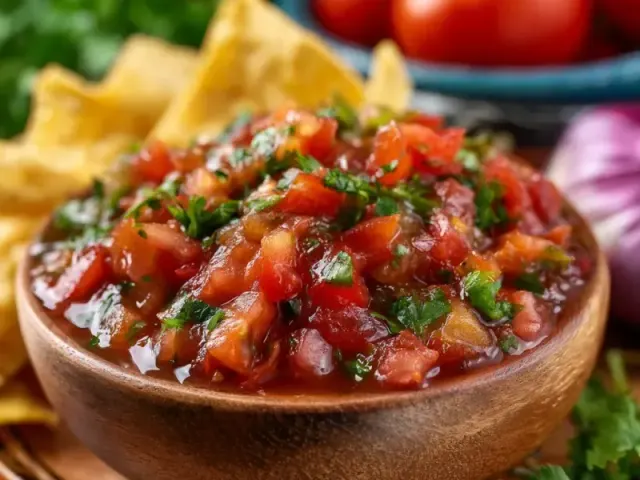
Freezer Tomato Salsa: A Bold, Fresh-Tasting Make-Ahead Staple
The first time I pulled a container of last summer’s salsa from the freezer in January, I was skeptical. Would it taste like a sad, watery shadow of the original? But one bite changed my mind. The tomatoes had given up some of their liquid, yes, but the flavor—bright, bold, and still a little smoky—was all there. That’s the power of a good technique. This freezer tomato salsa isn’t just a backup plan; it’s a deliberate way to preserve summer’s best tomatoes without the hassle of canning.

Why This Method Works
Freezing salsa is simple, but a few key decisions separate a vibrant result from a mushy one. The biggest issue with frozen salsa is water. Tomatoes are mostly water, and freezing breaks down cell walls, releasing that liquid. If you just chop and freeze fresh salsa, you end up with a soggy, diluted mess. My method solves that with two moves: a quick simmer to concentrate flavors and a strain after cooking to remove excess liquid. The result is a salsa that, once thawed, has a thick, chunky texture and a concentrated tomato taste.
The Ratio That Matters
I keep the ratio at about 4 parts tomatoes to 1 part alliums (onion, garlic, and peppers combined). That might seem heavy on the aromatics, but it’s intentional. Freezing dulls flavors slightly, so starting with a bolder mix ensures the thawed salsa still has punch. For 2 pounds of tomatoes, that means 1 medium onion, 2 jalapeños, and 3 cloves of garlic. The tomato paste is my secret weapon: just 1/4 cup adds depth and helps thicken the salsa without making it taste cooked or pasty.
Key Technique: The Simmer-and-Strain
Don’t skip the brief cooking step. It’s not about fully cooking the salsa—it’s about reducing the liquid. Here’s the exact process:
- Cook the onion, garlic, and jalapeño in olive oil until softened but not browned (about 3-4 minutes).
- Add the chopped tomatoes and seasonings. Bring to a gentle simmer—you want small bubbles, not a rolling boil.
- Simmer for 8-10 minutes, stirring occasionally. The tomatoes will break down and the mixture will visibly thicken. Look for the liquid to reduce by about a third; you should see the bottom of the pan when you stir.
- Remove from heat and stir in tomato paste. Let cool completely.
- Pour the mixture into a fine-mesh strainer set over a bowl. Let it drain for 5 minutes, then gently press with a spatula to push out more liquid. Don’t press too hard—you want to remove excess water, not all the flavor. You’ll end up with about 1/3 to 1/2 cup of liquid discarded.
This step is non-negotiable. Without it, your salsa will be watery after thawing. The drained liquid can be saved for another use, like adding to soups or a bloody mary mix.
Common Mistakes to Avoid
- Using overripe tomatoes: They’re too soft and watery. Roma tomatoes are ideal because they’re meaty and low-moisture.
- Overcooking: More than 10 minutes of simmering can turn the salsa into a sauce. You want it to thicken, not become a paste.
- Skipping the cool-down: Adding lime juice and cilantro to hot salsa will dull their brightness. Always let the mixture cool to room temperature before stirring them in.
- Freezing in too-large containers: Salsa expands when frozen. Leave at least 1/2 inch of headspace in your container. I prefer smaller containers (1-2 cup sizes) so I can thaw only what I need.
How to Thaw and Serve
The best way to thaw is overnight in the refrigerator. This slow thaw helps the salsa reabsorb some of its remaining liquid and keeps the texture more consistent. After thawing, give it a good stir. If it seems a bit thick, you can add a tablespoon of fresh lime juice or water to loosen it. The flavor will be just as bright as the day you made it, with a slightly softer texture—perfect for scooping with chips or spooning over tacos.
Takeaway
Freezer tomato salsa is a game-changer for anyone who loves homemade salsa but doesn’t want to deal with canning. The key is in the prep: a quick simmer to concentrate flavor, a strain to remove excess liquid, and a careful freeze. Follow these steps, and you’ll have a stash of bold, fresh-tasting salsa ready for months. No watery disappointments, just pure tomato goodness.
Frequently Asked Questions
Can I use any type of tomato for freezer salsa?
Roma tomatoes work best because they have less water and more flesh, which means a thicker salsa after freezing. You can use other varieties, but you may need to drain them longer or add a bit more tomato paste to compensate for extra moisture.
Why do I need to cook the salsa before freezing?
Cooking the salsa serves two purposes: it concentrates the flavors by reducing excess liquid, and it deactivates enzymes that can cause off-flavors and mushiness during freezing. A quick simmer ensures your salsa tastes fresh, not bland, after months in the freezer.
How long does freezer tomato salsa last?
Properly stored in airtight containers, freezer tomato salsa maintains its best quality for up to 3 months. After that, the flavor may start to fade, but it will still be safe to eat if kept at a constant 0°F (-18°C).
Why does my frozen salsa turn watery?
Watery salsa is usually from not draining enough liquid before freezing. Tomatoes naturally release water when cooked and frozen. My method of straining after cooking and adding tomato paste helps control the texture. Also, thawing in the refrigerator (not at room temperature) helps minimize separation.
Freezer Tomato Salsa

A bold, chunky salsa made from fresh tomatoes and aromatics, then frozen to lock in bright flavor. Perfect for make-ahead meals and parties.
- large skillet
- cutting board
- chef's knife
- wooden spoon
- fine-mesh strainer
- glass or plastic freezer containers
- measuring cups and spoons
- 2 pounds ripe Roma tomatoes (about 8-10, cored and roughly chopped)
- 1 medium white onion (finely diced)
- 2 jalapeño peppers (seeded and minced (leave seeds for heat if desired))
- 3 cloves garlic (minced)
- 1/2 cup fresh cilantro (finely chopped)
- 1/4 cup fresh lime juice (from about 2 limes)
- 1 teaspoon kosher salt
- 1/2 teaspoon ground cumin
- 1/4 teaspoon smoked paprika (optional)
- 1/4 cup tomato paste (see note)
- 1 tablespoon olive oil
- Heat olive oil in a large skillet over medium-high heat until shimmering. Add onion and cook, stirring occasionally, until translucent, about 3 minutes.
- Add garlic and jalapeño; cook for 1 minute until fragrant, stirring constantly to avoid burning.
- Add chopped tomatoes, salt, cumin, and smoked paprika (if using). Stir to combine. Bring to a gentle simmer, then reduce heat to medium-low.
- Cook for 8-10 minutes, stirring occasionally, until the tomatoes have broken down and the mixture has thickened slightly. The liquid should reduce by about one-third.
- Remove from heat. Stir in tomato paste until fully incorporated. This is my key step: tomato paste adds concentrated tomato flavor and helps the salsa maintain a thick, not watery, texture after freezing.
- Let the mixture cool to room temperature, about 20-30 minutes. Stir in lime juice and cilantro.
- Transfer to a fine-mesh strainer set over a bowl. Let drain for 5 minutes, gently pressing with a spatula to remove excess liquid. Discard the liquid or save it for another use (like a bloody mary).
- Pack the drained salsa into freezer-safe containers, leaving 1/2-inch headspace. Seal and label with the date. Freeze for up to 3 months.
- To thaw, place the container in the refrigerator overnight. Stir well before serving. The texture will be slightly softer than fresh, but the flavor remains bright and bold.
Storage: Freeze for up to 3 months. Thaw in the refrigerator overnight. Do not refreeze after thawing.
Serving: Serve with tortilla chips, on tacos, or as a topping for eggs or grilled meats.
Substitutions: For a milder salsa, use only one jalapeño or substitute a poblano pepper. For a smokier flavor, add a chipotle pepper in adobo sauce (minced) along with the garlic.
Allergens: This recipe is naturally free of common allergens (dairy, eggs, gluten, nuts). If you have specific dietary concerns, consult a qualified professional for personalized advice.
Safety: Use a sharp knife and a stable cutting board when chopping peppers and tomatoes. Wash hands thoroughly after handling jalapeños, and avoid touching your eyes.
Recipe: Freezer Tomato Salsa
Equipment
- Large skillet
- cutting board
- chef's knife
- wooden spoon
- fine-mesh strainer
- glass or plastic freezer containers
- measuring cups and spoons
Ingredients
- 2 pounds ripe Roma tomatoes (about 8-10, cored and roughly chopped)
- 1 medium white onion (finely diced)
- 2 jalapeño peppers (seeded and minced (leave seeds for heat if desired))
- 3 cloves garlic (minced)
- 1/2 cup fresh cilantro (finely chopped)
- 1/4 cup fresh lime juice (from about 2 limes)
- 1 teaspoon kosher salt
- 1/2 teaspoon ground cumin
- 1/4 teaspoon smoked paprika (optional)
- 1/4 cup tomato paste (see note)
- 1 tablespoon olive oil
Instructions
- Heat olive oil in a large skillet over medium-high heat until shimmering. Add onion and cook, stirring occasionally, until translucent, about 3 minutes.
- Add garlic and jalapeño; cook for 1 minute until fragrant, stirring constantly to avoid burning.
- Add chopped tomatoes, salt, cumin, and smoked paprika (if using). Stir to combine. Bring to a gentle simmer, then reduce heat to medium-low.
- Cook for 8-10 minutes, stirring occasionally, until the tomatoes have broken down and the mixture has thickened slightly. The liquid should reduce by about one-third.
- Remove from heat. Stir in tomato paste until fully incorporated. This is my key step: tomato paste adds concentrated tomato flavor and helps the salsa maintain a thick, not watery, texture after freezing.
- Let the mixture cool to room temperature, about 20-30 minutes. Stir in lime juice and cilantro.
- Transfer to a fine-mesh strainer set over a bowl. Let drain for 5 minutes, gently pressing with a spatula to remove excess liquid. Discard the liquid or save it for another use (like a bloody mary).
- Pack the drained salsa into freezer-safe containers, leaving 1/2-inch headspace. Seal and label with the date. Freeze for up to 3 months.
- To thaw, place the container in the refrigerator overnight. Stir well before serving. The texture will be slightly softer than fresh, but the flavor remains bright and bold.