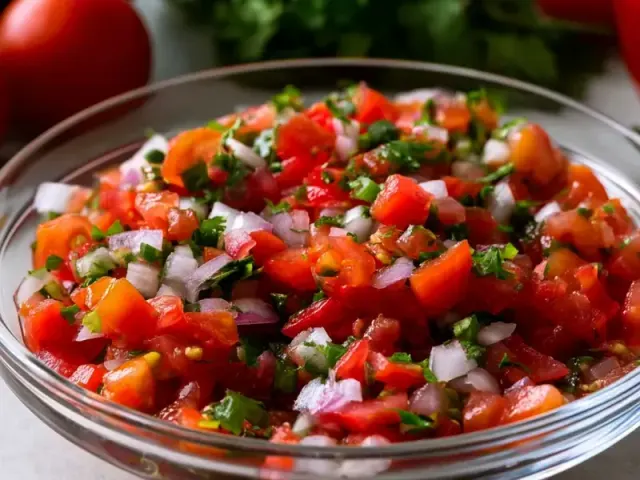
Fresh Tomato Pico de Gallo: My Go-To Ratio for Perfect Chunks
There's a moment when you cut into a perfectly ripe tomato in July—the knife meets just a little resistance, then glides through. The flesh is firm but giving, the skin taut, the scent sweet and earthy. That's the tomato I wait for all year. And when I get it, I make pico de gallo.

Not a watery, sad version that pools on the plate after ten minutes. I mean a pico de gallo where each chunk of tomato holds its shape, the onion has a clean bite, and the lime and cilantro taste like they just met. The trick is in the technique, not the ingredients. You likely already have everything you need.
Choose the Right Tomato
Roma tomatoes are my go-to for pico de gallo. They have fewer seeds, thicker walls, and less jelly than round slicing tomatoes. That means less liquid to deal with from the start. Look for tomatoes that feel heavy for their size and yield slightly to gentle pressure—not mushy, not rock hard. If they smell like a tomato at the stem end, you're in good shape.
If you can only find beefsteak or vine-ripened tomatoes, they work too. Just know you'll need to be extra thorough when removing the seeds and jelly. Cherry tomatoes are too sweet and delicate for a classic pico, in my opinion. Save those for a salad.
The Ratio That Works
I keep the ratio at roughly 4:1:1:1 by volume—tomatoes to onion to jalapeño to cilantro. That's four parts diced tomato, one part chopped white onion, one part chopped jalapeño, and one part chopped cilantro. The lime juice and salt are measured separately. This ratio gives you a balanced pico where no single flavor dominates. You taste the tomato first, then the heat and herb follow.
For a standard batch, that means 4 medium Roma tomatoes (about 1 1/2 pounds), 1/2 cup finely chopped white onion, 2 tablespoons seeded and chopped jalapeño, and 1/2 cup packed cilantro leaves, chopped. Two tablespoons of lime juice and about 1/2 teaspoon of kosher salt finish it.