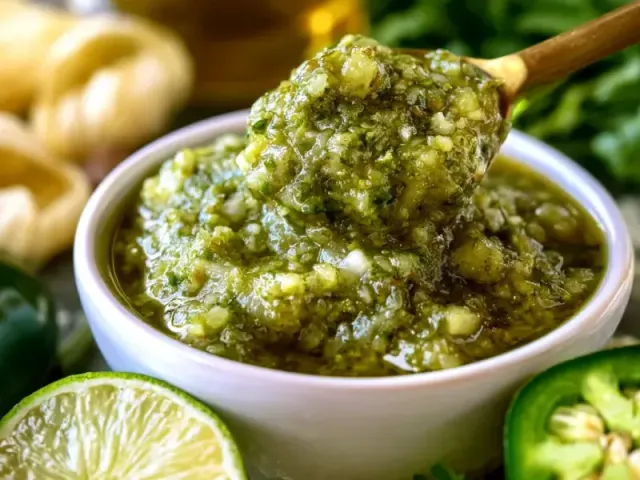
Garden Fresh Salsa Verde – Bright & Easy Weeknight Sauce
There’s a moment in late summer when the tomatillos at the farmers’ market are practically glowing — firm, green, and still wearing their papery husks. That’s when I start craving salsa verde. Not the thin, tangy stuff from a jar, but a real garden fresh salsa verde: roasted, smoky, and so bright it wakes up everything it touches.

This isn’t a complicated sauce. It’s just a handful of vegetables, a hot oven, and a blender. But the technique matters. Roasting the tomatillos, onion, garlic, and jalapeño together concentrates their sweetness and adds a subtle char that raw salsa can’t match. The key ratio I stick to is one pound of tomatillos to one quartered onion and two jalapeños — that gives you a balanced heat with enough body to coat a chip or a taco.
Why Roasting Makes a Difference
Raw tomatillos are tart and a little grassy. Roasting at 425°F for 8 to 10 minutes transforms them. The skins blister, the flesh softens, and the natural sugars caramelize just enough to round out the acidity. You want to see browning on the onion edges and a few dark spots on the tomatillos. That’s where the flavor lives. Don’t skip the olive oil drizzle — it helps the vegetables cook evenly and adds a silky mouthfeel to the finished salsa.
One common mistake: over-roasting. If you leave the tomatillos in too long, they turn mushy and lose that bright, tangy backbone. Set a timer. The garlic should be soft but not burnt — burnt garlic turns bitter and will ruin the whole batch. When in doubt, pull the pan a minute early.
Building the Flavor
After the vegetables cool for a few minutes, they go into the blender with fresh cilantro, lime juice, and salt. I add the cilantro stems too — they’re full of flavor and blend up fine. The cumin is optional, but a quarter teaspoon adds a warm, earthy note that plays nicely with the roasted tomatillos. Don’t over-blend. Pulse until you see small bits of onion and jalapeño. A completely smooth salsa verde loses its rustic appeal and can feel watery on the palate.
If the salsa seems too thick after blending, add cold water one tablespoon at a time. You’re aiming for a consistency that pours slowly — like a thick vinaigrette. Taste and adjust salt and lime. The acidity should hit your tongue first, followed by a gentle heat.
How to Use Salsa Verde
This salsa is incredibly versatile. Spoon it over crispy tacos, drizzle it on scrambled eggs, or serve it alongside grilled chicken or fish. I often double the batch and keep a jar in the fridge for quick weeknight dinners. It’s also excellent as a dressing for a simple salad of shredded cabbage and radishes.
If you prefer a cooked salsa, transfer the blended mixture to a small saucepan and simmer over medium-low heat for 5 minutes. This mellows the raw garlic and melds the flavors into something deeper. I do this when I’m serving it with enchiladas or as a sauce for braised pork.
Storage and Make-Ahead Tips
Store your garden fresh salsa verde in a sealed container in the refrigerator for up to five days. The flavor actually improves after a day or two as the ingredients marry. For longer storage, freeze it in a zip-top bag for up to three months. Thaw in the fridge overnight and stir before using. Do not can this recipe — the low acidity of tomatillos requires pressure canning for safety, and this recipe is designed for fresh use.
Always use a clean spoon when scooping from the jar to prevent spoilage. If you see any mold or off smells, discard the salsa.
The Takeaway
Real garden fresh salsa verde is about technique, not tricks. Roast the vegetables just until charred, blend with a light hand, and season boldly. Once you’ve made it yourself, you’ll never go back to the jarred stuff. It’s that simple — and that good.
Frequently Asked Questions
Can I use canned tomatillos instead of fresh?
Yes, but the flavor will be less bright. Drain a 14-ounce can of tomatillos and skip the roasting step. Combine with fresh onion, garlic, and jalapeño in the blender. The texture will be thinner, so you may want to add a little less water.
How do I make salsa verde less spicy?
Remove the seeds and white membranes from the jalapeños before roasting. For a very mild salsa, use only one jalapeño and replace the second with a small piece of green bell pepper for color.
Can I make this salsa verde ahead of time?
Absolutely. In fact, the flavors meld and improve after a few hours in the fridge. Make it up to 2 days ahead and store covered. Stir before serving.
What’s the best way to husk tomatillos?
Peel off the papery husk — it should come off easily. Rinse the sticky, slightly waxy residue off the fruit under cool water. That sticky coating is natural and washes right off.
Garden Fresh Salsa Verde

A tangy, roasted tomatillo salsa with jalapeño, onion, garlic, and cilantro. Perfect for tacos, nachos, or spooning over eggs.
- baking sheet
- blender or food processor
- chef's knife
- cutting board
- spatula
- small saucepan (optional)
- 1 lb tomatillos (about 6 medium, husked and rinsed)
- 1 medium white onion (quartered)
- 2 cloves garlic (peeled)
- 1-2 jalapeño peppers (stems removed (seeds in for heat, out for mild))
- 1/4 cup fresh cilantro leaves and tender stems
- 1 tablespoon fresh lime juice
- 1/2 teaspoon kosher salt (plus more to taste)
- 1/4 teaspoon ground cumin (optional)
- 1 tablespoon olive oil
- Preheat your oven to 425°F (220°C). Line a baking sheet with parchment or foil for easy cleanup.
- Place the husked tomatillos, quartered onion, garlic cloves, and whole jalapeños on the baking sheet. Drizzle with olive oil and toss gently to coat.
- Roast for 8-10 minutes, until the tomatillos are softened and starting to brown in spots, and the onion edges are charred. The garlic should be fragrant and soft. Let cool for 5 minutes.
- Transfer the roasted vegetables to a blender or food processor. Add cilantro, lime juice, salt, and cumin if using. Pulse until you reach your preferred consistency — I like it slightly chunky with visible bits of onion and jalapeño.
- Taste and adjust salt or lime juice. If the salsa is too thick, add water 1 tablespoon at a time until it flows like a thick sauce.
- Serve warm or at room temperature. For a cooked salsa, transfer to a small saucepan and simmer gently for 5 minutes to meld flavors (optional).
Storage: Keep in an airtight container in the refrigerator for up to 5 days. The flavor deepens overnight. For longer storage, freeze in a zip-top bag for up to 3 months. Common allergens: none. For dietary concerns, consult a qualified professional.
Recipe: Garden Fresh Salsa Verde
Equipment
- baking sheet
- blender or food processor
- chef's knife
- cutting board
- spatula
- small saucepan (optional)
Ingredients
- 1 lb tomatillos (about 6 medium, husked and rinsed)
- 1 medium white onion (quartered)
- 2 cloves garlic (peeled)
- 1-2 jalapeño peppers (stems removed (seeds in for heat, out for mild))
- 1/4 cup fresh cilantro leaves and tender stems
- 1 tablespoon fresh lime juice
- 1/2 teaspoon kosher salt (plus more to taste)
- 1/4 teaspoon ground cumin (optional)
- 1 tablespoon olive oil
Instructions
- Preheat your oven to 425°F (220°C). Line a baking sheet with parchment or foil for easy cleanup.
- Place the husked tomatillos, quartered onion, garlic cloves, and whole jalapeños on the baking sheet. Drizzle with olive oil and toss gently to coat.
- Roast for 8-10 minutes, until the tomatillos are softened and starting to brown in spots, and the onion edges are charred. The garlic should be fragrant and soft. Let cool for 5 minutes.
- Transfer the roasted vegetables to a blender or food processor. Add cilantro, lime juice, salt, and cumin if using. Pulse until you reach your preferred consistency — I like it slightly chunky with visible bits of onion and jalapeño.
- Taste and adjust salt or lime juice. If the salsa is too thick, add water 1 tablespoon at a time until it flows like a thick sauce.
- Serve warm or at room temperature. For a cooked salsa, transfer to a small saucepan and simmer gently for 5 minutes to meld flavors (optional).