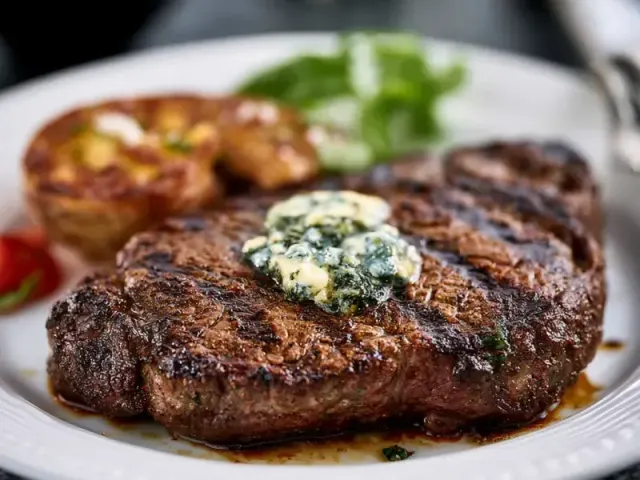
Grilled Steak Dinner Plate: Perfect Sear Every Time
The first sound you hear is the sizzle. That immediate, sharp hiss when the steak hits hot grill grates. It's the promise of a crust — dark, crisp, deeply savory. A grilled steak dinner plate is about more than just heat and meat. It's about controlling fire, timing the rest, and building a quick sauce that ties everything together.

I keep the ratio simple: one inch of thickness, one minute of searing per side per half-inch. For a one-inch steak, that's two minutes per side over high heat. Then I move it to a cooler zone to finish. This two-zone method is the backbone of consistent grilling. It prevents the outside from burning before the inside reaches the temperature you want.
Building the Perfect Sear
Start with dry steaks. Pat them with paper towels until the surface is tacky, not wet. Moisture is the enemy of browning — it turns to steam and keeps the surface from reaching the temperatures needed for the Maillard reaction. Season generously with coarse kosher salt and black pepper. I use about one teaspoon of salt per pound of meat. Let the steaks sit at room temperature for 20 minutes. This takes the chill off, so the interior cooks more evenly.
Set up your grill with two heat zones. On a charcoal kettle, pile the coals on one side. On a gas grill, turn one burner to high and leave the other on medium. Oil the grates by dipping a folded paper towel in oil and using tongs to rub it across the bars. Place the steaks over the high-heat zone. Don't crowd them — leave at least an inch between each piece. If the steaks are too close, they'll steam instead of sear.
Cook without moving for 3 minutes. Then flip. You should see a deep mahogany crust with distinct grill marks. If the steak sticks, it's not ready to flip. Let it cook another 30 seconds and try again. After flipping, sear the second side for another 3 minutes.
Finishing with Precision
Move the steaks to the medium-heat zone. This is where the interior catches up. Insert an instant-read thermometer into the thickest part of the steak, avoiding bone or fat. For medium-rare, pull the steak at 125°F. Carryover cooking will bring it to about 130°F during the rest. For medium, pull at 135°F. For medium-well, pull at 145°F.
The common mistake here is overcooking. The steak continues to rise in temperature after it leaves the grill. So stop cooking 5 degrees below your target. If you don't have a thermometer, use the touch test: press the center of the steak with your index finger. For medium-rare, it should feel like the fleshy part of your palm when you touch your thumb to your index finger. But honestly, a thermometer removes all uncertainty. It's a small tool that delivers big confidence.
Transfer the steaks to a cutting board. Tent them loosely with foil. Rest for exactly 5 minutes. Do not skip this. The rest allows the juices to redistribute. If you cut too soon, they'll pool on the board, and the steak will be dry.
A Quick Pan Sauce That Delivers
While the steak rests, make a pan sauce. This is where the flavor from the grill meets a silky, savory finish. In a small saucepan over medium heat, melt 2 tablespoons of butter. Add one finely minced shallot and cook, stirring, until softened — about 2 minutes. The shallot should turn translucent but not brown.
Pour in 1/2 cup of low-sodium beef broth and 1 tablespoon of Worcestershire sauce. Bring to a simmer. Whisk in 1 teaspoon of Dijon mustard. Let the sauce reduce by about half, which takes 3 to 5 minutes. You're looking for a consistency that coats the back of a spoon. Taste and adjust with salt and pepper. The sauce should be savory, slightly tangy, and rich without being heavy.
If you want to add a little extra depth, toss in a sprig of fresh thyme during the simmer and remove it before serving. The sauce will keep in the fridge for 2 days. Reheat gently with a splash of broth.
Assembling the Plate
Slice the rested steak against the grain into 1/2-inch thick pieces. Cutting against the grain shortens the muscle fibers, making each bite more tender. Arrange the slices on a warm plate. Drizzle the pan sauce over the top. Finish with a pinch of flaky sea salt — Maldon or similar — for a clean, bright salt crunch.
For sides, keep it simple. Roasted asparagus, a simple green salad with vinaigrette, or grilled crusty bread all work. The steak is the star. The sides should complement, not compete.
Common Mistakes to Avoid
- Skipping the rest: This is the number one reason for a dry steak. Five minutes makes all the difference.
- Using a cold steak: Straight from the fridge, the center stays cold while the outside burns. Always let it sit out for 20 minutes.
- Flipping too often: Let the first side develop a crust before you touch it. Constant flipping prevents browning.
- Overcooking with a thermometer: Remember carryover cooking. Pull the steak 5°F below your target.
A final note on food safety: The USDA recommends cooking steak to an internal temperature of 145°F for medium doneness, followed by a 3-minute rest. For medium-rare (130–135°F), the risk is minimal for whole cuts of beef, but always use a clean thermometer and practice good kitchen hygiene. For specific dietary concerns, consult a qualified professional.
This grilled steak dinner plate is a technique you can rely on. The two-zone fire, the precise temperature, the quick pan sauce — these are the building blocks of a meal that feels special but fits into a weeknight. Once you get the method down, you can adapt it to any cut, any seasoning, any side. That's the point. The fundamentals give you freedom.
Frequently Asked Questions
What is the best cut of steak for grilling?
Ribeye and New York strip are excellent choices because they have enough marbling to stay juicy over high heat. For a leaner option, sirloin works, but cook it to no more than medium doneness to avoid dryness.
How do I know when the steak is done without a thermometer?
The touch test works as a backup: press the center of the steak with your finger. For medium-rare, it should feel like the fleshy part of your palm when you touch your thumb to your index finger. But a thermometer is far more reliable and removes the guesswork.
Can I make the pan sauce ahead of time?
Yes. Make the sauce up to 2 days ahead and refrigerate in a sealed container. Reheat gently in a small saucepan over low heat, adding a splash of water or broth if it thickens too much.
Why do I need to let the steak rest?
Resting allows the muscle fibers to relax and the juices to redistribute evenly throughout the meat. If you cut into it right away, those juices will run out onto the cutting board, leaving the steak dry.
Grilled Steak Dinner Plate

A perfectly grilled steak with a crusty sear and a tender interior, served with a quick pan sauce and simple sides. This method ensures consistent results using a two-zone fire and a meat thermometer.
- charcoal or gas grill
- instant-read meat thermometer
- cast-iron skillet or heavy-bottomed pan (for sauce)
- tongs
- cutting board
- chef's knife
- small saucepan
- 2 boneless ribeye or New York strip steaks (about 1 inch thick (10–12 oz each))
- 1 tablespoon neutral oil (like avocado or canola)
- Coarse kosher salt
- Freshly ground black pepper
- 2 tablespoons unsalted butter
- 1 shallot (finely minced)
- 1/2 cup low-sodium beef broth
- 1 tablespoon Worcestershire sauce
- 1 teaspoon Dijon mustard
- Fresh thyme sprigs (optional, for garnish)
- Flaky sea salt (for finishing)
- Pat the steaks dry with paper towels. Season generously with kosher salt and black pepper on all sides. Let stand at room temperature for 20 minutes.
- Prepare a two-zone fire on your grill: one side high heat (450–500°F) for searing, the other side medium heat (350°F) for gentle cooking. For gas, set one burner to high, the other to medium.
- Oil the grill grates. Place steaks over the high-heat zone. Sear for 3 minutes without moving. Flip and sear the second side for 3 minutes. A deep brown crust should form.
- Move steaks to the medium-heat zone. Continue cooking, flipping once, until the internal temperature reaches 125°F for medium-rare (about 4–6 minutes total). For medium, cook to 135°F. Use an instant-read thermometer inserted into the thickest part.
- Transfer steaks to a cutting board. Tent loosely with foil. Rest for exactly 5 minutes. Do not skip this — the juices redistribute.
- While the steak rests, make the pan sauce. In a small saucepan over medium heat, melt the butter. Add the minced shallot and cook, stirring, until softened, about 2 minutes.
- Pour in the beef broth and Worcestershire sauce. Bring to a simmer. Whisk in the Dijon mustard. Let the sauce reduce by about half, 3–5 minutes, until slightly thickened. Taste and adjust salt and pepper.
- Slice the rested steak against the grain into 1/2-inch thick pieces. Arrange on plates. Drizzle with the pan sauce. Sprinkle with flaky sea salt and fresh thyme if desired.
Storage: Refrigerate leftover steak in an airtight container for up to 3 days. Reheat gently in a skillet over low heat with a splash of broth to avoid drying out. The pan sauce keeps for 2 days. For a dairy-free alternative, substitute the butter with olive oil and use a dairy-free margarine. If you have a nut allergy, this recipe is nut-free as written. Always verify your ingredients for hidden allergens. Handle the hot grill and pan with oven mitts. The USDA recommends cooking steak to an internal temperature of 145°F for medium doneness, followed by a 3-minute rest. For specific dietary needs, consult a qualified professional.
Recipe: Grilled Steak Dinner Plate
Equipment
- charcoal or gas grill
- instant-read meat thermometer
- cast-iron skillet or heavy-bottomed pan (for sauce)
- tongs
- cutting board
- chef's knife
- small saucepan
Ingredients
- 2 boneless ribeye or New York strip steaks (about 1 inch thick (10–12 oz each))
- 1 tablespoon neutral oil (like avocado or canola)
- Coarse kosher salt
- Freshly ground black pepper
- 2 tablespoons unsalted butter
- 1 shallot (finely minced)
- 1/2 cup low-sodium beef broth
- 1 tablespoon Worcestershire sauce
- 1 teaspoon Dijon mustard
- Fresh thyme sprigs (optional, for garnish)
- Flaky sea salt (for finishing)
Instructions
- Pat the steaks dry with paper towels. Season generously with kosher salt and black pepper on all sides. Let stand at room temperature for 20 minutes.
- Prepare a two-zone fire on your grill: one side high heat (450–500°F) for searing, the other side medium heat (350°F) for gentle cooking. For gas, set one burner to high, the other to medium.
- Oil the grill grates. Place steaks over the high-heat zone. Sear for 3 minutes without moving. Flip and sear the second side for 3 minutes. A deep brown crust should form.
- Move steaks to the medium-heat zone. Continue cooking, flipping once, until the internal temperature reaches 125°F for medium-rare (about 4–6 minutes total). For medium, cook to 135°F. Use an instant-read thermometer inserted into the thickest part.
- Transfer steaks to a cutting board. Tent loosely with foil. Rest for exactly 5 minutes. Do not skip this — the juices redistribute.
- While the steak rests, make the pan sauce. In a small saucepan over medium heat, melt the butter. Add the minced shallot and cook, stirring, until softened, about 2 minutes.
- Pour in the beef broth and Worcestershire sauce. Bring to a simmer. Whisk in the Dijon mustard. Let the sauce reduce by about half, 3–5 minutes, until slightly thickened. Taste and adjust salt and pepper.
- Slice the rested steak against the grain into 1/2-inch thick pieces. Arrange on plates. Drizzle with the pan sauce. Sprinkle with flaky sea salt and fresh thyme if desired.