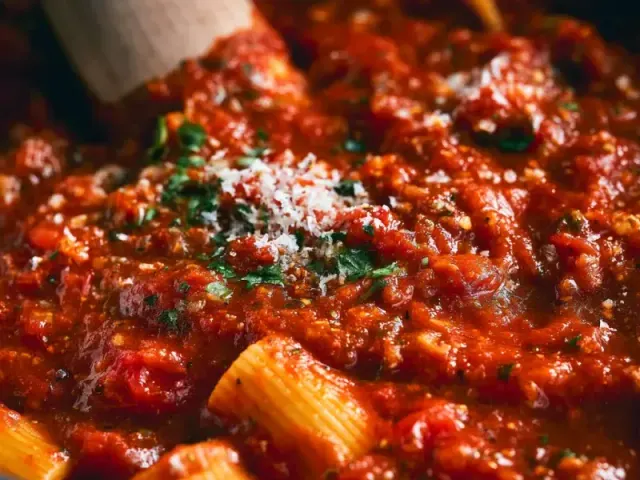
Homemade Marinara Pasta: Simple 30-Minute Sauce
When you pull that first strand of spaghetti from a pan of homemade marinara pasta, the sauce should cling to the pasta like it belongs there — not pool at the bottom of the bowl. That's the difference between a sauce that's made with the pasta and one that's just poured on top.

I've been making marinara from scratch for years, and I've learned that the trick isn't a secret ingredient or a long simmer. It's a simple ratio: 3 parts crushed tomatoes to 1 part olive oil, by volume. That ratio gives you a sauce that's rich without being heavy, and bright without being acidic. Here's how it works.
Why This Ratio Matters
Most marinara recipes call for a tablespoon or two of oil, then a whole can of tomatoes. That's a 12:1 ratio in favor of tomatoes. The result is a thin, sharp sauce that needs sugar or hours of cooking to tame. My 3:1 ratio (by volume, so 1 1/2 cups tomatoes to 1/2 cup oil — but I use a 28-ounce can and 6 tablespoons oil, which is close enough) means the olive oil emulsifies into the tomatoes, creating a silky mouthfeel that balances the natural acidity.
The key is to use extra-virgin olive oil here — not the cheap stuff, but a good one you'd drizzle on a salad. It's the backbone of the flavor.
Start with the Garlic
Slice your garlic cloves thinly, not minced. Sliced garlic releases its flavor more gently and won't burn as easily. Heat the oil in a 12-inch skillet over medium heat, then add the garlic and red pepper flakes (if using). Stir constantly. You want the garlic to turn fragrant and just barely golden at the edges — about 45 seconds. The moment it starts browning, it's past the sweet spot. Burnt garlic turns bitter, and that bitterness will carry through the whole sauce.
Build the Sauce
Pour in the crushed tomatoes. I use a 28-ounce can of San Marzano tomatoes because they're naturally sweeter and less acidic. Add salt and pepper, then bring the sauce to a gentle simmer. Lower the heat so it's barely bubbling — just a few lazy pops on the surface. Let it go for 15 minutes uncovered. Stir it occasionally, especially around the edges where the sauce can stick.
You'll see the color deepen from bright red to a richer, brick-like red. The sauce will also thicken slightly as water evaporates. If it looks too thick at this point, don't worry — you'll add pasta water later.