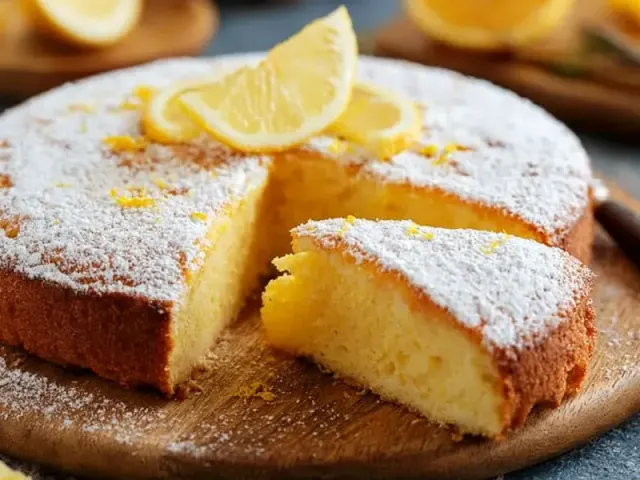
Italian Lemon Ricotta Cake: Tender, Moist, and Bright
The first thing you notice is the fragrance. Lemon zest hits your nose before the cake even comes out of the oven, bright and clean against the mellow scent of butter and eggs. Then you cut a slice — and feel the crumb give way with a soft, almost velvety resistance. That is the ricotta working its magic.

This Italian Lemon Ricotta Cake is not a showy dessert. It doesn't need a glaze or a frosting. What it offers is a texture that stays tender for days, a gentle sweetness, and a citrus flavor that tastes like sunshine concentrated into a single bite. The secret is the ratio of ricotta to butter and the way you handle the batter.
Why Ricotta Makes a Better Lemon Cake
Ricotta brings two things that butter alone cannot: moisture and a fine, tender crumb. Butter adds richness, but too much can make a cake heavy. Ricotta, with its creamy curds, keeps every bite soft without greasiness. The key is to use whole-milk ricotta, not part-skim. The fat content matters. I also let it come to room temperature so it blends smoothly into the batter. Cold ricotta will leave lumps and create an uneven crumb.
One more thing: do not drain the ricotta. Fresh, full-fat ricotta has just the right amount of whey. Draining it will dry out the cake.
The Lemon: Zest and Juice, Both
This cake uses the whole lemon — zest and juice. The zest carries the aromatic oils that give the cake its floral, sunny character. The juice adds acidity that balances the richness of the ricotta and eggs. I use two large lemons for the zest and then squeeze them for the juice. That gives you about a tablespoon of zest and a third of a cup of juice. If your lemons are small, you might need three.
Grate the zest directly into the sugar and rub it in with your fingertips before adding the eggs. This releases the oils into the sugar and distributes the flavor more evenly through the batter.
Step-by-Step: The Method
This is a straightforward cake, but the order of additions matters.
1. Beat eggs and sugar until thick
This is the only real aeration in the recipe. Beat on medium-high for a full three minutes. The mixture should fall in a thick ribbon when you lift the beater. This gives the cake lift without needing a lot of chemical leavener.
2. Add the wet ingredients gently
Lemon juice, zest, vanilla, and ricotta go in on low speed. The batter may look slightly curdled at this point — that's normal. The ricotta's whey and the acid in the lemon juice can cause the eggs to separate a little. It will come back together when you add the flour.
3. Fold in flour and butter
Add the dry ingredients in three batches, mixing on low just until the flour disappears. Overmixing develops gluten and makes the cake tough. After the flour is incorporated, drizzle in the melted butter and fold it in by hand with a rubber spatula. Folding keeps the batter light and ensures the butter is evenly distributed without deflating the eggs.
4. Bake at 350°F
I use a 9-inch round pan lined with parchment. The cake bakes for 45 to 50 minutes. Start checking at 45 minutes with a toothpick inserted into the center. It should come out clean or with a few moist crumbs clinging to it. If the toothpick is wet with batter, bake another 3-5 minutes. The top will be a deep golden brown, and the edges will pull slightly away from the pan.
Let it cool in the pan for 15 minutes, then turn it out onto a wire rack to cool completely. Dust with powdered sugar just before serving.
Common Mistakes and How to Avoid Them
- Using cold ricotta or eggs: Cold ingredients don't emulsify properly. The batter will be lumpy and the cake may dome unevenly. Set everything out 30 minutes before you start.
- Overmixing after adding flour: This is the number one cause of a dense, rubbery cake. Mix only until the flour disappears, then stop.
- Opening the oven door too early: The cake needs a steady temperature to rise. Wait until at least 35 minutes have passed before you peek.
- Skipping the parchment: This cake is moist and can stick. Parchment paper guarantees it comes out cleanly.
Storage and Serving
This cake actually improves after a day. The flavors meld and the crumb becomes even more tender. Wrap it tightly in plastic wrap and keep it at room temperature for up to three days. In the refrigerator, it will keep for five days — just bring slices to room temperature before serving to restore the soft texture.
It also freezes beautifully. Wrap the cooled cake (without powdered sugar) in a double layer of plastic wrap and then foil. Freeze for up to two months. Thaw overnight in the refrigerator, then bring to room temperature before dusting with sugar.
Substitutions and Allergen Notes
This recipe contains dairy (ricotta, butter), eggs, and gluten (wheat flour). For a dairy-free version, substitute a high-quality dairy-free ricotta (Kite Hill works well) and use a neutral oil like avocado or grapeseed in place of butter. The texture will be slightly different — a bit less tender — but still good. For egg-free, I have not tested a successful version of this specific cake, as eggs provide both structure and moisture here.
If you need to avoid gluten, replace the all-purpose flour with a 1:1 gluten-free baking blend that contains xanthan gum. The crumb will be more delicate, so handle the cake gently when removing it from the pan.
For specific dietary advice, please consult a qualified professional.
Takeaway
This Italian Lemon Ricotta Cake is not complicated, but it rewards attention to detail. Room-temperature ingredients, gentle mixing, and the right ricotta make all the difference. The result is a cake that tastes like a sunny afternoon — bright, soft, and deeply satisfying. Serve it with coffee or tea, or simply on its own. It disappears fast.
Frequently Asked Questions
Can I use low-fat ricotta?
I don't recommend it. Low-fat ricotta has more water, which can make the cake dense and soggy. Whole-milk ricotta gives the best texture and moisture.
Why did my cake sink in the middle?
Most likely the oven door was opened too early, or the cake was underbaked. Wait until at least 35 minutes before checking, and use a toothpick to test for doneness.
Can I use bottled lemon juice?
Fresh lemon juice is essential here. Bottled juice lacks the bright acidity and can add a metallic taste. Zest is also much more flavorful from fresh lemons.
Italian Lemon Ricotta Cake

A tender, moist Italian-style cake made with fresh ricotta and bright lemon zest. The ricotta keeps it soft for days.
- 9-inch round cake pan
- electric mixer (stand or hand)
- mixing bowls
- zester
- rubber spatula
- wire rack
- 1 1/2 cups 195g all-purpose flour
- 1 1/2 teaspoons baking powder
- 1/2 teaspoon salt
- 3 large eggs (room temperature)
- 1 cup 200g granulated sugar
- 1 tablespoon lemon zest (from 2 large lemons)
- 1/3 cup 80ml fresh lemon juice
- 1 teaspoon vanilla extract
- 1 cup 240g whole-milk ricotta, room temperature
- 1/2 cup 113g unsalted butter, melted and cooled
- Powdered sugar for dusting (optional)
- Preheat oven to 350°F (175°C). Grease a 9-inch round cake pan, line the bottom with parchment paper, and grease the paper.
- In a medium bowl, whisk together flour, baking powder, and salt. Set aside.
- In a large bowl with an electric mixer, beat eggs and sugar on medium-high until thick and pale, about 3 minutes.
- Add lemon zest, lemon juice, and vanilla; beat on low until combined.
- Add the ricotta and beat on low until just incorporated. The mixture may look slightly curdled — that's fine.
- With the mixer on low, add the dry ingredients in three additions, mixing until just combined after each. Do not overmix.
- Drizzle in the melted butter and fold gently with a rubber spatula until the batter is smooth and uniform.
- Pour batter into the prepared pan and spread evenly. Bake for 45-50 minutes, until a toothpick inserted in the center comes out clean or with a few moist crumbs. The top should be golden brown.
- Cool in the pan on a wire rack for 15 minutes, then turn out onto the rack to cool completely. Dust with powdered sugar before serving.
Storage: Wrap tightly in plastic wrap and keep at room temperature for up to 3 days, or refrigerate for up to 5 days. Bring to room temperature before serving. This cake also freezes well for up to 2 months. For a dairy-free version, substitute ricotta with a high-quality dairy-free ricotta (like Kite Hill) and use a neutral oil in place of butter. Contains dairy, eggs, and gluten. For specific dietary needs, consult a qualified professional.
Recipe: Italian Lemon Ricotta Cake
Equipment
- 9-inch round cake pan
- electric mixer (stand or hand)
- mixing bowls
- zester
- rubber spatula
- wire rack
Ingredients
- 1 1/2 cups 195g all-purpose flour
- 1 1/2 teaspoons baking powder
- 1/2 teaspoon salt
- 3 large eggs (room temperature)
- 1 cup 200g granulated sugar
- 1 tablespoon lemon zest (from 2 large lemons)
- 1/3 cup 80ml fresh lemon juice
- 1 teaspoon vanilla extract
- 1 cup 240g whole-milk ricotta, room temperature
- 1/2 cup 113g unsalted butter, melted and cooled
- Powdered sugar for dusting (optional)
Instructions
- Preheat oven to 350°F (175°C). Grease a 9-inch round cake pan, line the bottom with parchment paper, and grease the paper.
- In a medium bowl, whisk together flour, baking powder, and salt. Set aside.
- In a large bowl with an electric mixer, beat eggs and sugar on medium-high until thick and pale, about 3 minutes.
- Add lemon zest, lemon juice, and vanilla; beat on low until combined.
- Add the ricotta and beat on low until just incorporated. The mixture may look slightly curdled — that's fine.
- With the mixer on low, add the dry ingredients in three additions, mixing until just combined after each. Do not overmix.
- Drizzle in the melted butter and fold gently with a rubber spatula until the batter is smooth and uniform.
- Pour batter into the prepared pan and spread evenly. Bake for 45-50 minutes, until a toothpick inserted in the center comes out clean or with a few moist crumbs. The top should be golden brown.
- Cool in the pan on a wire rack for 15 minutes, then turn out onto the rack to cool completely. Dust with powdered sugar before serving.