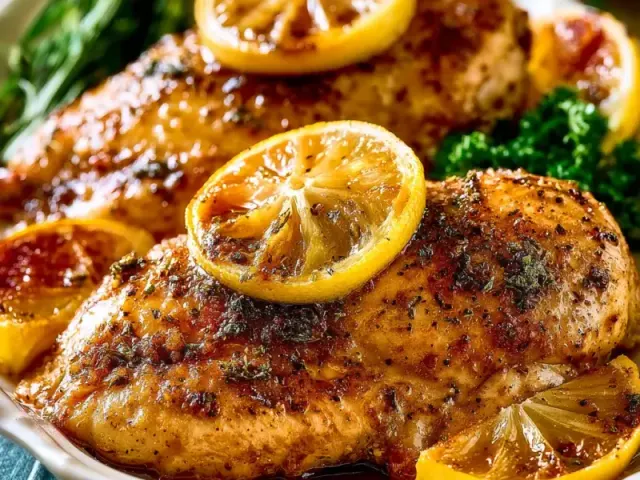
Juicy Baked Lemon Pepper Chicken (No Dry Breast)
The first time I made lemon pepper chicken, I ended up with dry, pale breasts and a faint, dusty lemon flavor. The problem wasn't the seasoning — it was the method. Lemon pepper is often sold as a pre-mixed blend, but those jars can be heavy on salt and citric acid, and light on actual lemon. So I started making my own mix, and I changed how I applied it. Now this baked lemon pepper chicken comes out juicy, with a bright citrus kick and a peppery crust that actually clings to the meat.

The Right Lemon-to-Pepper Ratio
Most recipes call for a dry rub of lemon pepper seasoning. That works, but the flavor stays on the surface. I wanted the lemon to sink in. So I use a two-step approach: a butter-lemon bath, then a dry seasoning layer. The butter carries the lemon juice and zest into the meat while the pepper and salt form a crust on top.
Here's my ratio: for four chicken breasts, use 2 tablespoons melted butter, 2 tablespoons fresh lemon juice, and 1 tablespoon lemon zest. That zest is crucial — it's where the essential oils live. Without it, you're just getting acidity. For the pepper, I use coarsely ground black pepper, not fine. Coarse grind gives you little bursts of heat rather than a uniform dusting. One and a half teaspoons is enough for a noticeable kick without overwhelming the lemon.
Prep Steps That Matter
Start by patting the chicken dry with paper towels. This isn't optional. Wet chicken steams in the oven, and steam prevents browning. Dry chicken browns. Browning equals flavor.
Mix the butter, lemon juice, and zest in a small bowl. In another bowl, combine the pepper, salt, and garlic powder. Brush the butter mixture onto both sides of each breast. Then sprinkle the seasoning mix evenly over both sides. Press it in gently so it sticks — if you just shake it on, half will fall off during baking.
Place the chicken in a 9x13-inch baking dish. Leave a little space between each piece. Crowding traps steam and keeps the crust from forming. Pour any remaining butter mixture over the top.
Temperature and Timing
Bake at 400°F. This is hot enough to brown the exterior quickly but not so hot that the outside burns before the inside cooks through. For standard boneless, skinless breasts (about 6 ounces each), start checking at 18 minutes. The thickest part of the breast should hit 160°F on an instant-read thermometer. Pull the chicken out then. It will carry over to 165°F as it rests for 5 minutes.
Do not skip the rest. Those 5 minutes let the juices redistribute. If you cut into the chicken right away, the juices run out onto the plate and you're left with dry meat. Rest it right in the baking dish, then spoon the pan juices over the top before serving.
Common Mistakes to Avoid
One mistake I see often: using pre-ground lemon pepper seasoning. Those blends usually contain sugar, which burns at 400°F, and citric acid, which can taste harsh. Making your own takes 2 extra minutes and the flavor is cleaner.
Another mistake: pounding the chicken to an even thickness. I don't recommend it here. Thin, pounded breasts cook too fast and dry out before the crust forms. Instead, buy chicken breasts of similar size and weight. If one end is much thicker than the other, fold the thin end under so it cooks at the same rate.
Serving and Storage
This chicken pairs well with roasted vegetables — asparagus, broccoli, or zucchini all work. The pan juices are excellent spooned over rice or quinoa. For a complete meal, see my One-Pan Lemon Herb Roasted Vegetables or a Simple Green Salad with Vinaigrette.
Leftovers keep in the fridge for up to 3 days. Reheat gently in a 300°F oven for 10 minutes, or slice cold and toss over a salad. If you use a microwave, cover with a damp paper towel to add moisture.
Dietary Adjustments
To make this dairy-free, substitute the butter with olive oil or avocado oil. The texture stays moist, though the flavor shifts slightly. For those with specific dietary needs, I recommend consulting a qualified professional for personal advice.
Takeaway
The secret to juicy baked lemon pepper chicken is a butter-lemon bath, a coarse pepper crust, and pulling the meat at 160°F. It's a simple shift that makes a real difference. Once you try it, you won't go back to the jar.
Frequently Asked Questions
How do I keep baked chicken breast from drying out?
The key is two-fold. First, pat the chicken dry so the seasoning sticks and the surface sears. Second, use a butter-lemon bath and pull the chicken at 160°F — the carryover cooking brings it to a safe 165°F without overcooking.
Can I use bottled lemon juice instead of fresh?
Fresh lemon juice and zest give a bright, clean flavor. Bottled juice often tastes flat and lacks the essential oils from the zest. For this recipe, fresh makes a noticeable difference.
Can I use chicken thighs instead of breasts?
Yes. Boneless, skinless thighs work well. Bake at 400°F for 20-25 minutes, until they reach 175°F. The higher fat content keeps them forgiving.
What can I substitute for butter?
Olive oil or avocado oil works perfectly. Use the same amount. The flavor will shift slightly but the texture stays moist.
Baked Lemon Pepper Chicken

Juicy, tangy baked chicken breasts with a bold lemon pepper crust, made in under 30 minutes.
- 9x13-inch baking dish
- instant-read thermometer
- small bowl
- chef's knife
- cutting board
- 4 boneless (skinless chicken breasts (about 6 oz each))
- 2 tablespoons unsalted butter (melted)
- 2 tablespoons fresh lemon juice
- 1 tablespoon lemon zest (from 1 lemon)
- 1 ½ teaspoons coarsely ground black pepper
- 1 teaspoon kosher salt
- ½ teaspoon garlic powder
- Fresh parsley for garnish (optional)
- Preheat oven to 400°F. Pat chicken breasts dry with paper towels.
- In a small bowl, whisk together melted butter, lemon juice, and lemon zest.
- In another small bowl, mix pepper, salt, and garlic powder.
- Brush both sides of each chicken breast with the butter mixture. Sprinkle the seasoning mix evenly over both sides, pressing lightly to adhere.
- Place chicken in a 9x13-inch baking dish, spaced apart. Pour any remaining butter mixture over the top.
- Bake for 18-22 minutes, until the thickest part of the breast reaches 160°F on an instant-read thermometer. The chicken will carry over to 165°F as it rests.
- Let rest in the dish for 5 minutes. Spoon pan juices over the top before serving. Garnish with parsley if desired.
Storage: Refrigerate leftovers in an airtight container for up to 3 days. Reheat gently in a low oven or microwave. Serving tip: Pair with roasted asparagus or a simple green salad. Allergen note: Contains dairy (butter). For dairy-free, substitute with olive oil or avocado oil.
Recipe: Baked Lemon Pepper Chicken
Equipment
- 9x13-inch baking dish
- instant-read thermometer
- small bowl
- chef's knife
- cutting board
Ingredients
- 4 boneless (skinless chicken breasts (about 6 oz each))
- 2 tablespoons unsalted butter (melted)
- 2 tablespoons fresh lemon juice
- 1 tablespoon lemon zest (from 1 lemon)
- 1 ½ teaspoons coarsely ground black pepper
- 1 teaspoon kosher salt
- ½ teaspoon garlic powder
- Fresh parsley for garnish (optional)
Instructions
- Preheat oven to 400°F. Pat chicken breasts dry with paper towels.
- In a small bowl, whisk together melted butter, lemon juice, and lemon zest.
- In another small bowl, mix pepper, salt, and garlic powder.
- Brush both sides of each chicken breast with the butter mixture. Sprinkle the seasoning mix evenly over both sides, pressing lightly to adhere.
- Place chicken in a 9x13-inch baking dish, spaced apart. Pour any remaining butter mixture over the top.
- Bake for 18-22 minutes, until the thickest part of the breast reaches 160°F on an instant-read thermometer. The chicken will carry over to 165°F as it rests.
- Let rest in the dish for 5 minutes. Spoon pan juices over the top before serving. Garnish with parsley if desired.