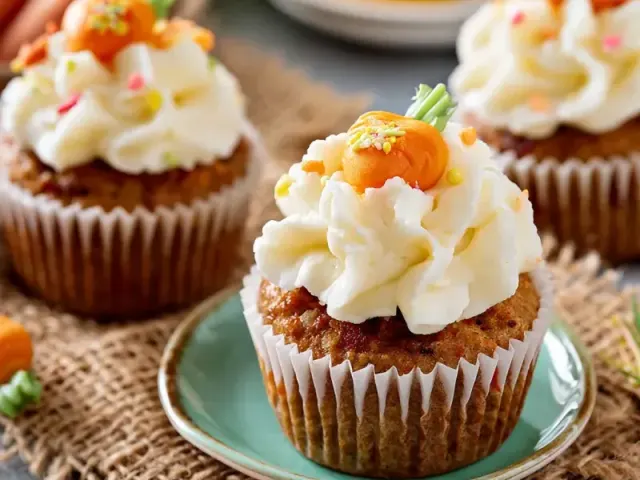
Lemon Carrot Easter Cupcakes
There's something about the scent of lemon zest hitting warm carrots that feels like spring on a plate. These Lemon Carrot Easter Cupcakes balance the earthy sweetness of carrot cake with a bright citrus punch—no heavy spices overpowering the delicate crumb. The trick is in the ratio: a full tablespoon of lemon zest and two tablespoons of juice in the batter, plus a buttermilk swap that keeps the crumb tender and the flavor clean. The frosting follows the same philosophy—cream cheese and butter in equal parts, brightened with lemon until it's tangy enough to cut through the sweetness.

Why This Ratio Works
Carrot cake can be dense. Here, I keep the fat at a 1:1 ratio of oil to eggs (by volume), which gives a moist crumb without greasiness. The buttermilk adds acidity that reacts with the baking soda for lift, while the lemon juice reinforces that acidity. The result? A cupcake that rises evenly, stays tender for days, and tastes like sunshine.
Key Technique: Grating Carrots
Use the small holes of a box grater—not the large ones. Fine shreds melt into the batter as they bake, releasing moisture without leaving stringy bits. Pre-shredded carrots from a bag are too dry and coarse; they won't integrate the same way. Grate three medium carrots for 1 1/2 cups packed shreds. Don't squeeze out the liquid—that moisture is part of the recipe.
How to Avoid Dry Cupcakes
The most common mistake is overbaking. Start checking at 18 minutes. A toothpick inserted in the center should come out clean or with a few moist crumbs—not wet batter. The tops will spring back when lightly pressed. Every oven runs differently; if yours runs hot, reduce the temperature to 340°F and watch the time. Overbaked cupcakes lose that tender springiness.
The Buttermilk Substitute
If you don't have buttermilk, add 1 teaspoon lemon juice to 1/4 cup whole milk. Let it sit 5 minutes until it curdles. This gives the same acidity and tenderness, with an extra lemon note. Avoid skim milk—it's too thin and won't provide the same structure.
Lemon Cream Cheese Frosting: The Balance
Equal parts cream cheese and butter (by weight) create a frosting that's stable enough to pipe but soft enough to spread. Use 8 ounces of each. Let them come to room temperature—about 30 minutes on the counter. Cold cream cheese creates lumps. Beat them together on medium speed for a full 2 minutes until no streaks remain. Then add sifted powdered sugar gradually to avoid a cloud. The lemon zest goes in at the end so its oils stay bright. A pinch of salt keeps it from tasting flat.