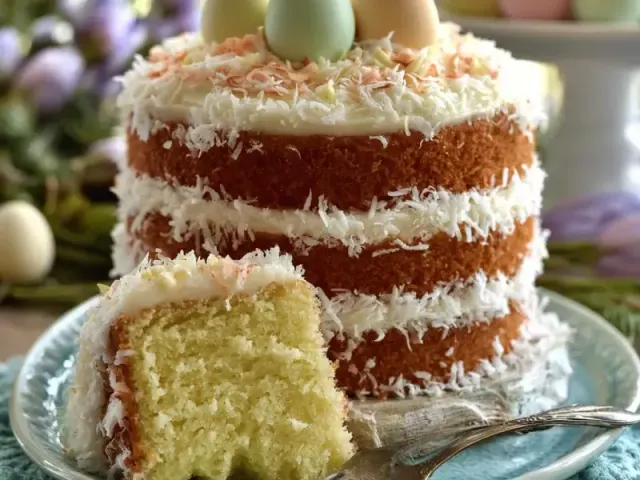
Lemon Coconut Easter Cake: Bright, Tender, and Easy to Decorate
The first slice of this cake tells you everything: a tender, spring-bright crumb scented with real lemon zest and juice, wrapped in a creamy coconut buttercream that’s not too sweet. The toasted coconut on the sides adds a little crunch and a nutty warmth that plays off the citrus. This is the cake I turn to when Easter brunch needs a centerpiece that actually tastes as good as it looks.

Why This Lemon Coconut Cake Works
The key to a moist, tender lemon cake that doesn’t crumble apart is the ratio of fat to acid. I keep the butter at 1 cup (226g) and the buttermilk at 1 cup (240ml), which gives enough richness without making the cake greasy. The lemon juice and zest go in with the wet ingredients — not after the flour — so the acid interacts with the buttermilk and baking soda for a fine, even crumb. One common mistake is adding lemon juice at the end, which can create uneven pockets of acidity and a denser texture.
For the coconut buttercream, the trick is to chop the shredded coconut in a food processor until it’s almost a powder. Whole shreds can clog a piping tip and create a chewy texture that competes with the cake. Finely ground, the coconut melts into the buttercream and gives a uniform coconut flavor in every bite.
Ingredients and Substitutions
For the Cake
- All-purpose flour: 360g (3 cups). Spoon and level for accuracy — scooping can add up to 50g extra, making the cake dry.
- Buttermilk: 240ml (1 cup). If you don’t have it, make a quick substitute: add 1 tablespoon lemon juice to 1 cup whole milk and let sit 5 minutes.
- Lemons: Use two medium lemons for zest and juice. Roll them on the counter before juicing to get the most out of them.
For the Buttercream
- Butter: 339g (1 1/2 cups), softened. If it’s too cold, the buttercream will be lumpy; if too warm, it will be soupy. Aim for about 65°F (18°C).
- Coconut: Sweetened shredded coconut, finely chopped. Toast half for the sides and leave the rest raw for the buttercream.
Step-by-Step Technique
Baking the Layers
Start with room-temperature eggs and buttermilk. Cold ingredients will make the batter seize and result in a dense cake. When you add the lemon juice and zest, the batter may look a little curdled — that’s normal. The buttermilk and baking soda will balance the pH as it bakes.
Bake at 350°F (175°C) for 22-25 minutes. Rotate the pans halfway through if your oven runs hot. The cakes are done when a toothpick comes out clean or with a few moist crumbs — not wet batter. Let them cool in the pans for exactly 10 minutes, then turn them out onto a wire rack. Cooling too long in the pan can cause the bottoms to steam and become soggy.
Making the Coconut Buttercream
Beat the butter alone for 2 minutes before adding sugar. This aerates it and gives a lighter texture. Add the powdered sugar one cup at a time on low speed to avoid a cloud of sugar dust. Once all sugar is in, add the cream and extracts, then beat on medium-high for 3-4 minutes. The buttercream should be pale, fluffy, and spreadable. If it’s too stiff, add another tablespoon of cream. If it’s too soft, refrigerate for 10 minutes and re-whip.
Fold in the finely chopped coconut with a spatula. Don’t use the mixer for this — you want the coconut evenly distributed, not ground further into the butter.
Assembling and Decorating
Chill the cake layers for 30 minutes before assembling. This firms them up so they don’t crumble when you spread the buttercream. Level each layer with a serrated knife if they domed during baking — a flat surface ensures even layers.
Apply a thin crumb coat (a base layer of buttercream that traps crumbs) and refrigerate for 20 minutes. This step makes the final frosting layer smooth and crumb-free. After the final coat, press the toasted coconut onto the sides with your hands, working in sections. For the top, sprinkle coconut and pastel sprinkles — or leave it plain for a more elegant look.
Common Mistakes and How to Avoid Them
- Dense cake: Overmixing the batter. Stop mixing as soon as the flour disappears.
- Buttercream too sweet: The salt and coconut extract balance the sugar. Don’t skip the salt.
- Toasted coconut burns: Watch it closely in the oven — it goes from golden to burnt in under a minute. Stir at 5 minutes and check every minute after.
Takeaway
This Lemon Coconut Easter Cake is about precision in the details: the right ratio of butter to buttermilk, finely chopped coconut in the frosting, and a proper crumb coat. Follow the temperatures and times here, and you’ll have a cake that’s tender, bright, and beautifully balanced — exactly what a spring celebration deserves.
Frequently Asked Questions
Can I make this Lemon Coconut Easter Cake ahead of time?
Yes. You can bake the cake layers up to two days ahead, wrap them tightly in plastic wrap, and store at room temperature. The buttercream can be made a day ahead and refrigerated; bring it to room temperature and re-whip before using. Once assembled, the cake keeps in the fridge for three days.
Why did my lemon cake turn out dense?
The most common cause is overmixing the batter once the flour is added. Mix just until the streaks disappear. Also, make sure your butter and eggs are at room temperature so the batter emulsifies properly. If the buttermilk is cold, it can seize the butter.
Can I use unsweetened coconut in the frosting?
I recommend sweetened shredded coconut for the frosting because it adds a touch of sweetness and a softer texture. If you only have unsweetened, you can use it — just add an extra tablespoon of powdered sugar to the buttercream to balance the flavor.
Lemon Coconut Easter Cake

A three-layer lemon cake filled and frosted with a silky coconut buttercream, finished with toasted coconut and pastel sprinkles.
- three 8-inch round cake pans
- stand mixer or hand mixer
- mixing bowls
- rubber spatula
- offset spatula
- cooling rack
- serrated knife
- piping bag and large star tip (optional)
- For the Cake: 3 cups (360g all-purpose flour)
- 2 1/2 teaspoons baking powder
- 1/2 teaspoon baking soda
- 1/2 teaspoon salt
- 1 cup 226g unsalted butter, softened
- 1 3/4 cups 350g granulated sugar
- 4 large eggs (room temperature)
- 1 tablespoon lemon zest (from 2 lemons)
- 1/4 cup 60ml fresh lemon juice
- 1 teaspoon vanilla extract
- 1 cup 240ml buttermilk, room temperature
- For the Coconut Buttercream: 1 1/2 cups (339g unsalted butter, softened)
- 4 cups 480g powdered sugar
- 1/4 cup 60ml heavy cream
- 1 teaspoon vanilla extract
- 1/2 teaspoon coconut extract (optional)
- 1/4 teaspoon fine salt
- 3/4 cup 60g sweetened shredded coconut, finely chopped in a food processor
- For Assembly: 1 cup (80g sweetened shredded coconut, toasted)
- 1/4 cup pastel sprinkles (optional)
- Preheat the oven to 350°F (175°C). Grease three 8-inch round cake pans, line the bottoms with parchment, and dust with flour.
- In a medium bowl, whisk together the flour, baking powder, baking soda, and salt. Set aside.
- In the bowl of a stand mixer fitted with the paddle attachment, beat the butter and sugar on medium-high speed until pale and fluffy, about 3 minutes.
- Add the eggs one at a time, beating well after each addition. Scrape down the bowl.
- Add the lemon zest, lemon juice, and vanilla. Mix on low until combined. The batter may look slightly curdled — that’s fine.
- With the mixer on low, add the dry ingredients in three additions, alternating with the buttermilk in two additions, starting and ending with the dry. Mix just until smooth. Do not overmix.
- Divide the batter evenly among the prepared pans (about 1 1/3 cups per pan). Bake for 22-25 minutes, or until a toothpick inserted in the center comes out clean or with a few moist crumbs. The edges will pull away from the pan.
- Cool the cakes in the pans for 10 minutes, then turn out onto a wire rack to cool completely. Wrap in plastic wrap and chill for 30 minutes before assembling — this makes them easier to handle.
- For the buttercream: In the bowl of a stand mixer, beat the butter on medium until smooth and creamy, about 2 minutes.
- Add the powdered sugar one cup at a time, beating on low. Add the heavy cream, vanilla, coconut extract (if using), and salt. Increase speed to medium-high and beat for 3-4 minutes until light and fluffy.
- Fold in the finely chopped coconut by hand with a rubber spatula.
- To assemble: Level the cake layers with a serrated knife if needed. Place one layer on a cake stand or plate. Spread about 2/3 cup of buttercream evenly on top. Repeat with the second layer and another 2/3 cup of buttercream. Top with the third layer.
- Apply a thin crumb coat of buttercream over the entire cake. Refrigerate for 20 minutes.
- Frost the cake with the remaining buttercream, smoothing with an offset spatula. If desired, pipe a decorative border around the top edge.
- Gently press the toasted coconut onto the sides of the cake. Sprinkle the top with toasted coconut and pastel sprinkles.
- Refrigerate for 30 minutes to set before slicing. Serve at room temperature.
Storage: Keep the cake covered in the refrigerator for up to 3 days. Let slices sit at room temperature for 15 minutes before serving. To toast the coconut: spread on a baking sheet and bake at 350°F for 5-7 minutes, stirring once, until golden and fragrant. For a nut-free version, ensure your coconut is from a nut-free facility. For a dairy-free version, substitute the butter with a high-quality plant-based butter and use a dairy-free milk alternative in place of buttermilk (mix 1 cup plant milk with 1 tablespoon lemon juice and let sit 5 minutes). Always handle a serrated knife carefully when leveling cakes.
Recipe: Lemon Coconut Easter Cake
Equipment
- Three 8-inch round cake pans
- stand mixer or hand mixer
- mixing bowls
- rubber spatula
- offset spatula
- cooling rack
- serrated knife
- piping bag and large star tip (optional)
Ingredients
- For the Cake: 3 cups (360g all-purpose flour)
- 2 1/2 teaspoons baking powder
- 1/2 teaspoon baking soda
- 1/2 teaspoon salt
- 1 cup 226g unsalted butter, softened
- 1 3/4 cups 350g granulated sugar
- 4 large eggs (room temperature)
- 1 tablespoon lemon zest (from 2 lemons)
- 1/4 cup 60ml fresh lemon juice
- 1 teaspoon vanilla extract
- 1 cup 240ml buttermilk, room temperature
- For the Coconut Buttercream: 1 1/2 cups (339g unsalted butter, softened)
- 4 cups 480g powdered sugar
- 1/4 cup 60ml heavy cream
- 1 teaspoon vanilla extract
- 1/2 teaspoon coconut extract (optional)
- 1/4 teaspoon fine salt
- 3/4 cup 60g sweetened shredded coconut, finely chopped in a food processor
- For Assembly: 1 cup (80g sweetened shredded coconut, toasted)
- 1/4 cup pastel sprinkles (optional)
Instructions
- Preheat the oven to 350°F (175°C). Grease three 8-inch round cake pans, line the bottoms with parchment, and dust with flour.
- In a medium bowl, whisk together the flour, baking powder, baking soda, and salt. Set aside.
- In the bowl of a stand mixer fitted with the paddle attachment, beat the butter and sugar on medium-high speed until pale and fluffy, about 3 minutes.
- Add the eggs one at a time, beating well after each addition. Scrape down the bowl.
- Add the lemon zest, lemon juice, and vanilla. Mix on low until combined. The batter may look slightly curdled — that’s fine.
- With the mixer on low, add the dry ingredients in three additions, alternating with the buttermilk in two additions, starting and ending with the dry. Mix just until smooth. Do not overmix.
- Divide the batter evenly among the prepared pans (about 1 1/3 cups per pan). Bake for 22-25 minutes, or until a toothpick inserted in the center comes out clean or with a few moist crumbs. The edges will pull away from the pan.
- Cool the cakes in the pans for 10 minutes, then turn out onto a wire rack to cool completely. Wrap in plastic wrap and chill for 30 minutes before assembling — this makes them easier to handle.
- For the buttercream: In the bowl of a stand mixer, beat the butter on medium until smooth and creamy, about 2 minutes.
- Add the powdered sugar one cup at a time, beating on low. Add the heavy cream, vanilla, coconut extract (if using), and salt. Increase speed to medium-high and beat for 3-4 minutes until light and fluffy.
- Fold in the finely chopped coconut by hand with a rubber spatula.
- To assemble: Level the cake layers with a serrated knife if needed. Place one layer on a cake stand or plate. Spread about 2/3 cup of buttercream evenly on top. Repeat with the second layer and another 2/3 cup of buttercream. Top with the third layer.
- Apply a thin crumb coat of buttercream over the entire cake. Refrigerate for 20 minutes.
- Frost the cake with the remaining buttercream, smoothing with an offset spatula. If desired, pipe a decorative border around the top edge.
- Gently press the toasted coconut onto the sides of the cake. Sprinkle the top with toasted coconut and pastel sprinkles.
- Refrigerate for 30 minutes to set before slicing. Serve at room temperature.