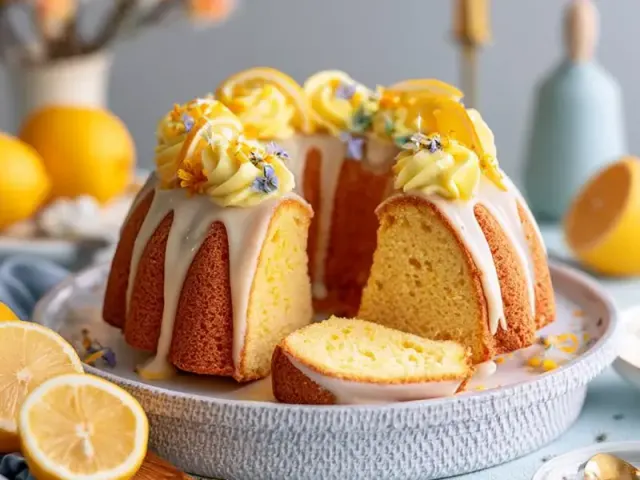
Lemon Easter Bundt Cake: Bright, Tender & Foolproof
There’s something about a bundt cake that feels both celebratory and effortless. The ringed shape catches the light, the glaze pools in the curves, and one slice is never quite enough. For Easter brunch or a spring dessert table, this Lemon Easter Bundt Cake delivers that bright, tender crumb with a citrus kick that lingers—without a hint of dryness.

The key is a two-step lemon treatment: zest and juice in the batter for foundational flavor, then a warm lemon syrup brushed over the cake as it cools. That syrup soaks into the crust, keeping every bite moist and amplifying the lemon without making the cake soggy. It’s a technique I use for all my citrus cakes, and it never fails.
Why This Recipe Works
Most lemon cakes rely on juice alone, but juice adds acidity without much aromatic lift. The zest—finely grated from the yellow part of the peel—contains essential oils that give that unmistakable lemon perfume. I use the zest of two to three lemons, and I rub it into the sugar before creaming the butter. This releases even more oil and distributes the flavor evenly.
The buttermilk is non-negotiable here. Its acidity tenderizes the gluten, producing a finer, softer crumb. It also reacts with the baking soda to give the cake a gentle lift. If you don’t have buttermilk, you can make a quick substitute: add one tablespoon of lemon juice to a cup of whole milk, stir, and let it sit for five minutes until it curdles slightly.
Bundt Pan Prep: The Most Important Step
A stuck bundt cake is a tragedy. I grease my pan with softened butter applied with a pastry brush—this gets into every ridge and fluting. Then I dust it with flour, tap out the excess, and check for any bare spots. If you prefer, use a baking spray that contains flour, but avoid regular cooking spray alone; it can leave a sticky residue.
After baking, let the cake cool in the pan for exactly ten minutes. Invert it onto a cooling rack and give the pan a gentle shake. If it resists, wait another two minutes and try again. Too long in the pan and steam condenses, making the cake stick.
The Lemon Syrup Trick
While the cake is still warm, brush the entire surface with a simple syrup made from equal parts lemon juice and sugar. The warmth opens the pores of the cake, drawing the syrup in. This adds moisture and a concentrated lemon punch right at the surface. It’s especially important for bundt cakes, which have a high crust-to-crumb ratio.
Glaze Consistency
The glaze should be thick enough to cling to the cake but thin enough to drizzle gracefully. I start with two tablespoons of lemon juice to one and a half cups of powdered sugar, then adjust. If it’s too thick, add a teaspoon of milk or cream. If it’s too thin, add more powdered sugar. Drizzle over the completely cooled cake—if the cake is warm, the glaze will melt and run off.
Common Mistakes to Avoid
- Overmixing the batter: Once you add the flour, mix only until it disappears. Overmixing develops gluten, making the cake tough.
- Cold ingredients: Butter, eggs, and buttermilk should all be at room temperature. Cold butter won’t cream properly, and cold eggs can curdle the batter.
- Opening the oven door too early: The cake needs steady heat to rise. Wait until at least the 35-minute mark before checking.
Frequently Asked Questions
Can I use bottled lemon juice instead of fresh?
Fresh lemon juice gives a brighter, cleaner flavor. Bottled juice often has preservatives that can taste flat. For the zest and syrup, fresh is essential. For the glaze, you can use bottled in a pinch, but the flavor won’t be as vibrant.
Why did my bundt cake stick to the pan?
The most common reason is insufficient greasing. I use softened butter applied with a pastry brush into every crevice, then dust with flour. Let the cake cool in the pan for exactly 10 minutes—too long and steam condenses, making it stick; too short and it crumbles.
Can I make this cake ahead of time?
Yes. Bake the cake, brush with syrup, and cool completely. Do not glaze. Wrap tightly in plastic wrap and store at room temperature for up to 2 days, or freeze for up to 2 months. Glaze just before serving.
How do I get a more intense lemon flavor?
Use the full amount of lemon zest called for—zest contains aromatic oils that juice alone can't match. The lemon syrup brushed on the warm cake also infuses the crumb. If you want even more, add 1/2 teaspoon lemon extract with the vanilla.
Takeaway
This Lemon Easter Bundt Cake is the kind of dessert that looks like you fussed but comes together with straightforward technique. The bright flavor, the moist crumb, the glossy glaze—it’s a celebration of spring in every slice. Bake it for Easter brunch, a garden party, or just because the lemons at the market look perfect. It won’t last long.
Frequently Asked Questions
Can I use bottled lemon juice instead of fresh?
Fresh lemon juice gives a brighter, cleaner flavor. Bottled juice often has preservatives that can taste flat. For the zest and syrup, fresh is essential. For the glaze, you can use bottled in a pinch, but the flavor won't be as vibrant.
Why did my bundt cake stick to the pan?
The most common reason is insufficient greasing. I use softened butter applied with a pastry brush into every crevice, then dust with flour. Let the cake cool in the pan for exactly 10 minutes—too long and steam condenses, making it stick; too short and it crumbles.
Can I make this cake ahead of time?
Yes. Bake the cake, brush with syrup, and cool completely. Do not glaze. Wrap tightly in plastic wrap and store at room temperature for up to 2 days, or freeze for up to 2 months. Glaze just before serving.
How do I get a more intense lemon flavor?
Use the full amount of lemon zest called for—zest contains aromatic oils that juice alone can't match. The lemon syrup brushed on the warm cake also infuses the crumb. If you want even more, add 1/2 teaspoon lemon extract with the vanilla.
Lemon Easter Bundt Cake

A tender, moist lemon bundt cake with a bright citrus glaze, perfect for spring celebrations. The buttermilk keeps the crumb soft, and the lemon syrup ensures every slice is bursting with flavor.
- 10-cup bundt pan
- electric mixer
- large mixing bowl
- medium bowl
- whisk
- cooling rack
- small saucepan
- For the cake:
- 2 1/2 cups 315g all-purpose flour
- 2 teaspoons baking powder
- 1/2 teaspoon baking soda
- 1/2 teaspoon salt
- 1 cup 226g unsalted butter, softened
- 1 3/4 cups 350g granulated sugar
- 3 large eggs (room temperature)
- 1 tablespoon lemon zest (from 2-3 lemons)
- 2 tablespoons fresh lemon juice
- 1 teaspoon vanilla extract
- 1 cup 240ml buttermilk, room temperature
- For the lemon syrup:
- 1/4 cup 60ml fresh lemon juice
- 1/4 cup 50g granulated sugar
- For the glaze:
- 1 1/2 cups 180g powdered sugar
- 2-3 tablespoons fresh lemon juice
- 1 tablespoon milk or cream (if needed)
- Preheat oven to 350°F (175°C). Generously grease a 10-cup bundt pan with softened butter or baking spray, making sure to get into all the crevices. Dust with flour, tap out excess.
- In a medium bowl, whisk together flour, baking powder, baking soda, and salt. Set aside.
- In a large bowl, beat butter and sugar with an electric mixer on medium speed until light and fluffy, about 3-4 minutes. Scrape down the bowl.
- Add eggs one at a time, beating well after each addition. Stir in lemon zest, lemon juice, and vanilla.
- With mixer on low, add flour mixture in three additions, alternating with buttermilk in two additions (begin and end with flour). Mix just until combined. Do not overmix.
- Pour batter into prepared pan and spread evenly. Tap pan on counter to release air bubbles.
- Bake for 40-45 minutes, until a skewer inserted in the center comes out clean or with a few moist crumbs. The top should be golden and spring back when lightly touched.
- While cake bakes, make the syrup: combine lemon juice and sugar in a small saucepan. Heat over medium, stirring, until sugar dissolves. Remove from heat.
- Let cake cool in pan on a rack for 10 minutes. Invert onto rack. While still warm, brush the entire cake with lemon syrup using a pastry brush. Let cool completely.
- For the glaze: whisk powdered sugar and 2 tablespoons lemon juice until smooth. Add more juice or milk to reach a thick but pourable consistency. Drizzle over cooled cake.
Storage: Store in an airtight container at room temperature for up to 3 days. The cake actually gets more moist on day two. For longer storage, wrap well and freeze for up to 2 months. Thaw at room temperature.
Allergens: Contains dairy, eggs, and gluten. For a dairy-free version, use plant-based butter and a dairy-free buttermilk (mix 1 cup plant milk with 1 tablespoon lemon juice, let sit 5 minutes). For egg-free, use 3 flax eggs (3 tablespoons ground flax + 9 tablespoons water).
Tip: If your bundt pan has a nonstick coating, avoid metal utensils when removing cake. Always grease thoroughly—I use a pastry brush to get into every groove.
Recipe: Lemon Easter Bundt Cake
Equipment
- 10-cup bundt pan
- electric mixer
- large mixing bowl
- medium bowl
- whisk
- cooling rack
- small saucepan
Ingredients
- For the cake:
- 2 1/2 cups 315g all-purpose flour
- 2 teaspoons baking powder
- 1/2 teaspoon baking soda
- 1/2 teaspoon salt
- 1 cup 226g unsalted butter, softened
- 1 3/4 cups 350g granulated sugar
- 3 large eggs (room temperature)
- 1 tablespoon lemon zest (from 2-3 lemons)
- 2 tablespoons fresh lemon juice
- 1 teaspoon vanilla extract
- 1 cup 240ml buttermilk, room temperature
- For the lemon syrup:
- 1/4 cup 60ml fresh lemon juice
- 1/4 cup 50g granulated sugar
- For the glaze:
- 1 1/2 cups 180g powdered sugar
- 2-3 tablespoons fresh lemon juice
- 1 tablespoon milk or cream (if needed)
Instructions
- Preheat oven to 350°F (175°C). Generously grease a 10-cup bundt pan with softened butter or baking spray, making sure to get into all the crevices. Dust with flour, tap out excess.
- In a medium bowl, whisk together flour, baking powder, baking soda, and salt. Set aside.
- In a large bowl, beat butter and sugar with an electric mixer on medium speed until light and fluffy, about 3-4 minutes. Scrape down the bowl.
- Add eggs one at a time, beating well after each addition. Stir in lemon zest, lemon juice, and vanilla.
- With mixer on low, add flour mixture in three additions, alternating with buttermilk in two additions (begin and end with flour). Mix just until combined. Do not overmix.
- Pour batter into prepared pan and spread evenly. Tap pan on counter to release air bubbles.
- Bake for 40-45 minutes, until a skewer inserted in the center comes out clean or with a few moist crumbs. The top should be golden and spring back when lightly touched.
- While cake bakes, make the syrup: combine lemon juice and sugar in a small saucepan. Heat over medium, stirring, until sugar dissolves. Remove from heat.
- Let cake cool in pan on a rack for 10 minutes. Invert onto rack. While still warm, brush the entire cake with lemon syrup using a pastry brush. Let cool completely.
- For the glaze: whisk powdered sugar and 2 tablespoons lemon juice until smooth. Add more juice or milk to reach a thick but pourable consistency. Drizzle over cooled cake.