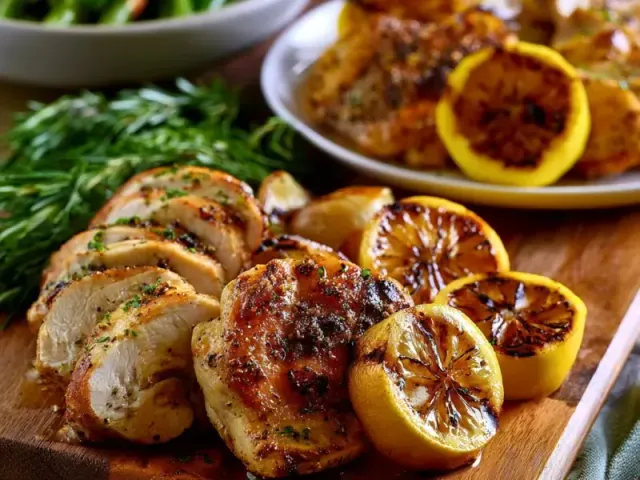
Lemon Pepper Chicken Marinade That Actually Works
Lemon pepper chicken can be a revelation — or a disappointment. The problem is almost always the marinade. Too much acid and the chicken turns soft, almost spongy. Too little and you get a pale, bland piece of meat. I've tested this ratio dozens of times, and the sweet spot is three parts lemon juice to two parts oil by volume, with enough pepper to feel a gentle heat on the back of your tongue.

Here's what makes this version different: I add the lemon zest and juice. The zest carries the aromatic oils that give lemon its perfume without the sour punch. The juice provides the acid for tenderizing. Together, they create a layered citrus flavor that lasts through cooking. And I use coarsely ground black pepper — not the fine dust from a shaker. The bigger pieces cling to the meat and release their heat slowly as they char.
Why This Ratio Matters
Acid breaks down protein. That sounds scientific, but it's simple: lemon juice unwinds the tight coils of chicken muscle. Done right, it makes the meat tender. Done wrong — more than four hours — it turns the outer layer into something that feels like wet cardboard. I keep the marinade time between 30 minutes and 4 hours. For boneless breasts, 90 minutes is ideal. For thighs, you can push to 3 hours. Any longer and you're better off cooking the chicken and adding a squeeze of fresh lemon after.
The oil in the marinade does two things: it carries fat-soluble flavor compounds from the pepper and zest, and it helps the chicken brown during cooking. Use a neutral oil like olive or avocado. Skip extra-virgin here — its smoke point is too low for searing, and the grassy notes can clash with lemon.
Building the Flavor
Start with fresh lemons. Roll them on the counter under your palm before zesting — this loosens the oils in the peel. Use a fine grater (Microplane is best) and only the yellow part; the white pith is bitter. For 1/4 cup juice, you'll need about two lemons. That gives you enough zest for the full recipe.
Coarsely grind the black pepper yourself. I use a pepper mill set to its widest setting, or I crack whole peppercorns with the bottom of a heavy pan. The pieces should be about the size of cracked coriander — visible, but not chunks. Pre-ground pepper is too fine; it dissolves into the liquid and loses its punch.
Salt is non-negotiable. I use kosher salt because it dissolves evenly and doesn't over-salt. One teaspoon per pound of chicken is the baseline. If you're using table salt, cut it to 3/4 teaspoon — it's denser.