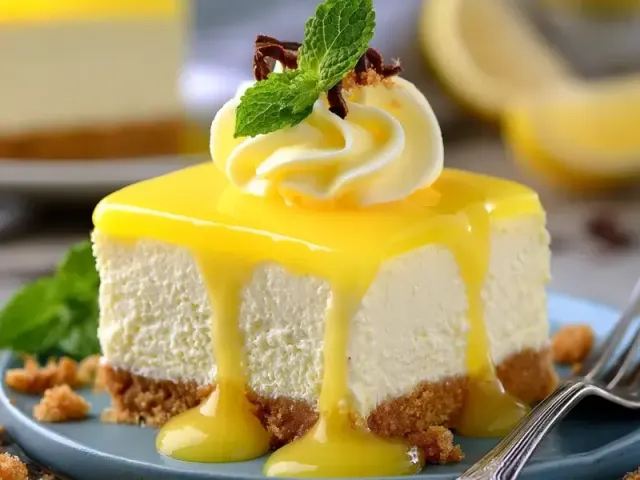
No-Bake Lemon Cheesecake: Creamy, Tangy, and So Easy
The first time you press a spoon into a no-bake cheesecake that's actually set — not soupy, not grainy — you'll wonder why you ever turned on the oven. This no-bake lemon cheesecake is that kind of recipe. It's creamy, tangy, and bright, with a crust that stays crisp and a filling that slices cleanly. No gelatin. No eggs. Just a smart ratio and a little patience.

The Key to a Firm No-Bake Filling
Here's the thing about no-bake cheesecake: it's all about structure. Without eggs or gelatin, you rely on two things — properly whipped cream and the right fat content. I keep the ratio at 2 parts cream cheese to 1 part heavy cream by volume. That means for every 8 ounces of cream cheese, I use 1 cup (8 ounces) of heavy cream. This gives enough body to hold the slice without being stiff or gluey.
The cream must be whipped to stiff peaks. Not soft peaks, not billowy clouds. Stiff peaks mean the cream stands straight up when you lift the beaters. If it droops, it's not ready. Underwhipped cream is the number one reason a no-bake cheesecake won't set.
Choosing Your Lemons
You need fresh lemons for both the zest and the juice. The zest carries the essential oils that give that pure lemon aroma. Roll the lemon on the counter under your palm before zesting — this loosens the oils and makes zesting easier. Zest only the yellow part; the white pith is bitter. You'll need about 2 medium lemons for the 1/4 cup juice and 1 tablespoon zest called for here.
Strain the juice through a fine-mesh strainer to catch any seeds or pulp. This keeps the filling silky smooth.
Building the Crust
A no-bake crust needs to hold together without baking. The trick is pressing it firmly into the pan. Use the bottom of a dry measuring cup or a flat-bottomed glass to compact the crumbs. Press until the surface is even and tight. Then chill the crust while you make the filling. A cold crust helps the filling set faster.
For the butter-to-crumb ratio, I use 6 tablespoons melted butter for 1 1/2 cups crumbs. That's enough to bind without making the crust greasy. If your crumbs seem dry, add another tablespoon of melted butter.
The Filling Method
Start with softened cream cheese. Cold cream cheese will leave lumps that no amount of mixing can fully smooth out. Let the blocks sit on the counter for 30 to 45 minutes before you begin. When you beat them, they should feel like soft butter — no resistance when you press a finger into the block.
Beat the cream cheese alone first for about 2 minutes until it's completely smooth and fluffy. Then add the sugar and lemon zest. The sugar helps dissolve any remaining tiny lumps. Scrape the bowl well after each addition.
When you add the lemon juice, the mixture may look slightly curdled or separated. Don't panic — this is normal. The acid in the juice reacts with the fat. It will come back together when you fold in the whipped cream.
Folding Without Deflating
This is the most important step. Add the whipped cream to the cream cheese mixture in three additions. First addition: fold gently with a rubber spatula until just combined — it will still look streaky. Second addition: fold again, this time bringing the spatula from the bottom of the bowl up and over. Third addition: fold until no white streaks remain. Stop the moment the color is uniform. Overfolding will deflate the cream and make the filling dense and heavy.
Chilling: The Hardest Part
This cheesecake needs at least 6 hours in the refrigerator, and overnight is better. The filling needs time to firm up as the fat solidifies. If you try to slice it after 3 hours, it will be soft and messy. Patience pays off here.
Cover the pan loosely with plastic wrap so the surface doesn't dry out or pick up fridge odors. Place it on a level shelf, not in the door where temperatures fluctuate.
Topping Ideas
A swirl of lemon curd adds an extra punch of tartness. You can also top with fresh raspberries, blueberries, or sliced strawberries. A dollop of lightly sweetened whipped cream is always welcome. Keep it simple — the cheesecake itself is the star.
Common Mistakes to Avoid
- Using cold cream cheese — leads to a lumpy filling.
- Underwhipping the cream — the cheesecake won't set properly.
- Skipping the chill time — the filling needs hours, not minutes.
- Overmixing after adding cream — deflates the air and makes the texture dense.
Takeaway
This no-bake lemon cheesecake delivers everything you want: a bright, creamy filling with a crisp crust, no oven required. The technique is straightforward — soften the cream cheese, whip the cream to stiff peaks, fold gently, and chill long enough. Follow these steps and you'll have a dessert that looks and tastes like you spent hours in the kitchen. You didn't. And that's the beauty of it.
Frequently Asked Questions
Can I use low-fat cream cheese?
Full-fat cream cheese gives the best texture and stability. Low-fat or Neufchâtel cheese has more moisture, which can make the filling softer and less likely to set firmly. If you must substitute, expect a looser slice and chill for at least 8 hours.
Why did my no-bake cheesecake turn out runny?
The most common reasons are: cream cheese was too cold or not beaten smooth enough, the whipped cream wasn't whipped to stiff peaks, or the cheesecake wasn't chilled long enough. Make sure the cream is very cold and whip until it holds a peak that doesn't droop. Chill a full 6 to 8 hours, preferably overnight.
Can I use bottled lemon juice?
Fresh lemon juice is best for flavor. Bottled juice often has preservatives that can affect taste and texture. You need the fresh zest too — that's where the bright lemon aroma comes from. So use real lemons.
Do I need to use a springform pan?
A springform pan makes it easy to remove the cheesecake cleanly. You can also use a 9-inch pie dish or a deep tart pan with a removable bottom. Just note that slices from a pie dish will be more casual.
How do I know when the cheesecake is fully set?
After 6 hours in the fridge, the filling should feel firm to the touch, not jiggly in the center. If you gently shake the pan, the center should barely move. If it ripples like Jell-O, it needs more time.
No-Bake Lemon Cheesecake

A creamy, tangy no-bake lemon cheesecake with a buttery graham cracker crust. No gelatin, no eggs — just a silky filling that sets perfectly in the fridge.
- 9-inch springform pan
- mixing bowls
- electric hand mixer or stand mixer
- spatula
- measuring cups and spoons
- fine-mesh strainer (optional for lemon juice)
- 1 1/2 cups graham cracker crumbs
- 1/4 cup granulated sugar
- 6 tablespoons unsalted butter (melted)
- 16 ounces two 8-ounce blocks full-fat cream cheese, softened to room temperature
- 1/2 cup granulated sugar
- 1 tablespoon fresh lemon zest (from about 2 lemons)
- 1/4 cup fresh lemon juice (from about 2 lemons)
- 1 teaspoon vanilla extract
- 1 cup heavy cream (cold)
- For the topping (optional: 1/2 cup lemon curd (store-bought or homemade), fresh berries, or whipped cream)
- Make the crust: In a medium bowl, stir together the graham cracker crumbs and 1/4 cup sugar. Pour in the melted butter and mix until every crumb is moistened. Press the mixture firmly and evenly into the bottom of a 9-inch springform pan. Use the bottom of a measuring cup to pack it tight. Place in the refrigerator while you make the filling.
- Make the filling: In a large bowl, beat the softened cream cheese with an electric mixer on medium speed until smooth and fluffy, about 2 minutes. Add 1/2 cup sugar and the lemon zest, and beat until combined. Scrape down the sides of the bowl.
- Add the lemon juice and vanilla, and beat on low until just incorporated. The mixture may look slightly curdled — that's okay. It will smooth out when you add the cream.
- In a separate cold bowl, whip the heavy cream with clean beaters on medium-high speed until stiff peaks form. You want the cream to hold its shape firmly when you lift the beaters.
- Gently fold the whipped cream into the cream cheese mixture in three additions. Use a rubber spatula and a light hand — fold until no white streaks remain, but don't overmix or you'll deflate the cream. The filling should be thick, silky, and pale yellow.
- Assemble: Remove the crust from the fridge. Spoon the filling onto the crust and spread it evenly. Smooth the top with a spatula. If using lemon curd, drop spoonfuls on top and swirl gently with a knife. Or leave it plain and top later.
- Chill: Cover the pan loosely with plastic wrap and refrigerate for at least 6 hours, but preferably overnight. The cheesecake needs this time to set firmly. Do not rush — a wobbly center means it's not ready.
- Serve: Run a thin knife around the edge of the pan before releasing the springform. Slice with a clean, dry knife, wiping it between cuts. Add berries or whipped cream if desired.
Storage: Cover and refrigerate leftover cheesecake for up to 5 days. You can also freeze individual slices (wrap tightly in plastic then foil) for up to 2 months. Thaw in the fridge overnight.
Tip: For the silkiest texture, make sure your cream cheese is truly at room temperature — about 65°F to 70°F. Cold cream cheese will leave lumps. Let it sit on the counter for 30 to 45 minutes before starting.
Allergen note: This recipe contains dairy and gluten. For a gluten-free crust, substitute certified gluten-free graham-style cookies or crushed almonds mixed with butter. For dairy-free, use vegan cream cheese and coconut cream — though texture will differ. Consult a healthcare professional for specific dietary needs.
Safety: When juicing lemons, watch your fingers. A citrus reamer or handheld juicer is safer than a knife for this step.
Recipe: No-Bake Lemon Cheesecake
Equipment
- 9-inch springform pan
- mixing bowls
- electric hand mixer or stand mixer
- spatula
- measuring cups and spoons
- fine-mesh strainer (optional for lemon juice)
Ingredients
- 1 1/2 cups graham cracker crumbs
- 1/4 cup granulated sugar
- 6 tablespoons unsalted butter (melted)
- 16 ounces two 8-ounce blocks full-fat cream cheese, softened to room temperature
- 1/2 cup granulated sugar
- 1 tablespoon fresh lemon zest (from about 2 lemons)
- 1/4 cup fresh lemon juice (from about 2 lemons)
- 1 teaspoon vanilla extract
- 1 cup heavy cream (cold)
- For the topping (optional: 1/2 cup lemon curd (store-bought or homemade), fresh berries, or whipped cream)
Instructions
- Make the crust: In a medium bowl, stir together the graham cracker crumbs and 1/4 cup sugar. Pour in the melted butter and mix until every crumb is moistened. Press the mixture firmly and evenly into the bottom of a 9-inch springform pan. Use the bottom of a measuring cup to pack it tight. Place in the refrigerator while you make the filling.
- Make the filling: In a large bowl, beat the softened cream cheese with an electric mixer on medium speed until smooth and fluffy, about 2 minutes. Add 1/2 cup sugar and the lemon zest, and beat until combined. Scrape down the sides of the bowl.
- Add the lemon juice and vanilla, and beat on low until just incorporated. The mixture may look slightly curdled — that's okay. It will smooth out when you add the cream.
- In a separate cold bowl, whip the heavy cream with clean beaters on medium-high speed until stiff peaks form. You want the cream to hold its shape firmly when you lift the beaters.
- Gently fold the whipped cream into the cream cheese mixture in three additions. Use a rubber spatula and a light hand — fold until no white streaks remain, but don't overmix or you'll deflate the cream. The filling should be thick, silky, and pale yellow.
- Assemble: Remove the crust from the fridge. Spoon the filling onto the crust and spread it evenly. Smooth the top with a spatula. If using lemon curd, drop spoonfuls on top and swirl gently with a knife. Or leave it plain and top later.
- Chill: Cover the pan loosely with plastic wrap and refrigerate for at least 6 hours, but preferably overnight. The cheesecake needs this time to set firmly. Do not rush — a wobbly center means it's not ready.
- Serve: Run a thin knife around the edge of the pan before releasing the springform. Slice with a clean, dry knife, wiping it between cuts. Add berries or whipped cream if desired.