Skillet Lemon Pepper Chicken Breasts That Stay Juicy Every Time
The first time I made lemon pepper chicken, I ended up with dry, chalky meat and a bitter, dusty coating. The problem wasn't the seasoning—it was the method. Chicken breasts are lean, and they punish inattention. But with a hot skillet, a little patience, and a technique that builds a crust before sauce, you get something entirely different: tender, juicy meat with a bright, peppery finish that actually tastes like lemon, not just the dried stuff from a jar.

Start with Even Thickness
Uneven chicken breasts are the number one reason for dry meat. The thin tip cooks long before the thick end, so by the time the thick part reaches 165°F, the thin part is sawdust. Fix this in 30 seconds per breast. Place a breast between two sheets of plastic wrap (or inside a zip-top bag) and gently pound with a meat mallet or rolling pin until it's an even 1/2 inch thick. Don't pulverize it—just flatten the thickest parts. This also tenderizes the fibers slightly, making the meat more forgiving of high heat.
The Seasoning Ratio That Works
Store-bought lemon pepper blends vary wildly. Some are mostly salt with a whisper of lemon; others are heavy on black pepper and light on citrus. I make my own using a 2:1:1 ratio of dried lemon zest to coarsely ground black pepper to garlic powder, with just enough salt to season the meat. For 4 breasts, that's 1 tablespoon lemon zest (dried), 1½ teaspoons black pepper, 1 teaspoon garlic powder, and ½ teaspoon salt. The key is the dried lemon zest—it clings to the chicken better than fresh zest, and it doesn't burn in the hot pan. If you only have fresh, grate the zest, spread it on a plate, and let it sit at room temperature for an hour to dry slightly before mixing.
Heat Management: Medium-High, Then Medium
Cast iron or a heavy stainless steel skillet is ideal. Preheat it over medium-high heat for a full 2 minutes. Add 1 tablespoon butter and 1 tablespoon olive oil—the butter adds flavor, the oil raises the smoke point so the butter doesn't burn. When the butter stops foaming, the pan is ready. Place the chicken in the skillet, leaving at least an inch between pieces. If your skillet is crowded, cook in two batches. Crowding lowers the pan temperature and steams the chicken instead of searing it.
Cook undisturbed for 5 minutes. This is the longest 5 minutes of your life, but don't touch the chicken. Let the crust form. When you flip it, the underside should be deep golden brown with crispy edges. Cook the second side for 4 to 5 minutes, until the internal temperature hits 160°F. The carryover heat will bring it to 165°F as it rests.
The Pan Sauce: Bright, Not Bitter
Transfer the cooked chicken to a plate and tent it with foil. Reduce the heat to medium. Add minced garlic to the skillet and stir for 30 seconds—just until fragrant. Pour in ¼ cup low-sodium chicken broth and scrape up all those browned bits (that's flavor). Add 2 tablespoons fresh lemon juice and 1 teaspoon fresh lemon zest. Let it simmer for 1 minute, then return the chicken to the skillet. Spoon the sauce over each piece and cook for another minute. The sauce will reduce slightly and cling to the chicken. Taste it—if it's too tart, add a tiny pinch of sugar; if too salty, add a splash more broth.
Visual Cues and Common Mistakes
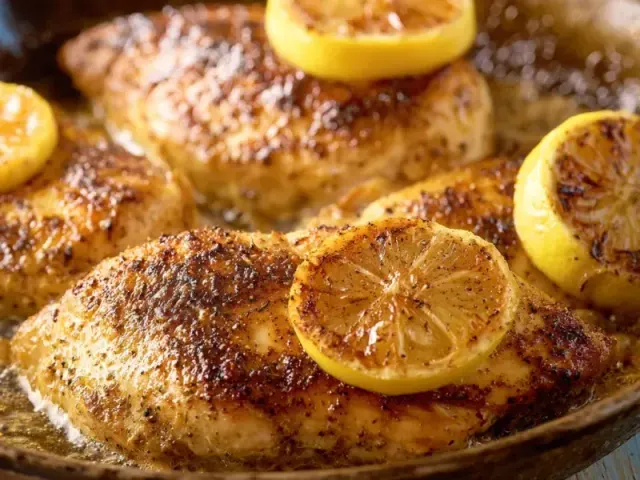
Here's what success looks like: the chicken has a golden-brown, slightly crisp exterior. When you cut into it, the meat is opaque white throughout, with a faint sheen of moisture. The sauce is glossy, not watery, and coats the back of a spoon. The most common mistake is using too-high heat and burning the lemon zest, which turns bitter. If you see black specks forming on the chicken before the 5-minute mark, lower the heat slightly. Another mistake is skipping the rest time—letting the chicken sit for 5 minutes under foil redistributes juices so they don't run out onto the plate.
Serving and Storing
This chicken pairs well with simple sides that soak up the pan sauce: mashed potatoes, steamed rice, or crusty bread. A side salad with a light vinaigrette cuts the richness. For leftovers, store the chicken and sauce together in an airtight container in the refrigerator for up to 3 days. Reheat gently in a covered skillet over low heat with a splash of broth—microwaving will toughen the meat.
Takeaway
Skillet lemon pepper chicken doesn't have to be dry or one-note. The technique—even thickness, a hot pan, undisturbed searing, and a quick pan sauce—turns a simple weeknight dinner into something you'll actually look forward to. The ratio of dried lemon zest to pepper to garlic matters. The rest time matters. And that pan sauce? It's the difference between seasoning that sits on the surface and flavor that sinks in.
Frequently Asked Questions
Why do I need to pound the chicken breasts?
Pounding to an even 1/2-inch thickness ensures the chicken cooks evenly, preventing dry, overcooked edges while the center reaches safe temperature. It also tenderizes the meat slightly.
Can I use chicken thighs instead?
Yes, boneless skinless thighs work well. Cook them about 6-7 minutes per side over medium heat, until internal temperature reaches 175°F (79°C). The sauce remains the same.
How do I keep the chicken from sticking?
Make sure the skillet is hot before adding the butter and oil. Let the butter stop foaming, then add the chicken. Do not move the chicken for at least 4 minutes—it will release naturally when a crust forms.
What if I don't have an instant-read thermometer?
Cut into the thickest part of the chicken at the end of cooking. The juices should run clear, and the meat should be opaque throughout with no pink. However, a thermometer is the most reliable way to ensure safety without overcooking.
Can I make this dairy-free?
Yes. Replace butter with a high-smoke-point oil like avocado or light olive oil. The sauce will be slightly thinner but still flavorful. Use a dairy-free margarine if you prefer a buttery taste.
Skillet Lemon Pepper Chicken Breasts

A straightforward method for pan-searing chicken breasts with a bright lemon pepper crust, ensuring moist, tender meat every time.
- 12-inch cast iron or heavy stainless steel skillet
- meat mallet or rolling pin
- instant-read thermometer
- citrus juicer
- tongs
- 4 boneless (skinless chicken breasts (about 6 ounces each))
- 1 tablespoon lemon pepper seasoning (store-bought or homemade, see note)
- 1/2 teaspoon kosher salt
- 2 tablespoons unsalted butter
- 1 tablespoon olive oil
- 1/4 cup low-sodium chicken broth
- 2 tablespoons fresh lemon juice
- 1 teaspoon lemon zest
- 1 clove garlic (minced)
- 2 tablespoons chopped fresh parsley (optional)
- Place one chicken breast between two sheets of plastic wrap. Using a meat mallet or rolling pin, gently pound to an even 1/2-inch thickness. Repeat with remaining breasts.
- Pat chicken dry with paper towels. Season both sides evenly with lemon pepper seasoning and salt. Let rest at room temperature for 10 minutes.
- Heat a 12-inch heavy skillet over medium-high heat for 2 minutes. Add butter and olive oil; swirl to coat. When butter stops foaming, carefully place chicken in skillet, leaving space between pieces (cook in two batches if needed).
- Cook undisturbed for 5 minutes. The edges should look opaque and golden. Flip chicken using tongs. Cook another 4-5 minutes, until internal temperature reaches 160°F (71°C) at thickest part. Transfer to a plate; tent loosely with foil.
- Reduce heat to medium. Add garlic to skillet; stir 30 seconds until fragrant. Pour in chicken broth, scraping up browned bits with a wooden spoon. Add lemon juice and zest; simmer 1 minute.
- Return chicken to skillet, spoon pan sauce over each piece. Cook 1 minute more, until sauce slightly thickens and chicken reaches 165°F (74°C). Garnish with parsley if desired.
To make your own lemon pepper seasoning: mix 2 tablespoons dried lemon zest (or finely grated fresh zest, dried overnight), 1 tablespoon coarsely ground black pepper, 1 teaspoon garlic powder, and 1/2 teaspoon salt. Store airtight for up to 2 weeks. For thicker sauce, stir in 1 teaspoon cornstarch dissolved in 1 tablespoon cold water before adding lemon juice. Leftovers keep refrigerated in a sealed container for up to 3 days. Reheat gently in a covered skillet over low heat with a splash of broth. Common allergens: dairy (butter). Substitute ghee or avocado oil for dairy-free.
Recipe: Skillet Lemon Pepper Chicken Breasts
Equipment
- 12-inch cast iron or heavy stainless steel skillet
- meat mallet or rolling pin
- instant-read thermometer
- citrus juicer
- tongs
Ingredients
- 4 boneless (skinless chicken breasts (about 6 ounces each))
- 1 tablespoon lemon pepper seasoning (store-bought or homemade, see note)
- 1/2 teaspoon kosher salt
- 2 tablespoons unsalted butter
- 1 tablespoon olive oil
- 1/4 cup low-sodium chicken broth
- 2 tablespoons fresh lemon juice
- 1 teaspoon lemon zest
- 1 clove garlic (minced)
- 2 tablespoons chopped fresh parsley (optional)
Instructions
- Place one chicken breast between two sheets of plastic wrap. Using a meat mallet or rolling pin, gently pound to an even 1/2-inch thickness. Repeat with remaining breasts.
- Pat chicken dry with paper towels. Season both sides evenly with lemon pepper seasoning and salt. Let rest at room temperature for 10 minutes.
- Heat a 12-inch heavy skillet over medium-high heat for 2 minutes. Add butter and olive oil; swirl to coat. When butter stops foaming, carefully place chicken in skillet, leaving space between pieces (cook in two batches if needed).
- Cook undisturbed for 5 minutes. The edges should look opaque and golden. Flip chicken using tongs. Cook another 4-5 minutes, until internal temperature reaches 160°F (71°C) at thickest part. Transfer to a plate; tent loosely with foil.
- Reduce heat to medium. Add garlic to skillet; stir 30 seconds until fragrant. Pour in chicken broth, scraping up browned bits with a wooden spoon. Add lemon juice and zest; simmer 1 minute.
- Return chicken to skillet, spoon pan sauce over each piece. Cook 1 minute more, until sauce slightly thickens and chicken reaches 165°F (74°C). Garnish with parsley if desired.