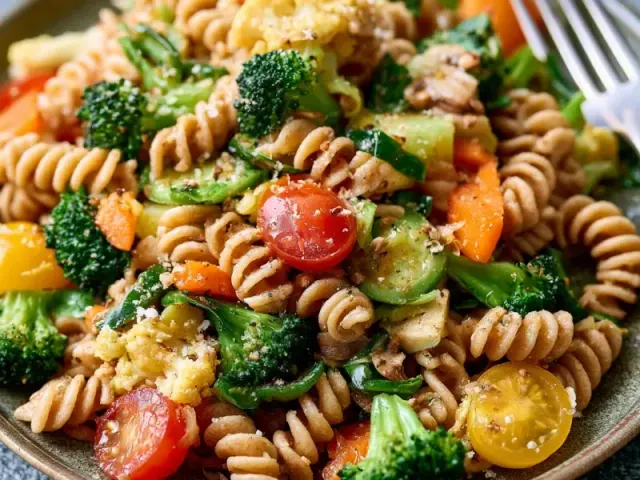
Veggie-Loaded Whole Wheat Pasta: A Weeknight Dinner That Works
The first thing you notice when you cook whole wheat pasta is the aroma: nutty, almost toasty, nothing like the bland flour of regular pasta. It smells like something that will actually fill you up. But if you've tried it before, you also know the risk—mushy, gummy, or just plain heavy. That's where technique comes in.

This veggie-loaded whole wheat pasta solves those problems. The trick is twofold: cook the pasta a minute shy of al dente, and pan-roast the vegetables separately before combining. No boiling the veggies into submission. No gluey sauce. Just a skillet full of tender-crisp vegetables with browned edges, tossed with pasta in a light, savory coating that comes from the pasta water itself.
The Right Way to Cook Whole Wheat Pasta
Whole wheat pasta needs more water than you think. Fill a large pot with at least 4 quarts of water per pound of pasta. Salt it generously—about 1 tablespoon of kosher salt—until it tastes like the sea. This is the only chance to season the pasta from the inside out.
Bring it to a full, rolling boil before adding the pasta. Stir immediately to prevent sticking. Set a timer for 1 minute less than the package's shortest recommended time. For most whole wheat penne or fusilli, that's around 8 minutes. Taste a piece at that point. It should be firm to the bite, with a tiny white dot in the center. That's al dente. Drain it, but reserve 1 cup of the starchy water before you do. That water is liquid gold—it will bind the sauce to the pasta without any cream or butter.
Do not rinse the pasta. The starch on the surface is what helps the sauce cling. If you rinse it, you wash away that texture and end up with slippery noodles that shed their coating.
Pan-Roasting the Vegetables
Most vegetable pasta recipes dump everything into one pot and hope for the best. The result is a watery, steamed mess. Instead, give the vegetables their own moment in a hot skillet.
Heat 1 tablespoon of olive oil in a large skillet—12 inches is ideal—over medium-high heat until it shimmers. Add the diced zucchini, yellow squash, and bell pepper in a single layer. Let them sit without stirring for 2 full minutes. You'll hear a steady sizzle. That's the sound of water evaporating and browning beginning. After 2 minutes, stir and let them cook another 2-3 minutes. The edges should be golden, the centers still firm. Transfer them to a plate.
This step is where the flavor happens. If you stir too often, the vegetables steam instead of brown. If the pan is too crowded, they release water and boil. Work in batches if your skillet is small, or simply use fewer vegetables. Quality over quantity.
Building the Sauce
With the vegetables set aside, reduce the heat to medium and add the remaining oil and the diced onion. Cook it slowly, stirring occasionally, until it turns translucent and the edges start to brown—about 4 minutes. This builds a sweet, savory base. Add the minced garlic and cook just until fragrant, 30 seconds. Burnt garlic tastes bitter, so keep it moving.
Stir in the drained diced tomatoes. Canned tomatoes are fine here—they're cooked at peak ripeness. Draining them removes excess liquid that would make the sauce watery. Add the salt, pepper, oregano, and red pepper flakes. Let it simmer for 2 minutes, scraping up any browned bits from the bottom of the pan. Those bits are concentrated flavor, and the tomatoes will absorb them.
Return the roasted vegetables to the skillet. Toss to coat them in the tomato mixture.
Bringing It All Together
Add the drained pasta to the skillet along with 1/2 cup of the reserved pasta water. Toss everything over medium heat for 1-2 minutes. The starch in the water will emulsify with the oil and tomato juices, creating a light sauce that clings to every piece of pasta. If it seems dry, add more pasta water a tablespoon at a time until it looks glossy and loose. If it's too wet, let it cook another minute to reduce.
Remove from heat. Stir in fresh basil or parsley and a shower of Parmesan if using. The cheese adds saltiness and umami, but it's optional. Taste and adjust salt and pepper.
What to Watch For
Don't overcook the pasta. Whole wheat pasta continues to soften as it sits in the sauce. Undercook it by a minute, and it will finish cooking in the skillet. Overcook it, and you'll have mush.
Don't skip the pasta water. Without it, the sauce won't cling. The starch is the glue. If you forget to reserve it, use 1/2 cup of starchy water from boiling potatoes or simply mix 1 teaspoon of cornstarch with 1/2 cup of water as a last resort.
Don't crowd the skillet. If you need to feed more people, cook the vegetables in two batches. Overcrowding leads to steaming, not browning, and you lose that nutty, caramelized flavor.
Make It Your Own
This recipe is a template. Swap the zucchini for broccoli florets (blanch them first for 2 minutes). Use asparagus tips in spring. Add a handful of baby spinach at the end and let it wilt. Toss in a can of drained chickpeas for extra protein. The method stays the same: sear the vegetables, build a quick sauce, and let the pasta water do the work.
The beauty of this dish is that it's filling without being heavy. The whole wheat pasta gives you staying power, the vegetables add color and crunch, and the sauce is light enough that you don't feel like you're eating a brick. It's a weeknight dinner that actually works—no special ingredients, no complicated steps, just solid technique and a little patience.
For specific dietary needs or health concerns, consult a qualified professional.
Frequently Asked Questions
Why does whole wheat pasta sometimes turn out gummy?
Whole wheat pasta has more fiber and starch than white pasta, so it releases more starch during cooking. The key is to cook it in plenty of salted water—at least 4 quarts per pound—and stop cooking when it's just al dente, about 1 minute less than the package says. Rinsing after draining is not recommended; the starch helps the sauce stick. If it still seems sticky, toss it with a drizzle of olive oil immediately after draining.
Can I use frozen vegetables instead of fresh?
Yes, but the texture will be softer. Frozen vegetables release more water during cooking, so skip the initial sear step. Thaw them first, pat dry with a paper towel, then add them to the skillet after the onions and garlic are cooked. Cook just until heated through, about 2-3 minutes, to avoid mushiness.
How do I make this pasta more filling without adding meat?
Add a can of drained and rinsed chickpeas or white beans along with the tomatoes. They add protein and fiber without changing the flavor profile much. You can also stir in a handful of baby spinach at the end—it wilts quickly and boosts the veggie count.
What's the best whole wheat pasta shape for this recipe?
Short shapes with ridges or nooks—like penne, fusilli, or rotini—work best because they catch the sauce and vegetable pieces. Long strands like spaghetti can work but are harder to toss evenly with chunky vegetables.
Veggie-Loaded Whole Wheat Pasta

A hearty whole wheat pasta tossed with pan-roasted vegetables and a light garlic-herb sauce. No heavy cream, no complicated steps—just good technique for a satisfying weeknight meal.
- large pot
- colander
- large skillet (12-inch)
- chef's knife
- cutting board
- wooden spoon
- measuring cups and spoons
- 12 ounces whole wheat pasta (penne or fusilli work well)
- 2 tablespoons olive oil (divided)
- 1 medium zucchini (diced into 1/2-inch pieces)
- 1 medium yellow squash (diced into 1/2-inch pieces)
- 1 red bell pepper (diced into 1/2-inch pieces)
- 1 medium yellow onion (diced)
- 3 cloves garlic (minced)
- 1 14.5-ounce can diced tomatoes, drained
- 1/2 teaspoon salt (plus more for pasta water)
- 1/4 teaspoon black pepper
- 1/2 teaspoon dried oregano
- 1/4 teaspoon red pepper flakes (optional)
- 1/4 cup grated Parmesan cheese (optional, for serving)
- 2 tablespoons fresh basil or parsley (chopped)
- Bring a large pot of salted water to a rolling boil. Add the whole wheat pasta and cook until al dente, about 1 minute less than package directions (usually 8-10 minutes). Reserve 1 cup of pasta water before draining.
- While the pasta cooks, heat 1 tablespoon olive oil in a large skillet over medium-high heat until shimmering. Add the zucchini, yellow squash, and bell pepper. Cook without stirring for 2 minutes to get a good sear, then stir and cook another 2-3 minutes until the vegetables are tender and lightly browned in spots. Transfer to a plate.
- Reduce heat to medium. Add the remaining 1 tablespoon olive oil and the diced onion. Cook, stirring occasionally, until the onion is translucent and beginning to brown, about 4 minutes. Add the garlic and cook for 30 seconds until fragrant.
- Stir in the drained diced tomatoes, salt, black pepper, oregano, and red pepper flakes if using. Cook for 2 minutes, scraping up any browned bits from the bottom of the pan.
- Return the cooked zucchini, squash, and bell pepper to the skillet. Toss to combine.
- Add the drained pasta to the skillet along with 1/2 cup of the reserved pasta water. Toss everything together over medium heat for 1-2 minutes, adding more pasta water if needed to create a light sauce that coats the pasta. The starches in the water help the sauce cling.
- Remove from heat. Stir in the fresh herbs and Parmesan if using. Serve immediately.
Storage: Leftovers keep in an airtight container in the refrigerator for up to 3 days. Reheat in a skillet with a splash of water or broth to refresh the sauce. The pasta will absorb more liquid as it sits, so add a little extra when reheating.
Substitutions: Swap zucchini and squash for broccoli florets or asparagus tips (cut into 1-inch pieces). Use gluten-free pasta if needed (cook according to package directions). Omit Parmesan for a dairy-free version, or use a vegan alternative.
Allergen note: This recipe contains gluten (pasta) and dairy (Parmesan). For specific dietary needs, consult a qualified professional.
Safety: When working with a hot skillet and boiling pasta water, keep pot handles turned inward and use oven mitts when handling hot cookware.
Recipe: Veggie-Loaded Whole Wheat Pasta
Equipment
- large pot
- colander
- large skillet (12-inch)
- chef's knife
- cutting board
- wooden spoon
- measuring cups and spoons
Ingredients
- 12 ounces whole wheat pasta (penne or fusilli work well)
- 2 tablespoons olive oil (divided)
- 1 medium zucchini (diced into 1/2-inch pieces)
- 1 medium yellow squash (diced into 1/2-inch pieces)
- 1 red bell pepper (diced into 1/2-inch pieces)
- 1 medium yellow onion (diced)
- 3 cloves garlic (minced)
- 1 14.5-ounce can diced tomatoes, drained
- 1/2 teaspoon salt (plus more for pasta water)
- 1/4 teaspoon black pepper
- 1/2 teaspoon dried oregano
- 1/4 teaspoon red pepper flakes (optional)
- 1/4 cup grated Parmesan cheese (optional, for serving)
- 2 tablespoons fresh basil or parsley (chopped)
Instructions
- Bring a large pot of salted water to a rolling boil. Add the whole wheat pasta and cook until al dente, about 1 minute less than package directions (usually 8-10 minutes). Reserve 1 cup of pasta water before draining.
- While the pasta cooks, heat 1 tablespoon olive oil in a large skillet over medium-high heat until shimmering. Add the zucchini, yellow squash, and bell pepper. Cook without stirring for 2 minutes to get a good sear, then stir and cook another 2-3 minutes until the vegetables are tender and lightly browned in spots. Transfer to a plate.
- Reduce heat to medium. Add the remaining 1 tablespoon olive oil and the diced onion. Cook, stirring occasionally, until the onion is translucent and beginning to brown, about 4 minutes. Add the garlic and cook for 30 seconds until fragrant.
- Stir in the drained diced tomatoes, salt, black pepper, oregano, and red pepper flakes if using. Cook for 2 minutes, scraping up any browned bits from the bottom of the pan.
- Return the cooked zucchini, squash, and bell pepper to the skillet. Toss to combine.
- Add the drained pasta to the skillet along with 1/2 cup of the reserved pasta water. Toss everything together over medium heat for 1-2 minutes, adding more pasta water if needed to create a light sauce that coats the pasta. The starches in the water help the sauce cling.
- Remove from heat. Stir in the fresh herbs and Parmesan if using. Serve immediately.