
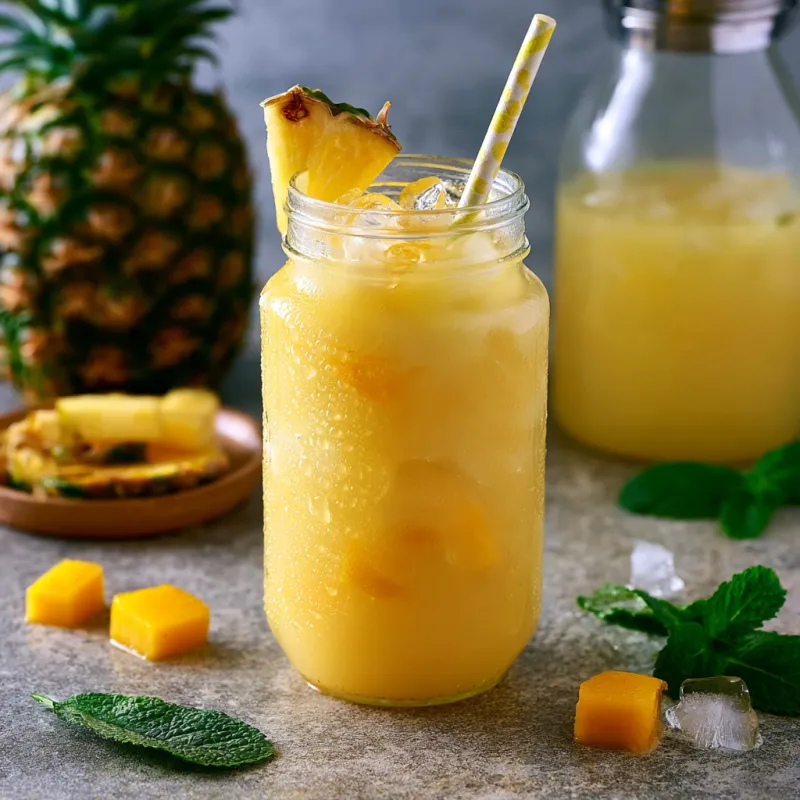
The first sip hits you with a wave of mango sweetness, then lime cuts through clean and sharp. Pineapple lingers on the finish, not too loud, just enough to keep you reaching for another sip. That’s what a mango pineapple refresher should be: bright, balanced, and never cloying.

I’ve tested a lot of fruit drink recipes over the years, and the biggest mistake I see is treating the blender like a trash can. Too much liquid, too little fruit, and suddenly you’re drinking vaguely tropical water. This method keeps the focus on the fruit itself, with a specific ratio that delivers real flavor without added sugar overload.
The Ratio That Works
The secret is a 4:1 fruit-to-water ratio by volume. For two servings, that’s 2 cups of fruit (1 cup mango, 1 cup pineapple) to 1/2 cup water. The water is just enough to get the blender moving without watering down the puree. Lime juice adds acid, which brightens the whole drink and prevents it from tasting flat. I use 2 tablespoons per 2 cups of fruit — that’s the sweet spot between tart and balanced.
Why You Must Strain the Puree
Mango and pineapple both have fibrous threads. If you skip straining, your drink will have a fuzzy, pulpy texture that feels more like a smoothie than a refresher. That’s fine for breakfast, but not for a crisp afternoon drink. Pour the blended puree through a fine-mesh strainer and press firmly. You’ll get a silky liquid, and the fibrous pulp stays behind. It takes an extra 60 seconds, and it makes all the difference.
Ice Strategy: Chill Without Dilution
Adding ice directly to the blender is a common mistake. It dilutes the puree before you even taste it. Instead, blend the fruit, water, lime, and sweetener first. Then add the ice to the pitcher and stir. The ice chills the puree quickly while melting just enough to loosen the texture without making it watery. I use 1 cup of ice for 2 servings. That’s the magic number.
How to Know When the Puree Is Right
After blending, the puree should be thick enough to coat the back of a spoon. When you pour it into the pitcher, it should flow slowly, not splash like water. If it’s too thick, add a tablespoon of water at a time until it moves freely. If it’s too thin, you added too much water — next time, start with less.
Sparkling Water: The Final Touch
Top each glass with sparkling water just before serving. Use about 1/2 cup per glass. Stir once gently — over-stirring knocks out the bubbles. The drink should have a light fizz that lifts the fruit flavors. If you want a still version, skip the sparkling water and add a splash of cold water or coconut water instead.
Common Mistake to Avoid
Using overripe fruit. A mango that’s gone soft and brown will make the drink taste fermented. Pineapple that’s too ripe loses its bright acidity and turns cloying. Use fruit that’s sweet but still firm. For mango, look for one that yields slightly to pressure but isn’t mushy. For pineapple, the leaves should pull away easily from the crown, and the base should smell sweet but not winy.
Adjusting Sweetness and Tartness
Start with 1 tablespoon of honey or agave. Taste the puree after blending. If the mango was very sweet, you might not need any. If it was a bit green, add another teaspoon. The lime juice is non-negotiable — it’s what makes the drink refreshing rather than just sweet. If you prefer more tartness, add an extra squeeze of lime to your glass.
Make It Your Own
This recipe is a base. Swap the mango for papaya or the pineapple for orange. Add a pinch of cayenne for heat or a few basil leaves in the blender for an herbal twist. The technique stays the same: fruit, water, acid, strain, chill, fizz.
Takeaway: A great mango pineapple refresher comes down to fruit quality, the right ratio, and a willingness to strain. Skip the shortcuts, and you’ll have a drink that tastes like real fruit, not a juice box. Make it once, and you’ll know exactly what I mean.
Frequently Asked Questions
Can I use canned mango or pineapple?
Yes, but choose canned fruit packed in juice, not syrup. Drain well before blending. The flavor will be less bright than fresh, so add an extra squeeze of lime to balance.
Why does my refresher taste watery?
Watery flavor usually comes from too much ice or not enough fruit. Stick to the ratio of 2 cups fruit to 1/2 cup water, and use the specified amount of ice only to chill, not to dilute. Strain the puree to remove excess water from the fruit fibers.
Can I make this ahead for a party?
Absolutely. Make the puree base up to 2 days ahead and refrigerate. Just before serving, add ice and sparkling water. Do not add the sparkling water until serving or it will go flat.
Is this drink vegan?
Yes, if you use agave syrup instead of honey. All other ingredients are plant-based.
How do I adjust sweetness?
Taste the mango first. A very ripe mango may need no sweetener at all. Start with 1 teaspoon of honey or agave, then add more after blending. You can always add, but you can’t take it out.
Mango Pineapple Refresher
Ingredients
Equipment
Method
- Peel the mango and cut the flesh away from the pit. Cube into 1-inch pieces. If using fresh pineapple, trim and core, then cut into chunks.
- Place mango, pineapple, cold water, lime juice, and honey in a blender. Blend on high until completely smooth, about 30-45 seconds. The mixture should be thick and creamy with no visible chunks.
- Pour the puree through a fine-mesh strainer set over a pitcher. Press with the back of a spoon to extract all the liquid. Discard the fibrous pulp left in the strainer. This step ensures a silky texture, not a pulpy one.
- Add the ice cubes to the pitcher and stir until the puree is well chilled and the ice begins to melt slightly, about 1 minute. This quick dilution balances the sweetness.
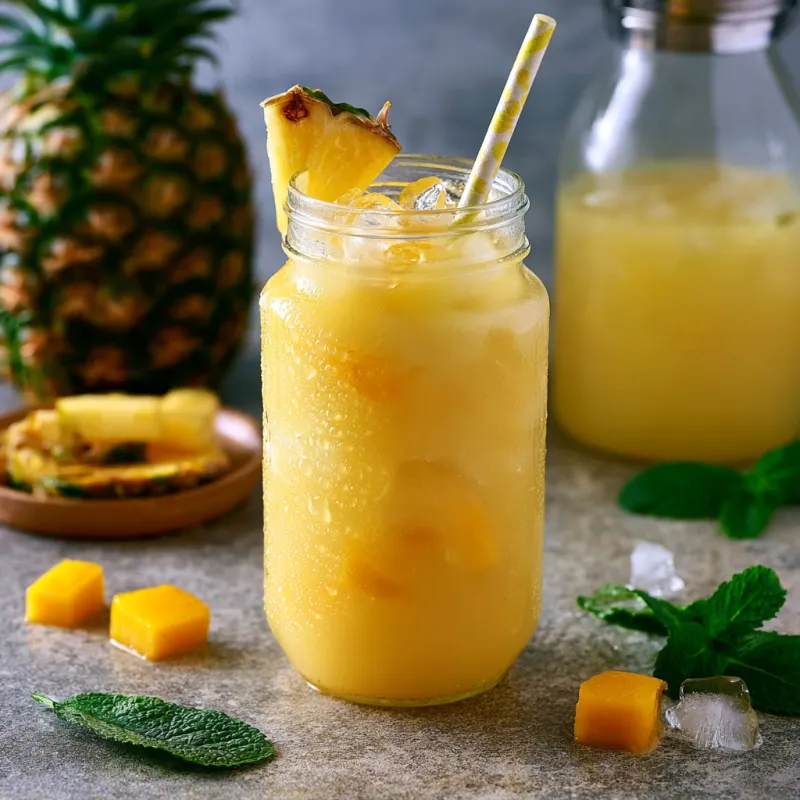
- Divide the mixture between two tall glasses filled with fresh ice. Top each with about 1/2 cup sparkling water. Stir gently once to combine. The drink should be a vibrant golden-orange with a slight fizz.
- Garnish with a lime slice and a mint sprig. Serve immediately.