
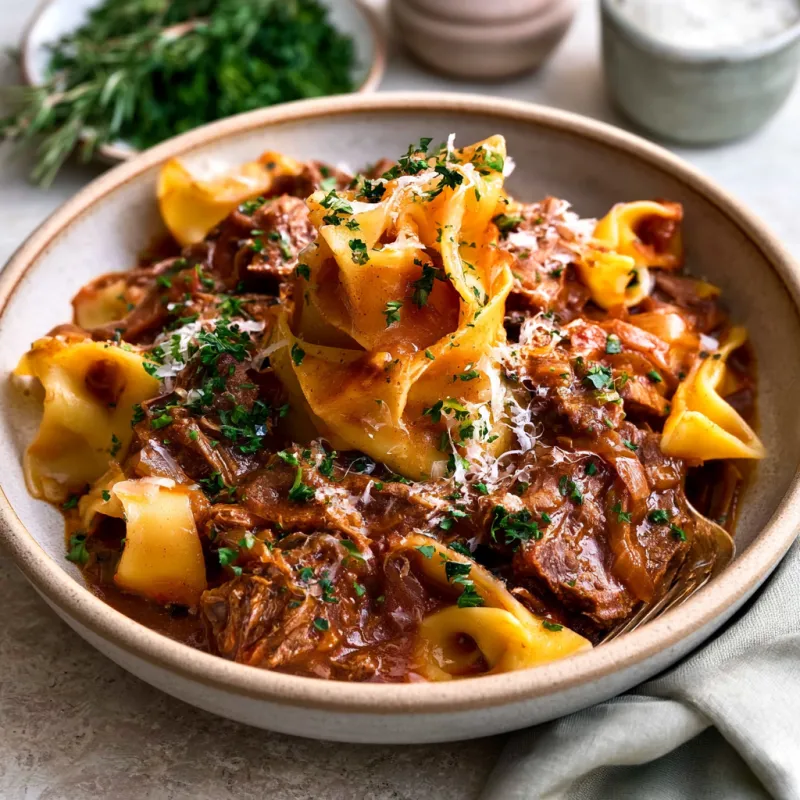
There’s a moment when a pot of beef ragu has been simmering for almost two hours, and the kitchen smells like a Sunday that never ends. The air is thick with tomato, wine, and a gentle herbiness from rosemary. I lift the lid, and the sauce bubbles lazily. That’s when I know—the beef is about to fall apart under the slightest pressure from a fork.

I keep the ratio simple: two pounds of beef, one can of tomatoes, one cup of wine, and a half cup of milk. That last ingredient surprises some people. But the milk is the quiet hero—it rounds out the acidity and adds a tender richness you can’t get from broth alone. No cream, no butter. Just a splash of whole milk stirred in at the end.
Why Chuck Is King
Beef chuck comes from the shoulder, a hardworking muscle with plenty of connective tissue and fat. Those are exactly what you want for a long, slow braise. As the collagen breaks down over two-plus hours, it melts into the sauce, giving it body and a silky texture. Lean cuts like sirloin will turn dry and stringy. Chuck stays moist and shreds into tender strands.
I cut the chuck into two-inch chunks before searing. That size gives maximum surface area for browning without drying out the interior. Brown in batches—crowding the pan lowers the temperature and steams the meat instead of searing it. You want deep mahogany crust, not pale gray.
The Sauté: A Fine Dice Matters
Onion, carrot, and celery form the base. I dice them small—about a quarter-inch—so they melt into the sauce almost invisibly. A coarse chop leaves you biting into raw-textured vegetables later. Cook them until they’re soft and just starting to color, about eight minutes. Then add the garlic and tomato paste. Let that paste cook for a full minute. It darkens from bright red to rusty brick, and its flavor deepens.
Deglazing with Wine
Red wine does two things: it adds complexity and lifts the browned bits off the bottom of the pot. Those bits, called fond, are pure concentrated flavor. I use a dry red like Merlot or Cabernet Sauvignon—nothing sweet. Pour it in, scrape with a wooden spoon, and let it reduce by half. That takes about three to four minutes. The alcohol cooks off, leaving behind fruity, tannic notes that balance the tomatoes.
The Long Simmer
Return the beef to the pot along with any juices that pooled on the plate. Add crushed tomatoes—I prefer a 28-ounce can of good-quality Italian tomatoes, crushed by hand or from a can. Two sprigs of fresh rosemary and two bay leaves go in. No oregano, no basil. Keep the herb profile clean.
Bring the sauce to a gentle simmer—small bubbles breaking the surface, not a rolling boil. Cover the pot partially with a lid, leaving a crack for steam to escape. Cook on low heat for two hours. Stir every twenty minutes or so to prevent sticking. The sauce will thicken and the meat will become so tender that a fork slides through with no resistance.
Visual Cues at Two Hours
The sauce should be deep red, slightly darkened from reduction. The oil may separate a little on top—that’s normal. The beef should pull apart with two forks like pulled pork. If it still resists, give it another fifteen minutes and check again.
The Milk Finish
Remove the rosemary stems and bay leaves. Shred the beef right in the pot. Then stir in half a cup of whole milk. Simmer uncovered for ten minutes. The milk integrates into the sauce, softening the acidity and adding a subtle creaminess. Don’t skip this step—it’s what makes the ragu taste luxuriously smooth without being heavy.
Pasta Pairing and Serving
Pappardelle is my go-to here. Those wide ribbons catch the chunky sauce in every fold. Cook the pasta al dente—firm to the bite—because it will continue cooking in the sauce. Before draining, scoop out a cup of the starchy pasta water. Toss the drained pasta into the ragu pot over low heat, adding pasta water a splash at a time until the sauce coats each strand evenly. Serve immediately with freshly grated Parmesan.
This beef ragu pasta is the kind of meal that feels like an occasion, even on a Tuesday. The technique is straightforward, the ingredients humble, and the result is deeply satisfying.
Note on allergens: This recipe contains dairy and gluten. For a dairy-free version, omit the milk or substitute unsweetened oat milk. For gluten-free, serve over polenta or gluten-free pasta. Consult a qualified professional for personal dietary decisions.
Frequently Asked Questions
What cut of beef is best for ragu?
Beef chuck is ideal because it has enough marbling to stay tender during long simmering. Brisket or bottom round also work, but avoid lean cuts like sirloin.
Can I make beef ragu in a slow cooker?
Yes. After searing the beef and sautéing the vegetables, transfer everything to a slow cooker. Cook on low for 6-8 hours, then shred and add the milk at the end.
Why add milk to beef ragu?
A small amount of milk adds a subtle richness and helps tenderize the meat. It also balances the acidity of the tomatoes without making the sauce creamy.
What pasta shape works best?
Wide, flat noodles like pappardelle or fettuccine are traditional because they hold the chunky sauce well. Rigatoni or paccheri are good alternatives.
How do I know when the beef is done?
The beef is ready when it pulls apart easily with two forks—no resistance. If it still feels firm, continue simmering and check every 15 minutes.
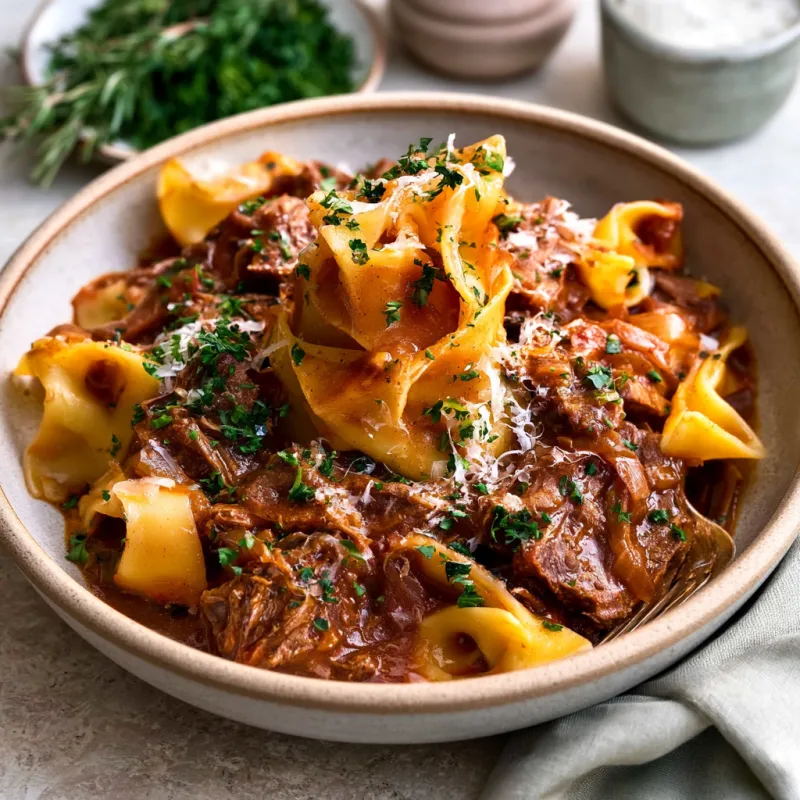
Beef Ragu Pasta
Ingredients
Equipment
Method
- Pat the beef chunks dry with paper towels. Season generously with salt and pepper.
- Heat olive oil in a large Dutch oven over medium-high heat until shimmering. Working in batches, sear the beef on all sides until deeply browned, about 4-5 minutes per batch. Transfer to a plate and set aside.
- Reduce heat to medium. Add onion, carrots, and celery to the pot. Cook, stirring occasionally, until softened and lightly golden, about 8 minutes. Scrape up any browned bits from the bottom.
- Stir in garlic and tomato paste. Cook for 1 minute until fragrant and the paste darkens slightly.
- Pour in the red wine. Bring to a simmer, scraping the bottom to release any remaining fond. Let the wine reduce by half, about 3-4 minutes.
- Return the beef and any accumulated juices to the pot. Add crushed tomatoes, rosemary sprigs, and bay leaves. Stir to combine.
- Bring to a gentle simmer, then cover partially with a lid. Cook on low heat for 2 hours, stirring occasionally, until the beef is fork-tender and shreds easily.
- Remove from heat. Discard rosemary sprigs and bay leaves. Using two forks, shred the beef into bite-sized pieces directly in the pot.
- Stir in the whole milk. Simmer uncovered for 10 minutes to meld flavors and slightly thicken the sauce. Taste and adjust salt and pepper.
- Meanwhile, cook pasta in a large pot of salted boiling water until al dente. Reserve 1 cup of pasta water before draining.
- Add drained pasta to the ragu pot. Toss over low heat, adding pasta water a splash at a time if needed to loosen the sauce. Serve immediately with Parmesan.