
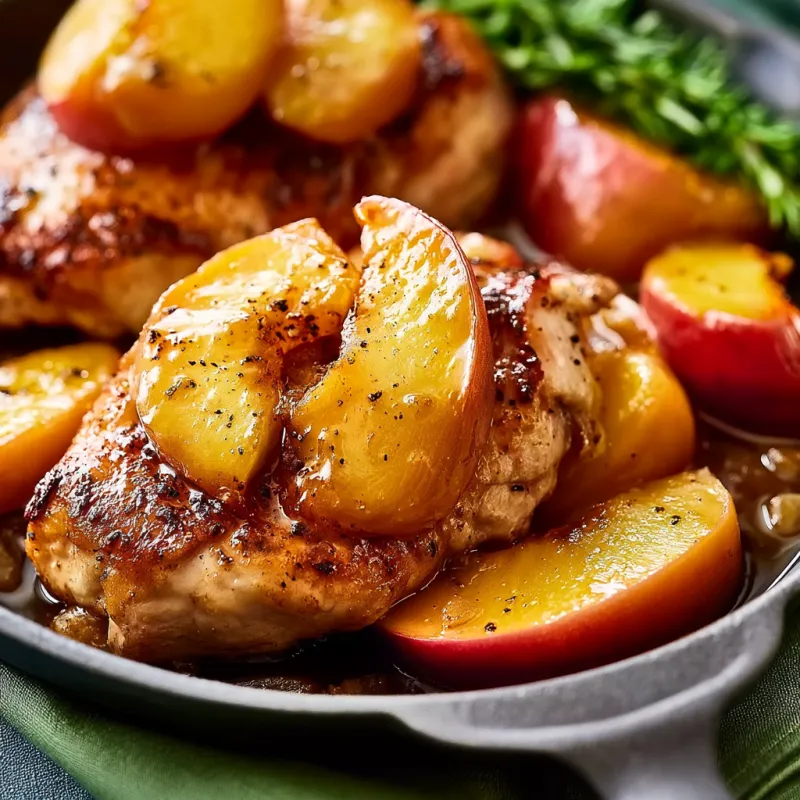
The first thing you notice is the smell. Balsamic vinegar hitting a hot skillet, mingling with caramelizing peaches and seared chicken. It’s sweet, tangy, and savory all at once — the kind of aroma that pulls everyone into the kitchen. This savory peach chicken skillet comes together in one pan and about 30 minutes. No marinating, no complicated steps. Just ripe peaches, well-seasoned chicken, and a simple pan sauce that tastes like you spent an hour on it.

The Secret to a Good Pan Sauce
A pan sauce is built on browned bits — the fond left behind after searing meat. That’s why I never rush the first step. Pat the chicken thighs dry with paper towels. Moisture is the enemy of browning. If the chicken is wet, it steams instead of sears, and you lose that deep flavor. Heat the skillet over medium-high until a drop of water sizzles and evaporates instantly. Add the oil, let it shimmer, then lay the chicken in smooth side down. Leave it alone for a full 5 minutes. That patience gives you a crust that’s mahogany and crisp. When you flip, the other side only needs 3 minutes. Transfer the chicken to a plate — it will finish cooking later in the sauce.
Getting the Peaches Right
Choose peaches that are ripe but firm. If they yield slightly to gentle pressure, they’re perfect. Overripe peaches will turn to mush in the skillet. Cut each peach into 8 wedges — not too thin or they’ll cook too fast, not too thick or they won’t caramelize. After the chicken comes out, reduce the heat to medium. Add the remaining oil and lay the peach wedges cut side down. Let them cook undisturbed for 2 minutes. You’ll see the edges turn golden and the natural sugars start to bubble. Flip and cook just 1 minute more. The goal is a slight char and softened texture, not a fully cooked peach. They’ll finish in the sauce.
Building the Balsamic Glaze
With the peaches set aside with the chicken, the skillet now holds the key to the sauce — browned bits from both the chicken and the peaches. Add the shallot and cook for 1 minute, scraping up any loose fond. Then the garlic goes in for 30 seconds. Garlic burns fast, so keep it moving. Pour in the balsamic vinegar and honey. Let it bubble for 30 seconds, stirring to dissolve the honey and incorporate the fond. The vinegar will smell sharp at first, then mellow as it reduces. Add the chicken broth and bring everything to a simmer. Scrape any remaining bits from the bottom — that’s pure flavor. Let it simmer for 2 minutes. The sauce should thicken slightly, just enough to coat the back of a spoon.
Returning Everything to the Pan
Nestle the chicken and peaches back into the skillet, along with any juices that accumulated on the plate. Add the butter and thyme sprigs. Spoon the sauce over the chicken and peaches. Let everything simmer together for 2 minutes. The butter emulsifies the sauce, giving it a silky sheen. The chicken reheats and absorbs some of the balsamic sweetness. The peaches soften a bit more but still hold their shape. Check the internal temperature of the chicken — it should be 165°F. If it’s not, simmer another minute or two. Remove the thyme sprigs before serving.
What to Serve Alongside
This dish is saucy, so something to catch that sauce is ideal. I serve it over creamy polenta, which takes about 15 minutes and soaks up every drop. Or try it with couscous, rice, or crusty bread. For a lighter meal, pile it on a bed of arugula — the peppery greens balance the sweetness. A simple side of steamed green beans or roasted asparagus rounds out the plate.
Common Mistakes to Avoid
Overcrowding the pan. If your skillet isn’t big enough, sear the chicken in two batches. Crowding lowers the pan temperature and causes steaming. A 12-inch skillet handles 4 thighs comfortably.
Skipping the rest time. Letting the chicken rest after seasoning and again after searing keeps it juicy. Cutting into it too early lets the juices run out.
Using overripe peaches. They’ll disintegrate. Stick with ripe but firm peaches. Nectarines work well too — no need to peel them.
Not scraping the fond. Those browned bits are the foundation of the sauce. Deglaze thoroughly with the vinegar and broth.
Final Thoughts
This savory peach chicken skillet is the kind of recipe that feels special but fits into a busy weeknight. The contrast of sweet peaches, tangy balsamic, and savory chicken is unexpected in the best way. And because it all happens in one pan, cleanup is quick. That’s a win in my book.
Frequently Asked Questions
Can I use frozen peaches for this savory peach chicken skillet?
Yes, but thaw and pat them very dry first. Frozen peaches release more water, so you’ll need to cook them an extra 1-2 minutes per side to get good caramelization. The sauce may be slightly thinner — simmer an extra minute to compensate.
What can I substitute for balsamic vinegar?
Use apple cider vinegar or red wine vinegar mixed with 1/2 teaspoon of brown sugar. The flavor will be brighter and less sweet, but still complementary to the peaches. Reduce the honey by half if using apple cider vinegar.
How do I know when the chicken is cooked through?
Use an instant-read thermometer inserted into the thickest part of the thigh. It should read 165°F. If you don’t have a thermometer, cut into the thickest piece — the juices should run clear and the meat should be opaque throughout with no pink.
Can I make this dish dairy-free?
Yes. Omit the butter entirely, or substitute with a dairy-free butter alternative or an extra tablespoon of olive oil. The sauce will still be rich from the balsamic reduction and chicken juices.
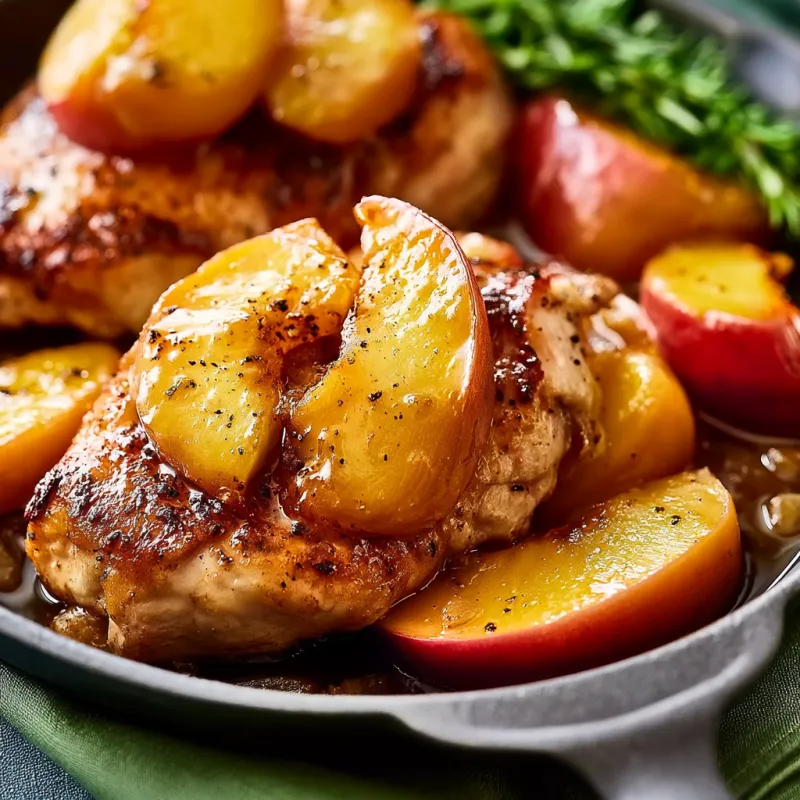
Savory Peach Chicken Skillet
Ingredients
Equipment
Method
- Pat chicken thighs dry with paper towels. Season both sides evenly with salt and pepper. Let rest at room temperature 10 minutes.
- Heat 1 tablespoon oil in a 12-inch cast-iron skillet over medium-high heat until shimmering (about 2 minutes). Place chicken smooth side down. Cook without moving for 5 minutes, until deep golden brown. Flip and cook 3 more minutes. Internal temperature should reach 165°F. Transfer to a plate.
- Reduce heat to medium. Add remaining 1 tablespoon oil. Add peach wedges cut side down. Cook undisturbed 2 minutes until caramelized. Flip and cook 1 minute. Transfer peaches to plate with chicken.
- Add shallot to skillet. Cook 1 minute, stirring. Add garlic, cook 30 seconds until fragrant.
- Pour in balsamic vinegar and honey. Stir, scraping up browned bits. Let bubble 30 seconds. Add chicken broth. Bring to a simmer, scraping any remaining bits. Simmer 2 minutes until slightly reduced.
- Return chicken and peaches to skillet, along with any accumulated juices. Add butter and thyme sprigs. Spoon sauce over chicken. Simmer 2 minutes, until sauce thickens slightly and chicken is glazed. Internal temperature should still read 165°F.
- Remove from heat. Discard thyme sprigs. Serve immediately, spooning extra sauce and peaches over each portion.