
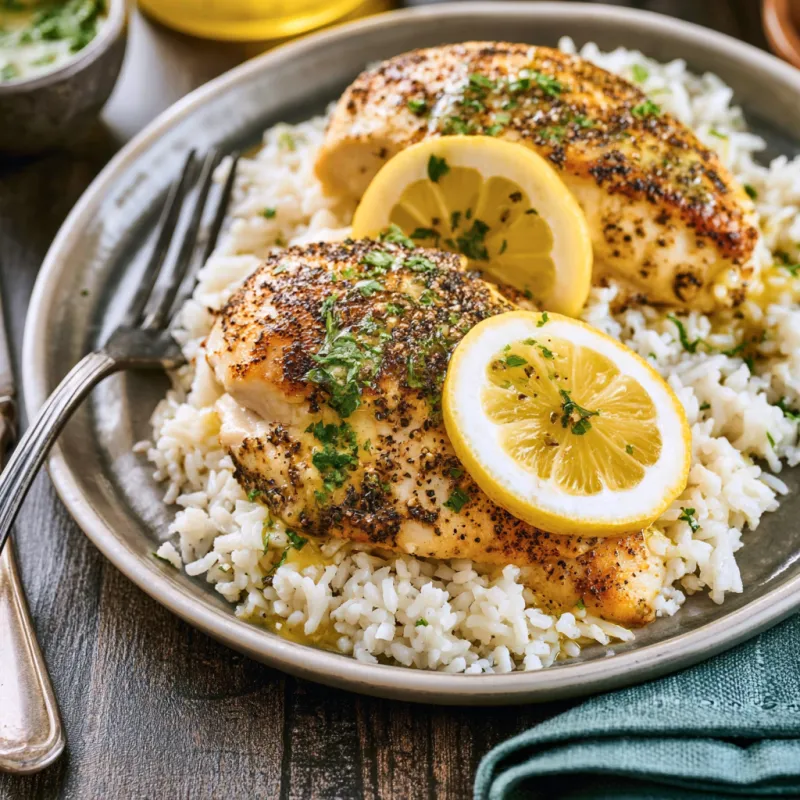
There’s a moment when you lift the lid off a skillet of lemon pepper chicken and rice that tells you everything you need to know. Steam rushes up carrying the bright scent of lemon zest and the warm, earthy punch of black pepper. The rice underneath is tender, each grain separate and glossy. The chicken skin is crisp, crackling when you press it with a fork. That’s the goal.

This is a one-pan meal built on technique, not fuss. The lemon pepper here isn’t a store-bought blend—it’s a simple paste of fresh zest, cracked pepper, salt, and lemon juice rubbed right into the chicken. That direct contact means the flavor penetrates the meat, not just the skin. And the rice? It cooks in the same pan, soaking up the browned bits and chicken drippings. No separate pots, no wasted flavor.
Why This Method Works
The key to this dish is the order of operations. You sear the chicken first, skin-side down, until it’s deep amber. That’s not optional—it builds a foundation of savory flavor in the pan. Then you cook the aromatics in the same fat, toast the rice briefly, add the liquid, and return the chicken to finish in the oven. The oven heat is gentle and even, so the rice cooks without scorching and the chicken finishes without drying.
I keep the ratio at 1 cup of rice to 2 cups of total liquid (broth plus water). That’s standard for long-grain white rice, but the addition of the chicken juices and butter shifts the balance just enough. The butter, added in small cubes, melts into the rice as it bakes, giving it a silky finish without making it greasy.
Choosing Your Chicken
Bone-in, skin-on thighs are my first choice here. The bone keeps the meat moist during the longer bake, and the skin crisps up beautifully under the broiler-less dry heat of the oven. If you use boneless thighs, reduce the initial sear time and check doneness earlier. Breasts work, but they’re leaner and can dry out if overcooked. If you go that route, pull them from the oven as soon as they hit 165°F (74°C).
The Lemon Pepper Paste
Fresh lemon zest is non-negotiable. The zest contains the essential oils that give lemon its bright, aromatic character. Dried zest or bottled juice won’t deliver the same punch. Use a Microplane or fine grater and only the yellow part—the white pith is bitter. Mix the zest with freshly cracked black pepper (not pre-ground, which is dull) and salt, then stir in enough lemon juice to make a paste. Rub it all over the chicken, including under the skin. Let it sit for ten minutes while the pan heats. That brief rest lets the salt begin to penetrate the meat.
Building the Rice Base
After searing the chicken, you’ll have a skillet with browned bits stuck to the bottom. That’s flavor. Don’t scrub it out. Cook the onion in the remaining fat, scraping up those bits as the onion softens. The garlic goes in last—just 30 seconds, or it will burn. Then add the rice and stir for a full minute. You’re looking for the edges of the grains to turn from opaque white to translucent. That toasting step keeps the rice from turning mushy later.
Pour in the broth and water, stir once to combine, and bring to a simmer. Then nestle the chicken back in, skin-side up, and add the butter cubes. Cover tightly and bake. The cover traps steam, which cooks the rice evenly. If your lid doesn’t fit snugly, use a double layer of foil crimped around the edges.
Doneness Cues
After 30 minutes covered, remove the lid. The rice should have absorbed most of the liquid and be tender but still slightly firm. The chicken’s internal temperature should be around 165°F (74°C) at this point, but I prefer to let thighs go to 175-185°F (79-85°C) for the most tender, succulent meat. The extra 10-15 minutes uncovered allows the skin to re-crisp and the rice to finish cooking. If the rice is still wet, give it a few more minutes uncovered. If it’s dry but not quite tender, add a splash of broth and cover for another 5 minutes.
Common Mistakes to Avoid
Stirring the rice after adding the liquid is the most common error. Once the liquid is in, leave the rice alone. Stirring releases starch and turns the rice gummy. Also, don’t lift the lid during the first 30 minutes of baking. Every time you lift it, steam escapes, and the rice takes longer to cook.
Another pitfall: using a pan that’s too small. A 12-inch skillet gives enough surface area for the rice to cook in a thin, even layer. If your pan is smaller, the rice will be too deep and may cook unevenly. Adjust the recipe by halving it if needed.
Variations
Add vegetables for a complete meal. Thinly sliced bell peppers or zucchini can go in with the onion. For a pop of color and acidity, stir in a handful of frozen peas after the rice is done, letting them warm through from the residual heat. If you like heat, add a pinch of red pepper flakes with the garlic.
The Takeaway
This lemon pepper chicken and rice is the kind of meal that looks impressive but asks little of you. The oven does most of the work. The result is a skillet full of tender, fragrant rice and juicy chicken with a crackling skin. It’s weeknight cooking that actually works—no separate pans, no last-minute scrambles, just a single dish that delivers.
Frequently Asked Questions
Can I use chicken breasts instead of thighs?
Yes, but adjust cooking time. Use boneless, skinless breasts (about 6-8 oz each). Sear for 3 minutes per side, then bake covered for 20-25 minutes, until internal temperature reaches 165°F (74°C). Check rice doneness separately; you may need to add a few extra minutes of uncovered baking if rice is still firm.
How do I prevent the rice from turning mushy?
Use the correct liquid-to-rice ratio (2:1 by volume) and do not stir the rice after it comes to a simmer. Stirring releases starch and makes the rice gummy. Also, ensure the skillet is covered tightly during baking to trap steam.
Can I make this recipe with brown rice?
Yes, but brown rice requires more liquid and a longer cook time. Use 1 3/4 cups broth and 3/4 cup water (total 2.5 cups liquid) and bake covered for 50-55 minutes, then uncovered for 10-15 minutes. The chicken may need to be added later to avoid overcooking; sear the chicken, set aside, then add it back after the rice has baked for 20 minutes.
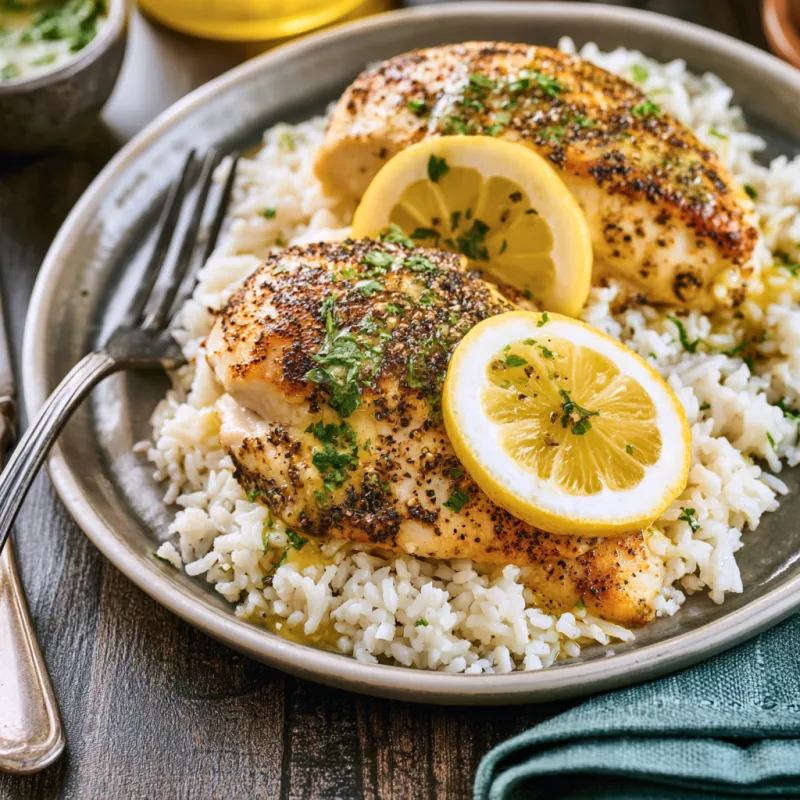
Lemon Pepper Chicken and Rice
Ingredients
Equipment
Method
- Preheat your oven to 375°F (190°C).
- Pat the chicken thighs dry with paper towels. In a small bowl, combine the black pepper, salt, lemon zest, and lemon juice to form a paste. Rub this mixture evenly over the chicken thighs, including under the skin where possible. Let sit at room temperature for 10 minutes.
- Heat 1 tablespoon of olive oil in a 12-inch oven-safe skillet over medium-high heat until shimmering. Place the chicken thighs skin-side down in the skillet. Cook without moving for 5-6 minutes, until the skin is deep golden brown and crispy. Flip and cook the other side for 2 minutes. Transfer chicken to a plate; do not wipe the skillet.
- Reduce heat to medium. Add the remaining 1 tablespoon olive oil to the skillet. Add the diced onion and cook, stirring, for 3-4 minutes until softened and translucent. Add the minced garlic and cook for 30 seconds until fragrant.
- Add the rice to the skillet and stir to coat with the oil and onion mixture. Cook for 1 minute, stirring constantly, until the rice edges turn translucent.
- Pour in the chicken broth and water. Stir to scrape up any browned bits from the bottom of the skillet. Bring to a simmer.
- Nestle the chicken thighs back into the skillet, skin-side up, along with any accumulated juices. Dot the butter cubes around the rice. Cover the skillet tightly with a lid or aluminum foil.
- Transfer the skillet to the preheated oven. Bake for 30 minutes. Remove the lid or foil and bake for another 10-15 minutes, until the rice is tender and has absorbed all liquid, and the chicken registers 175-185°F (79-85°C) at the thickest part (safe minimum is 165°F/74°C, but thighs are best at 175-185°F for tenderness).
- Remove from oven and let rest, uncovered, for 5 minutes. Fluff the rice with a fork, garnish with parsley if desired, and serve.