
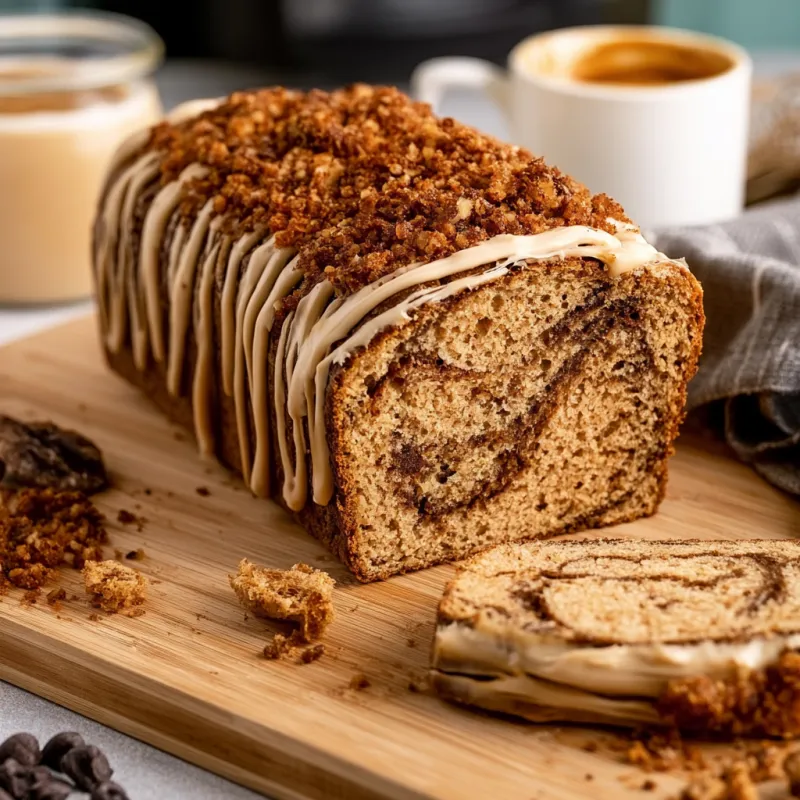
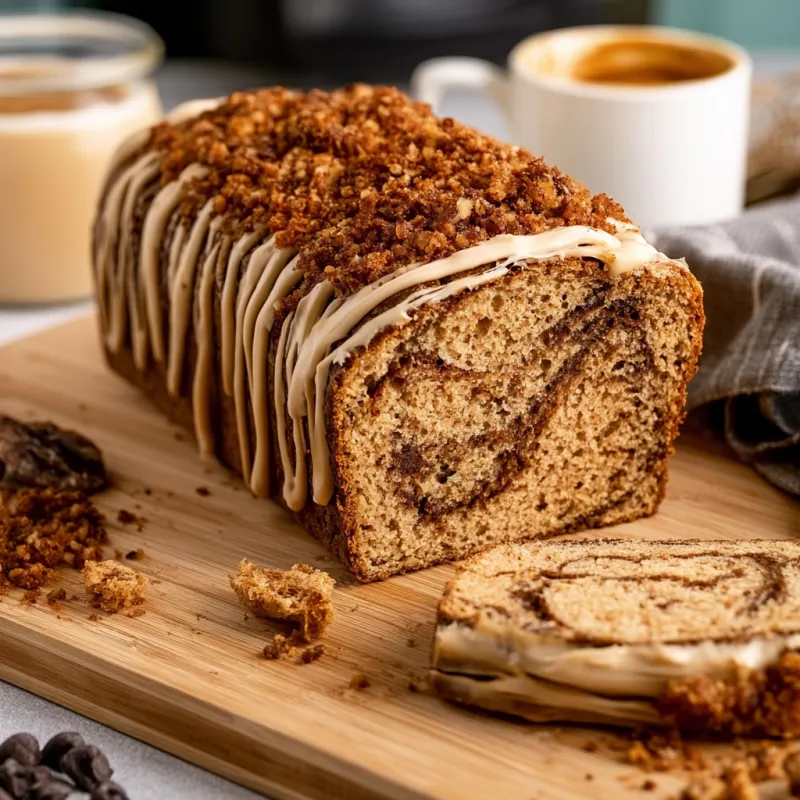
The first thing you notice is the crumb topping. Thick, buttery, and studded with cinnamon-sugar clusters, it crackles under the knife as you slice through. Then comes the loaf itself — tender, moist, with a ribbon of cinnamon running through the middle. This isn’t a dry coffee cake that needs a dunk in your mug to be edible. This is the kind you eat standing at the counter, still warm, with nothing but a fork.

The Secret to a Moist, Tender Crumb
The texture of this coffee cake loaf comes down to one ingredient: sour cream. I use a full-fat version, and I keep the ratio at about 1/2 cup per 1 1/2 cups of flour. The acidity in the sour cream tenderizes the gluten, while the fat keeps the crumb soft and rich. It also reacts with the baking soda to help the loaf rise evenly.
Temperature matters here. Your butter, eggs, and sour cream should all be at room temperature — around 68°F to 70°F. Cold ingredients won’t emulsify properly, leaving you with a dense, uneven crumb. If you forgot to set them out, place the eggs in a bowl of warm water for 5 minutes and microwave the sour cream in 10-second bursts until it’s no longer cold to the touch.
Building the Crumb Topping (The Right Way)
This isn’t a sprinkle of cinnamon sugar. A proper crumb topping uses melted butter, not cold, because melted butter coats the flour and sugar evenly, creating those craggy clumps. I whisk the dry ingredients first — flour, brown sugar, cinnamon, and a pinch of salt — then pour in the melted butter and stir with a fork. The mixture should look like wet sand with some pea-sized clumps. If it’s too dry, add a teaspoon more melted butter. If it’s too wet, add a tablespoon more flour.
The key technique: press the crumb topping gently into the batter before baking. This anchors it so it doesn’t slide off as the loaf rises. No one wants a pile of crumbs at the bottom of the pan.
The Cinnamon Swirl: A Simple Layer of Flavor
Rather than mixing cinnamon into the batter (which can create a muddy flavor), I layer a ribbon of cinnamon sugar in the middle. Two tablespoons of granulated sugar plus one teaspoon of cinnamon — that’s all. Sprinkle it evenly over the first half of the batter, then top with the remaining batter. The swirl stays distinct and fragrant, giving you a little burst of spice in every other bite.
Mixing: Less Is More
Overmixing is the fastest way to a tough coffee cake. I use the muffin method here: whisk the dry ingredients separately, beat the butter and sugar until fluffy, then add the eggs and vanilla. Finally, alternate adding the dry ingredients and the sour cream mixture, starting and ending with the flour. Mix on low speed just until the flour disappears. A few streaks are fine — they’ll disappear as you fold the batter into the pan.
Baking and Doneness Cues
Bake at 350°F (175°C) for 45 to 50 minutes. Your loaf is done when a wooden skewer inserted into the center comes out clean or with just a few moist crumbs attached. The top should be deep golden brown, and the loaf should feel firm when you press the center gently. If the crumb topping is browning too quickly (after about 30 minutes), tent the pan loosely with foil.
Let the loaf cool in the pan for 15 minutes. This allows the structure to set so it doesn’t fall apart when you lift it out. Then, use the parchment overhang to transfer it to a wire rack to cool completely. Slicing while warm is tempting, but it’ll crumble. Wait until it’s fully cool — about 1 hour — for clean, neat slices.
Common Mistakes to Avoid
- Using cold ingredients: Cold butter won’t cream properly, and cold sour cream won’t emulsify. Room temperature is non-negotiable.
- Overmixing the batter: Stir just until the flour disappears. Overmixing develops gluten and makes the loaf tough.
- Skipping the parchment: The crumb topping can stick to the pan. Parchment overhang makes removal clean and easy.
- Baking too long: Check at 45 minutes. Every oven runs slightly differently, and an extra 5 minutes can dry out the loaf.
Storing and Serving
This coffee cake loaf keeps well at room temperature for up to 3 days when wrapped tightly in plastic wrap. You can also freeze it for up to 3 months — wrap in plastic, then foil, and thaw overnight at room temperature. Serve it as is, or with a simple dusting of powdered sugar. It’s equally good with a hot cup of coffee or a cold glass of milk.
Note: For specific dietary needs (such as gluten-free or dairy-free), please consult a qualified healthcare professional before making substitutions.
Frequently Asked Questions
Why is my coffee cake loaf dry?
Dryness usually comes from overmixing the batter or overbaking. Mix just until the flour disappears, and start checking for doneness at the 45-minute mark. Using full-fat sour cream adds moisture, so don’t substitute with a low-fat version.
Can I use Greek yogurt instead of sour cream?
Yes, you can substitute plain full-fat Greek yogurt for the sour cream in equal measure. The texture will be slightly less tender but still very good. Avoid non-fat yogurt, which can make the loaf dry.
How do I keep the crumb topping from sinking into the batter?
Make sure your crumb topping has distinct clumps, not a sandy texture. Also, gently press the topping into the batter before baking. Baking the loaf right after adding the topping helps, too, as the batter sets quickly.
Can I make this coffee cake loaf gluten-free?
Yes, use a 1:1 gluten-free all-purpose baking blend that contains xanthan gum. The texture may be a bit more tender, so handle the batter gently. Bake time may vary slightly—check for doneness with a skewer.
How should I store leftover coffee cake loaf?
Wrap the cooled loaf tightly in plastic wrap and store at room temperature for up to 3 days. You can also freeze it, wrapped in plastic and then foil, for up to 3 months. Thaw overnight at room temperature before serving.
Classic Coffee Cake Loaf
Ingredients
Equipment
Method
- Preheat the oven to 350°F (175°C). Grease a 9x5-inch loaf pan and line with parchment paper, leaving overhang on the long sides.
- Make the crumb topping: In a medium bowl, whisk together the flour, brown sugar, cinnamon, and salt. Pour in the melted butter and stir with a fork until clumps form. Set aside.
- Make the cinnamon swirl: In a small bowl, stir together the sugar and cinnamon. Set aside.
- Make the cake: In a medium bowl, whisk together the flour, baking powder, baking soda, and salt.
- In a large bowl, beat the softened butter and granulated sugar with an electric mixer on medium speed until light and fluffy, about 3 minutes. Scrape down the bowl.
- Add the eggs one at a time, beating well after each addition. Beat in the vanilla extract.
- In a small bowl or measuring cup, whisk together the sour cream and milk.
- With the mixer on low speed, add the flour mixture in three additions, alternating with the sour cream mixture in two additions, beginning and ending with the flour. Mix just until combined. Do not overmix.
- Pour half of the batter into the prepared loaf pan and spread evenly. Sprinkle the cinnamon sugar mixture over the batter. Spoon the remaining batter on top and spread gently to cover the swirl.
- Sprinkle the crumb topping evenly over the batter, pressing it lightly so it adheres.
- Bake for 45–50 minutes, or until a wooden skewer inserted into the center comes out clean or with a few moist crumbs. The top should be golden brown and the loaf should feel firm to the touch.
- Let the loaf cool in the pan on a wire rack for 15 minutes. Then lift it out using the parchment overhang and cool completely on the rack before slicing.