
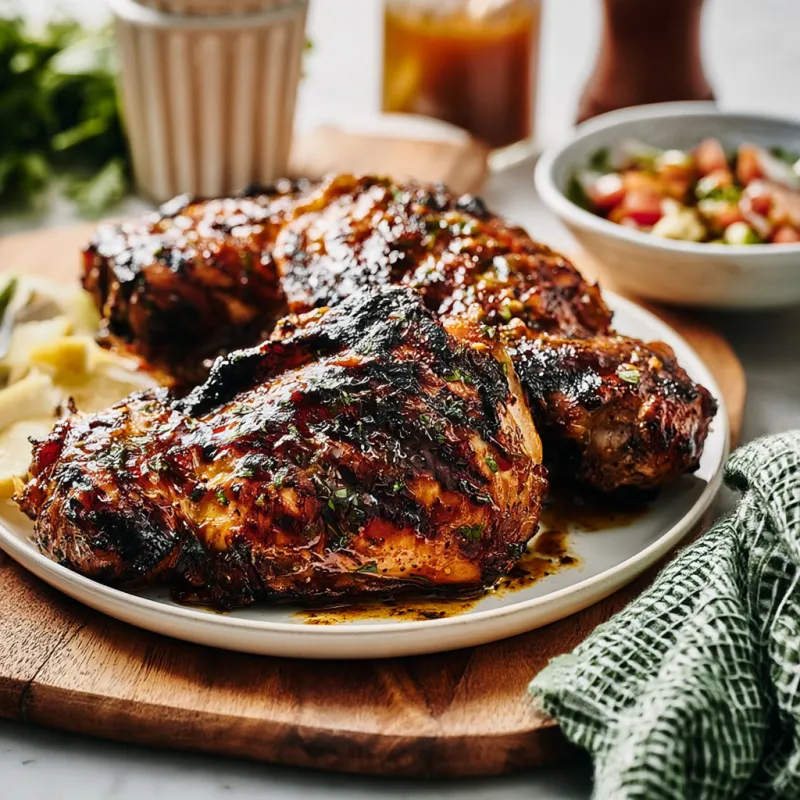
The moment that first waft of smoke hits you—sweet and sharp, with a hint of char—you know summer has arrived. I love that smell. It means dinner is about to be something special, yet it’s still just a weeknight. The trick to great grilled chicken isn’t a secret marinade or a fancy grill. It’s a simple brine, a two-zone fire, and an instant-read thermometer. That’s it.

Skip the dry, bland chicken breast. Let me walk you through the method that gives you juicy meat, a sticky-sweet glaze, and those beautiful grill marks every time.
Why Brine? It’s Not Just for Turkey
Brining is the single best thing you can do for boneless, skinless chicken breasts. They’re lean and cook quickly, which means they dry out just as fast. A quick 30-minute soak in salt and sugar water does two things: the salt helps the chicken hold onto moisture during cooking, and the sugar adds a subtle sweetness that caramelizes on the grill.
I keep the ratio at 1/4 cup kosher salt and 1/4 cup brown sugar per 4 cups of warm water. That’s enough for four standard breasts. Don’t brine longer than 2 hours, or the chicken will taste like salt licks. Rinse it well after brining, then pat it bone-dry. Wet chicken steams, not sears.
Two-Zone Grilling: The Only Way
Direct heat alone is a recipe for burnt outsides and raw centers. Two-zone grilling gives you control. Set one side of the grill to high heat (450-500°F) for searing, and the other side to medium heat (350-375°F) for gentle cooking. On a gas grill, that means one burner on high, the others on medium. For charcoal, pile the coals on one side.
Sear the chicken on the hot side for 3-4 minutes per side. Don’t poke or move it—let the heat do the work. When the chicken releases easily from the grates, it’s ready to flip. Then slide it to the cool side, close the lid, and let it finish cooking gently. This method gives you deep grill marks and a fully cooked, juicy interior.
The Glaze: Build Flavor in Layers
I make a quick glaze by simmering barbecue sauce with apple cider vinegar and smoked paprika. The vinegar cuts the sweetness, and the paprika adds a smoky depth. Brush it on only during the last 2 minutes of cooking. Sugar burns fast, so if you apply the glaze too early, you’ll end up with bitter, blackened spots.
Use a clean basting brush for the glaze, and don’t double-dip into the sauce pot with a brush that touched raw chicken. That’s a food safety rule worth remembering.
Temperature: Your Best Friend
I cannot overstate the value of an instant-read thermometer. Guessing doneness by slicing into the chicken lets all those juices run out onto the cutting board. Instead, insert the probe into the thickest part of the breast. Pull the chicken off the grill when it reads 160°F. It will continue cooking as it rests, climbing to a safe 165°F. Let it rest for 5 minutes under loose foil. That brief rest redistributes the juices evenly throughout the meat.
If you don’t have a thermometer, pierce the thickest part with a knife tip. The juices should run clear, not pink. The meat should feel firm with a little spring. But honestly, a $10 thermometer is a game-changer for weeknight cooking.
Common Mistakes and How to Avoid Them
- Skipping the dry-off: After brining, if you don’t pat the chicken dry, it will steam on the grill instead of searing. No char, no flavor.
- Flare-ups from sugary glaze: Keep the glaze application to the last 2 minutes on the cooler side of the grill. If you see flames, move the chicken immediately.
- Cutting into the chicken too soon: Resting is not optional. Slicing immediately releases all the juices onto the plate, leaving dry meat.
- Using cold chicken: Let the chicken sit at room temperature for 10 minutes after brining and drying. Cold meat cooks unevenly.
Bringing It All Together
Summer BBQ Grilled Chicken doesn’t have to be a project. Brine, sear, glaze, rest. That’s the rhythm. The result is a plate of chicken that’s juicy all the way through, with a smoky-sweet crust that tastes like you spent all afternoon at the grill. In reality, you’ll have dinner on the table in under 45 minutes.
Pair it with a tangy coleslaw or grilled corn for a complete meal. And remember, the thermometer is your guide. Trust it over a timer every time.
Frequently Asked Questions
Can I use chicken thighs instead of breasts?
Yes, absolutely. Chicken thighs have more fat and stay juicy even if you overcook them slightly. Use bone-in, skin-on thighs for the best flavor. Sear them over high heat for 4-5 minutes per side, then move to medium heat and cook until the internal temperature reaches 175°F. The extra time allows the connective tissue to break down.
How do I know when the chicken is done without a thermometer?
I strongly recommend an instant-read thermometer for safety and juiciness. But if you must go without, pierce the thickest part of the breast with a knife tip. The juices should run clear, not pink. The meat should feel firm with a little spring when pressed. Note that this method is less reliable and can lead to dry chicken.
Why is my grilled chicken always dry?
Two common culprits: overcooking and skipping the brine. Chicken breast is lean and cooks fast. Pull it off the grill at 160°F—it will rise to a safe 165°F while resting. The brine adds moisture and flavor that stays locked in during grilling. Also, patting the chicken dry before grilling ensures a good sear, not steam.
Can I grill the chicken indoors?
Yes, use a cast-iron grill pan over medium-high heat. The key difference is airflow—indoor grilling produces less smoke and no charcoal flavor. Follow the same two-zone technique by preheating one side of the pan more than the other. Open a window and turn on your range hood to manage smoke from the glaze.
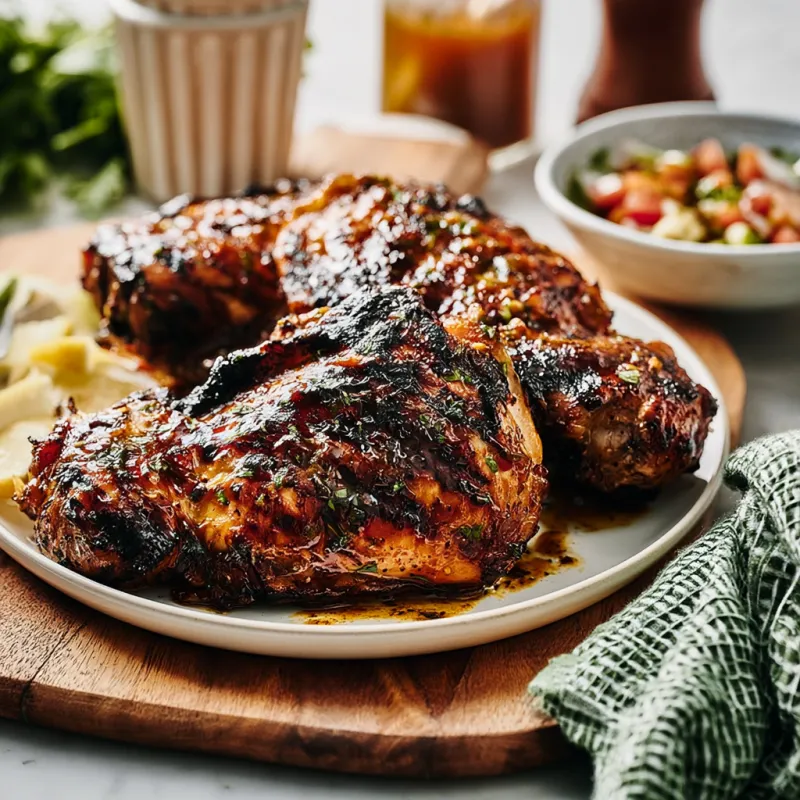
Summer BBQ Grilled Chicken
Ingredients
Equipment
Method
- In a large bowl, dissolve the kosher salt and brown sugar in warm water. Submerge the chicken breasts completely. Cover and refrigerate for at least 30 minutes, up to 2 hours. Do not exceed 2 hours or the chicken may become too salty.
- While the chicken brines, make the glaze. In a small saucepan, combine the barbecue sauce, apple cider vinegar, smoked paprika, garlic powder, and cayenne (if using). Simmer over low heat for 5 minutes, stirring occasionally. Remove from heat and set aside.
- Remove the chicken from the brine, rinse under cold water, and pat very dry with paper towels. Let the chicken rest on a plate at room temperature for 10 minutes. Drying is critical—moisture on the surface creates steam, not sear.
- Preheat your grill for two-zone cooking: one side high heat (450-500°F), the other side medium heat (350-375°F). Clean and oil the grates thoroughly.
- Place the chicken on the hot side of the grill, lid open. Sear for 3-4 minutes without moving, until deep grill marks form and the chicken releases easily. Flip and sear the other side for 3 minutes.
- Move the chicken to the cooler side of the grill (medium heat). Close the lid. Cook for 6-8 minutes, flipping once halfway, until the internal temperature reaches 155°F in the thickest part of the breast.
- Brush the glaze generously onto both sides of the chicken. Close the lid and cook for 1-2 minutes more, until the glaze is sticky and the internal temperature hits 160°F. Carryover cooking will bring it to 165°F as it rests.
- Transfer the chicken to a clean plate. Tent loosely with foil and rest for 5 minutes. This step is non-negotiable—it locks in juices. Slice against the grain and serve with extra glaze on the side.