
The first forkful should hit you with brightness—tangy lemon, a whisper of garlic, and herbs that taste like the garden just outside. The pasta should be tender but still have a little chew, and every piece of vegetable should glisten, not sit in a puddle of dressing. That’s the pasta salad I reach for all summer long.

Too many pasta salads turn into a sad, dry clump after a few hours in the fridge. The dressing vanishes into the starch, the vegetables go limp, and you’re left with a bland pile of noodles. The fix is simpler than you think: a vinaigrette that’s built to stay saucy, and a technique that keeps the pasta from acting like a sponge.
I keep the ratio at 3 parts oil to 1 part acid, plus a splash of red wine vinegar for depth. That’s 1/2 cup olive oil to 1/4 cup lemon juice plus 2 tablespoons vinegar. The Dijon and honey do more than flavor—they help the dressing cling to every spiral of rotini without getting heavy.
Why This Pasta Salad Works
The biggest mistake home cooks make is overdressing the pasta while it’s hot. That’s when it absorbs the most liquid, leaving you with a dry salad later. I rinse the cooked pasta under cold water to stop the cooking and wash away excess starch. Then I let it drain for a full two minutes. Any water clinging to the pasta dilutes the dressing, so take the time to shake that colander well.
Another key: dress the pasta while it’s still slightly warm, but not hot. Warm pasta absorbs just enough vinaigrette to carry flavor into the center of each piece, but the remaining oil and acid stay on the surface, keeping things slick. If you’re making this a day ahead, reserve a few tablespoons of vinaigrette to toss in right before serving.
The Vegetables: Cut for Texture
Cherry tomatoes get halved, not chopped. That way they release their juices slowly, mixing with the dressing instead of making the salad watery. English cucumbers are my go-to because the skin is thin and the seeds are small—no need to peel or seed. I quarter them lengthwise, then slice into half-moons about 1/4-inch thick. That shape nests into the pasta curves nicely.
Red onion needs a quick soak. Dice it finely, then cover with cold water for 5 minutes while you prep everything else. Drain and pat dry. This tames the sharp bite without losing the crunch.
Fresh Herbs: Not Just Garnish
Flat-leaf parsley and basil are non-negotiable here. I use about 1/2 cup parsley and 1/4 cup basil, both roughly chopped. Herbs wilt quickly in dressing, so add them just before you toss. If you’re making this salad more than 4 hours ahead, hold back half the herbs and stir them in just before serving for a pop of fresh green color.
Step-by-Step: From Pot to Bowl
1. Cook the pasta. Salt the water generously—about 1 tablespoon per 4 quarts. Cook the pasta one minute less than the package says for al dente. It will soften slightly as it sits in the dressing. Drain, rinse with cold water, and let drain thoroughly.
2. Make the vinaigrette. Whisk everything together until the mustard and honey fully dissolve. Taste it. It should be bright and assertive, with a clear lemon punch. If it tastes flat, add another pinch of salt. The dressing will mellow once it coats the pasta.
3. Combine. In a large bowl, toss the pasta with the vegetables and herbs. Pour the vinaigrette over the top and fold gently but thoroughly. Every piece of pasta should glisten. If it looks dry, add a tablespoon of olive oil and toss again.
4. Rest. Cover and refrigerate for at least 30 minutes. This is not optional. The flavors need time to marry. When you pull it out, give it a taste. Sometimes the pasta absorbs enough salt that you need a tiny pinch more. A final squeeze of lemon juice can wake it up too.
Make It Your Own
This recipe is a framework. Swap the feta for cubed mozzarella or omit it entirely for a dairy-free version. Add a can of drained chickpeas for protein, or toss in some sliced pepperoni for a heartier side. The vinaigrette works with any combination of crunchy vegetables—bell peppers, snap peas, or shredded carrots all hold up well.
If you’re gluten-sensitive, use a good-quality gluten-free pasta. Cook it one to two minutes less than the package directs, because gluten-free pasta turns mushy faster once dressed. Rinse it well and toss with a little olive oil before adding the vinaigrette.
For anyone following a specific dietary plan, this salad is naturally vegetarian and can be made vegan by skipping the feta. As always, consult a qualified professional for personalized advice about your dietary needs.
The Takeaway
A great summer pasta salad doesn’t need mayonnaise or complicated steps. The vinaigrette does the work. Keep the pasta slightly undercooked, drain it well, and dress it while it’s warm enough to absorb flavor but cool enough to stay firm. Let it rest, taste it before serving, and don’t be shy with the herbs. That’s the method I use every time, and it never lets me down.
Frequently Asked Questions
Why does my pasta salad taste dry the next day?
Pasta absorbs dressing as it sits, especially if you use a thick, mayo-based dressing. My trick: dress the pasta while it’s still slightly warm (after rinsing) with a thinner vinaigrette. The pasta absorbs some flavor, but the extra oil and acid keep it moist. Also, reserve about 2 tablespoons of vinaigrette to toss in just before serving leftovers.
Can I use a different pasta shape?
Absolutely. Any short pasta works well—farfalle, penne, or shells. Avoid long noodles like spaghetti because they tangle and don’t hold dressing as evenly. I like rotini or fusilli because the spirals catch the vinaigrette and bits of herbs.
How do I keep the vegetables from getting soggy?
Salt the cucumber slices lightly and let them sit on a paper towel for 5 minutes before adding to the salad. This draws out excess moisture. Also, add the tomatoes and cucumber after the pasta has cooled completely, not while it’s still warm, or they’ll soften too quickly.
Can I make this ahead for a picnic or barbecue?
Yes, this is a great make-ahead dish. Prepare the salad up to 24 hours in advance, but keep the vinaigrette separate. Combine and toss about 1 hour before serving. If already mixed, let it sit at room temperature for 15 minutes and toss with a splash of olive oil to revive it.
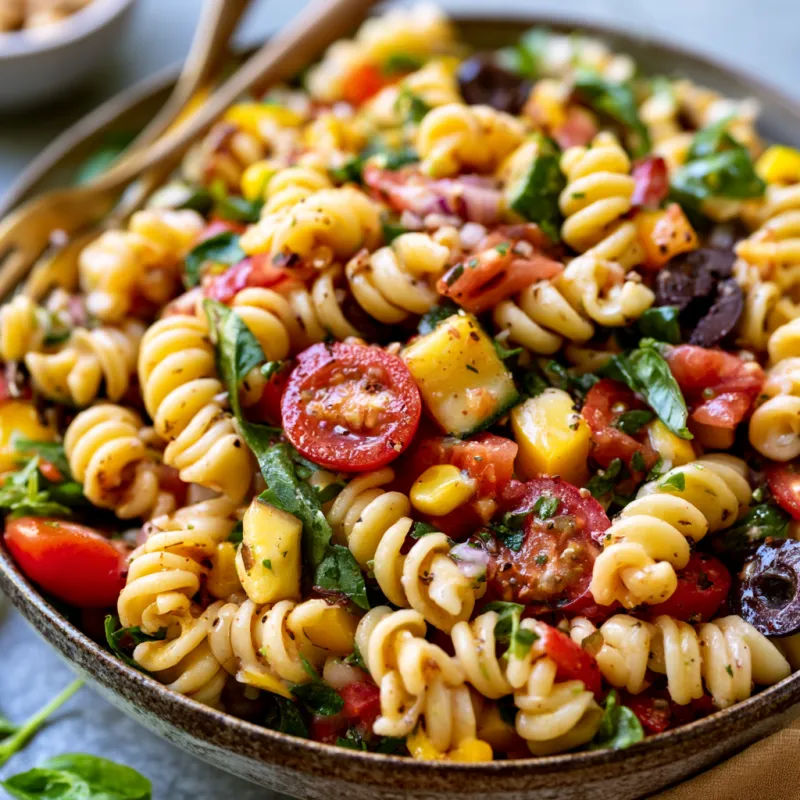
Easy Summer Pasta Salad with Lemon-Herb Vinaigrette
Ingredients
Equipment
Method
- Bring a large pot of salted water to a rolling boil. Add pasta and cook according to package directions until al dente, usually 8-10 minutes. Drain in a colander and rinse under cold running water for 30 seconds to stop cooking. Shake off excess water and let drain well for 2 minutes.
- While pasta cooks, make the vinaigrette. In a medium bowl, whisk together olive oil, lemon juice, red wine vinegar, Dijon mustard, honey, minced garlic, salt, and pepper until emulsified and slightly thickened, about 30 seconds.
- In a large mixing bowl, combine the cooled, drained pasta, cherry tomatoes, cucumber, red onion, parsley, and basil. Pour the vinaigrette over the top.
- Toss thoroughly with a large spoon or spatula until every piece of pasta and vegetable is coated. If using feta, gently fold it in now.
- Cover and refrigerate for at least 30 minutes before serving. This resting time lets the flavors meld. Taste before serving and add a pinch more salt or a squeeze of lemon if needed.