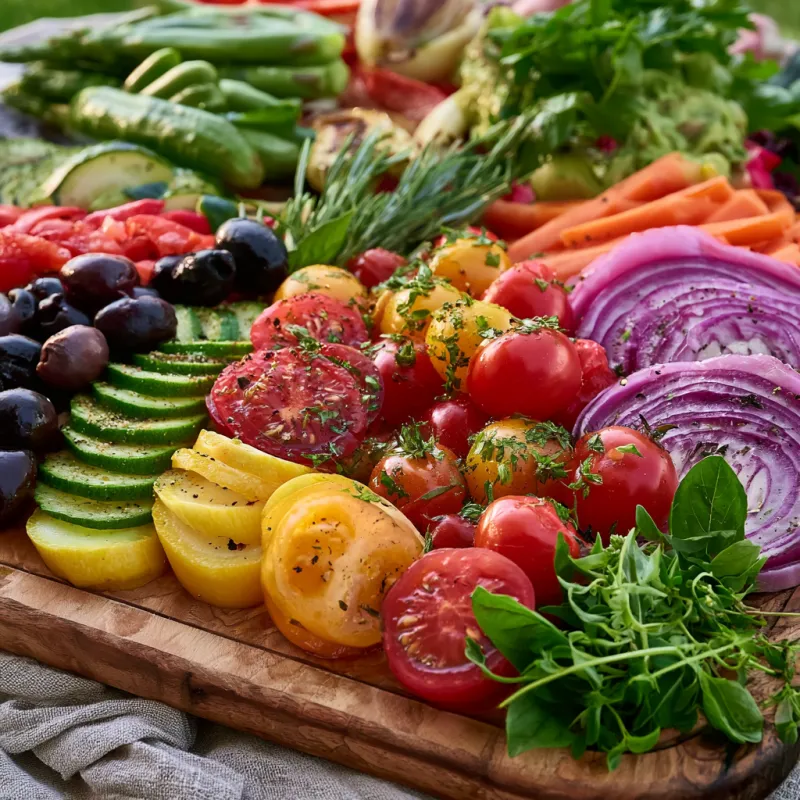
Ingredients
Equipment
Method
- Make the dip first so flavors meld. Place a fine-mesh strainer lined with a single layer of cheesecloth over a bowl. Spoon the yogurt into the strainer and let drain for 15 minutes at room temperature. This removes excess whey so the dip stays thick and doesn't water down overnight.
- While yogurt drains, prep the vegetables. Peel the cucumber in alternating strips (leave some skin on for color), then slice into 1/2-inch-thick rounds. Cut carrots into 3-inch-long, 1/4-inch-thick sticks. Slice bell pepper into 1-inch-wide strips. Halve cherry tomatoes. Leave snap peas whole.
- After 15 minutes, transfer the drained yogurt to a clean bowl (discard the liquid). Whisk in lemon juice, garlic, dill, mint, salt, and pepper until smooth. Drizzle olive oil over the top without stirring—this seals the dip and prevents a skin from forming.
- Arrange vegetables on a large platter: group each type separately for contrast. Tuck radicchio leaves or lettuce around the edges to frame the colors. Scatter olives in small piles.
- Serve dip in a small bowl placed in the center of the platter. For best texture, let dip sit at room temperature 10 minutes before serving.
Notes
Storage: The dip keeps in an airtight container in the fridge for up to 3 days. Stir before serving. Vegetables can be prepped up to 8 hours ahead—store them wrapped in damp paper towels inside a sealed bag to stay crisp. Do not add salt to the vegetables; it draws out moisture and makes them limp. For a dairy-free dip, substitute full-fat canned coconut cream (chilled) and omit the draining step. The olive oil seal technique works with any thick yogurt dip to keep it from drying out.