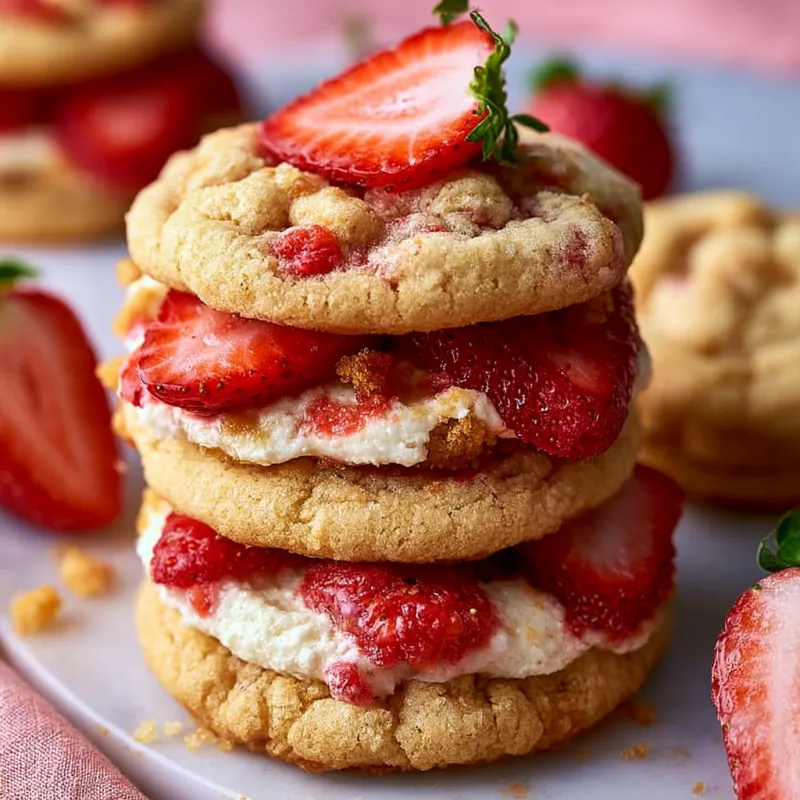
Ingredients
Equipment
Method
- Preheat your oven to 375°F (190°C). Line two baking sheets with parchment paper.
- In a large bowl, whisk together the flour, sugar, baking powder, and salt.
- Add the cold butter cubes to the flour mixture. Use a pastry blender or your fingertips to cut the butter into the flour until the mixture resembles coarse meal with some pea-sized butter pieces remaining. Work quickly so the butter stays cold.
- In a separate medium bowl, whisk together the buttermilk, egg, and vanilla until smooth.
- Pour the wet ingredients into the dry ingredients. Stir with a rubber spatula just until combined—do not overmix. The dough will be shaggy and slightly sticky.
- Gently fold in the chopped strawberries. They will release some juice; that's fine. Work quickly and gently to avoid crushing them.
- Using a 1.5-tablespoon cookie scoop or two spoons, drop rounded mounds of dough onto the prepared baking sheets, spacing them about 2 inches apart. The dough will be irregular and rustic.
- Bake for 11-13 minutes, rotating the pans halfway through, until the edges are lightly golden and the tops are set. The cookies will be pale on top. Let them cool on the baking sheet for 5 minutes, then transfer to a wire rack to cool completely.
- For the glaze: whisk together powdered sugar, 2 tablespoons buttermilk, and vanilla. Add more buttermilk a teaspoon at a time until you reach a drizzling consistency. Drizzle over cooled cookies. Let the glaze set for about 15 minutes before serving.
Notes
Storage: Store in an airtight container at room temperature for up to 2 days. For longer storage, freeze unglazed cookies for up to 1 month; thaw and glaze before serving. The strawberries will soften over time, so these are best enjoyed the day they are made.
Substitution: For a dairy-free version, use cold plant-based butter and full-fat oat milk mixed with 1 teaspoon lemon juice in place of buttermilk. The texture will be slightly less tender but still delicious.
Common mistake: Do not overmix the dough once you add the wet ingredients. Overworking develops gluten, making the cookies tough. Stop mixing as soon as the flour is incorporated.