
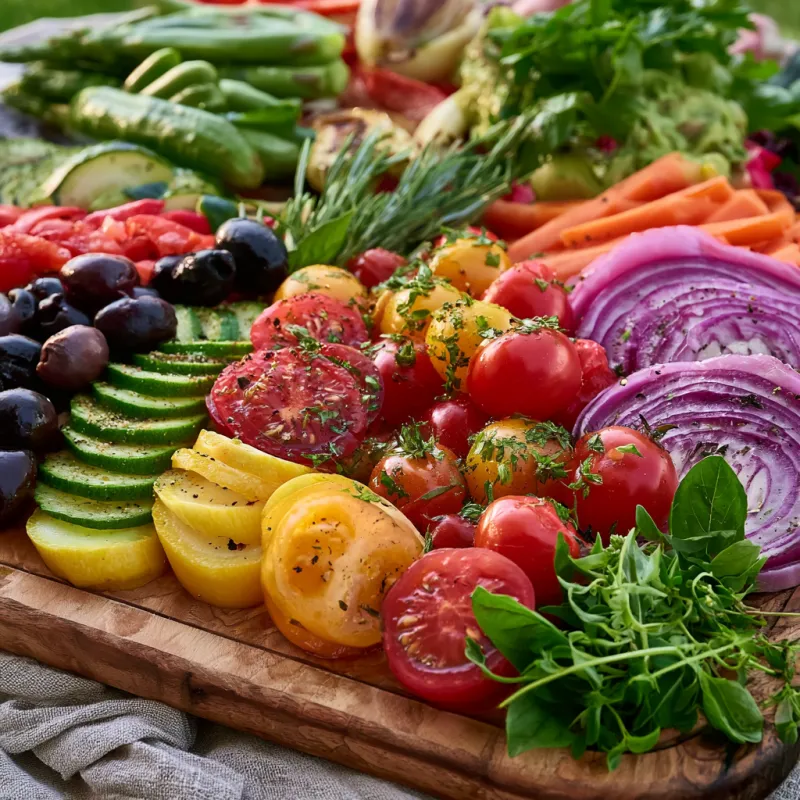
There’s a certain snap when you bite into a cucumber round that’s been chilled just right. The skin gives, the flesh cracks, and cool juice runs across your tongue. That moment—the textural contrast between a crisp vegetable and a creamy dip—is exactly what a summer veggie platter should deliver. Not a sad pile of limp celery next to a bowl of ranch. A real platter that feels like an event.

I’ve tested dozens of combinations over the years, and this one hits the sweet spot between color, crunch, and staying power. The key ratio I keep in mind is roughly 70% crunchy vegetables to 30% tender or juicy ones (tomatoes, olives). That balance ensures every bite has a satisfying resistance without turning into a jaw workout. The dip is where most platters fail—they get watery or bland within an hour. My fix is a two-step technique: strain the yogurt first, then seal the surface with olive oil. No weeping, no skin, no sad dip.
Why This Platter Works When Others Wilt
Temperature and moisture are the enemies of a good crudité platter. Vegetables release water as they sit, especially if cut too far in advance or stored improperly. The trick is twofold. First, cut vegetables into shapes that maximize surface area without exposing too much wet interior. Cucumber rounds (not sticks) hold their structure better. Carrot sticks cut to 1/4-inch thickness stay crunchy for hours. Second, never salt the vegetables. Salt draws out moisture by osmosis, turning crisp peppers into limp ribbons within 20 minutes. Keep salt only in the dip.
The radicchio leaves serve a dual purpose. Their slight bitterness contrasts with the sweet carrots and snap peas, and their sturdy leaves act as edible scoops for the dip. If radicchio isn’t available, Belgian endive leaves or even sturdy romaine hearts work the same way. The olives add a briny pop that resets your palate between bites of cool vegetable—a small but crucial detail that keeps the platter interesting from first bite to last.
The No-Wilt Yogurt Dip Method
Most homemade yogurt dips turn watery because Greek yogurt still contains whey. As the dip sits, that whey separates and pools around the bowl. The fix is embarrassingly simple: drain the yogurt before mixing. Fifteen minutes in a fine-mesh strainer lined with cheesecloth removes just enough whey to stabilize the dip for hours without making it stiff or chalky. Full-fat yogurt gives the best texture here—the fat carries the herb flavors and creates a creamy mouthfeel that low-fat versions can’t match.
After whisking in the lemon juice, garlic, and herbs, I drizzle the olive oil on top and leave it undisturbed. This oil layer acts as a barrier against air, preventing a skin from forming on the surface. When you’re ready to serve, just stir the oil into the dip—it emulsifies into the yogurt and adds a final silky note. If you’re prepping the dip a day ahead, leave the oil seal intact until just before serving.
Herb Choices That Hold Up
Dill and mint are my go-to summer herbs because they stay bright even after a day in the fridge. Basil and cilantro tend to darken and lose flavor within a few hours. If you want to use basil, add it chopped right before serving. The total herb volume should be 1/4 cup—more than that and the dip becomes grassy, less and it’s barely noticeable. Chop the herbs finely but not to a paste; you want tiny flecks of green, not a puree.
Building the Platter for Visual Impact
Group each vegetable by color rather than scattering them randomly. This isn’t just for looks—it makes the platter easier to navigate and prevents wet vegetables from touching dry ones. Start with the dip bowl off-center (not dead center, which forces reaching across the whole board). Arrange the brightest colors first: red peppers and tomatoes opposite each other for contrast. Fill gaps with green snap peas and cucumber. Tuck the radicchio leaves around the edges like a frame. The olives go in small clusters, not scattered, so guests can pick them without hunting.
For a party, I prep the vegetables in the morning and store them in separate zip-top bags with a slightly damp paper towel. The dip goes into a container with the olive oil seal. Assembly takes three minutes right before guests arrive. The platter holds beautifully for two hours at room temperature—longer than most appetizers last anyway.
Takeaway
A healthy summer veggie platter doesn’t have to be boring or soggy. The details matter: draining the yogurt, cutting vegetables for maximum crunch, grouping by color, and using an oil seal to protect the dip. Once you have those techniques down, you can swap vegetables with the season—grilled zucchini in August, blanched asparagus in spring, roasted squash in fall. The ratio stays the same. The crunch stays loud.
Frequently Asked Questions
Can I use nonfat Greek yogurt for the dip?
Nonfat works but will be thinner. To compensate, drain it for 25 minutes instead of 15, or stir in 1 tablespoon of tahini to help thicken the texture.
How far ahead can I assemble the veggie platter?
You can prep all vegetables up to 8 hours in advance. Keep them in separate bags with a slightly damp paper towel in the fridge. Add the dip and assemble the platter no more than 2 hours before serving for maximum crunch.
What if I don’t have fresh dill or mint?
Use any combination of soft herbs: basil, parsley, chives, or tarragon. The total amount should stay at 1/4 cup chopped. Avoid dried herbs here—they won’t rehydrate well in the cold dip.
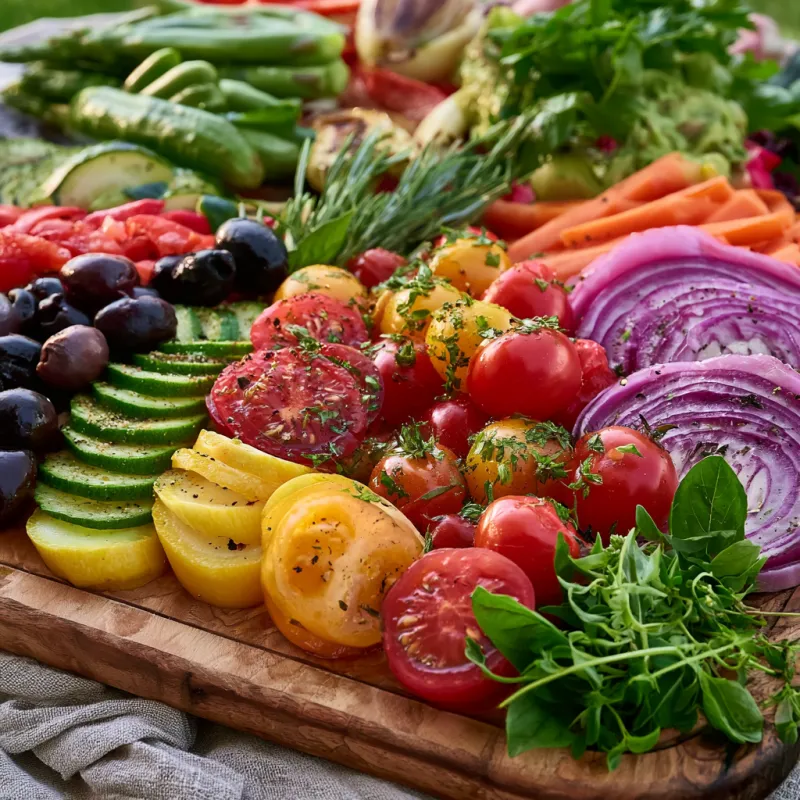
Healthy Summer Veggie Platter with Herbed Yogurt Dip
Ingredients
Equipment
Method
- Make the dip first so flavors meld. Place a fine-mesh strainer lined with a single layer of cheesecloth over a bowl. Spoon the yogurt into the strainer and let drain for 15 minutes at room temperature. This removes excess whey so the dip stays thick and doesn't water down overnight.
- While yogurt drains, prep the vegetables. Peel the cucumber in alternating strips (leave some skin on for color), then slice into 1/2-inch-thick rounds. Cut carrots into 3-inch-long, 1/4-inch-thick sticks. Slice bell pepper into 1-inch-wide strips. Halve cherry tomatoes. Leave snap peas whole.
- After 15 minutes, transfer the drained yogurt to a clean bowl (discard the liquid). Whisk in lemon juice, garlic, dill, mint, salt, and pepper until smooth. Drizzle olive oil over the top without stirring—this seals the dip and prevents a skin from forming.
- Arrange vegetables on a large platter: group each type separately for contrast. Tuck radicchio leaves or lettuce around the edges to frame the colors. Scatter olives in small piles.
- Serve dip in a small bowl placed in the center of the platter. For best texture, let dip sit at room temperature 10 minutes before serving.