
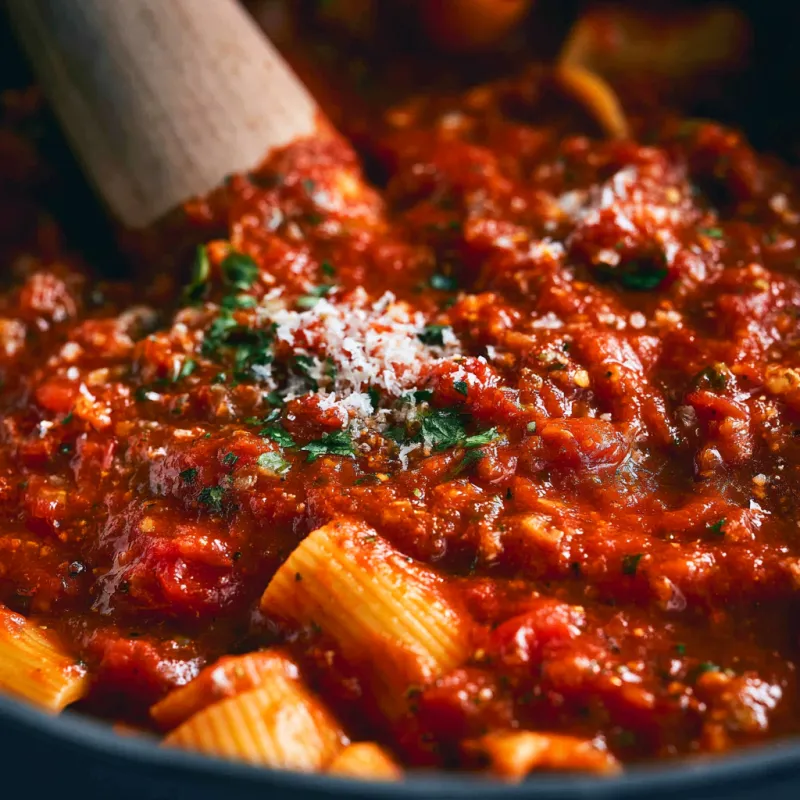
When you pull that first strand of spaghetti from a pan of homemade marinara pasta, the sauce should cling to the pasta like it belongs there — not pool at the bottom of the bowl. That’s the difference between a sauce that’s made with the pasta and one that’s just poured on top.

I’ve been making marinara from scratch for years, and I’ve learned that the trick isn’t a secret ingredient or a long simmer. It’s a simple ratio: 3 parts crushed tomatoes to 1 part olive oil, by volume. That ratio gives you a sauce that’s rich without being heavy, and bright without being acidic. Here’s how it works.
Why This Ratio Matters
Most marinara recipes call for a tablespoon or two of oil, then a whole can of tomatoes. That’s a 12:1 ratio in favor of tomatoes. The result is a thin, sharp sauce that needs sugar or hours of cooking to tame. My 3:1 ratio (by volume, so 1 1/2 cups tomatoes to 1/2 cup oil — but I use a 28-ounce can and 6 tablespoons oil, which is close enough) means the olive oil emulsifies into the tomatoes, creating a silky mouthfeel that balances the natural acidity.
The key is to use extra-virgin olive oil here — not the cheap stuff, but a good one you’d drizzle on a salad. It’s the backbone of the flavor.
Start with the Garlic
Slice your garlic cloves thinly, not minced. Sliced garlic releases its flavor more gently and won’t burn as easily. Heat the oil in a 12-inch skillet over medium heat, then add the garlic and red pepper flakes (if using). Stir constantly. You want the garlic to turn fragrant and just barely golden at the edges — about 45 seconds. The moment it starts browning, it’s past the sweet spot. Burnt garlic turns bitter, and that bitterness will carry through the whole sauce.
Build the Sauce
Pour in the crushed tomatoes. I use a 28-ounce can of San Marzano tomatoes because they’re naturally sweeter and less acidic. Add salt and pepper, then bring the sauce to a gentle simmer. Lower the heat so it’s barely bubbling — just a few lazy pops on the surface. Let it go for 15 minutes uncovered. Stir it occasionally, especially around the edges where the sauce can stick.
You’ll see the color deepen from bright red to a richer, brick-like red. The sauce will also thicken slightly as water evaporates. If it looks too thick at this point, don’t worry — you’ll add pasta water later.
Cook the Pasta Right
While the sauce simmers, cook your pasta in well-salted water. I use about 2 tablespoons of kosher salt for 4 quarts of water. The water should taste like the sea — that’s your only chance to season the pasta itself.
Cook the pasta a full minute less than the package says. It should be al dente — firm to the bite, not mushy. Reserve a full cup of that starchy pasta water before draining. This is liquid gold: the starch helps the sauce cling to the pasta and gives it a glossy finish.
Marry the Sauce and Pasta
Drain the pasta — don’t rinse it, or you’ll wash away the starch — and add it directly to the skillet with the sauce. Toss everything together with tongs or a wooden spoon. If the sauce seems thick, add the reserved pasta water a splash at a time. You’re looking for a consistency where the sauce coats each strand but still moves freely. It shouldn’t be soupy, but it shouldn’t be paste-like either.
This is where the magic happens: the pasta finishes cooking in the sauce, absorbing some of that flavor. Toss for about 1 minute over low heat.
Finish with Basil
Remove the skillet from the heat. Add the torn basil leaves and toss once more. The residual heat will wilt them just enough to release their aroma without turning them black. Taste and add a pinch more salt if needed — but remember, the Parmesan will add salt too.
Common Mistakes to Avoid
Overcooking the garlic. It’s the most common error. Once garlic burns, the sauce is ruined. Keep the heat medium and stir constantly.
Skipping the pasta water. Plain water won’t work the same way. The starch is essential for that silky, restaurant-quality texture.
Using pre-grated Parmesan. It contains anti-caking agents that prevent it from melting smoothly. Grate your own from a block — it takes 30 seconds and makes a real difference.
Serving Suggestions
This marinara is a weeknight workhorse. Serve it over spaghetti, as I’ve written here, or with any long pasta like linguine or bucatini. It also works beautifully on penne or rigatoni. Pair it with a simple green salad dressed with lemon and olive oil, and a piece of crusty bread to soak up any leftover sauce in the bowl.
Takeaway
Homemade marinara pasta doesn’t need to simmer for hours or include a dozen ingredients. With the right ratio of tomatoes to olive oil, careful garlic, and a splash of pasta water, you can have a deeply flavorful, silky sauce on the table in 30 minutes. That’s a weeknight win.
Frequently Asked Questions
Can I use whole or diced tomatoes instead of crushed?
Yes, but you’ll need to crush them by hand or pulse them in a food processor first. Whole tomatoes will give a chunkier sauce — cook them for an extra 5 minutes to break down. Diced tomatoes often have calcium chloride added to keep their shape, so they won’t break down as smoothly. I prefer crushed for the silkiest texture.
Why does my homemade marinara taste acidic?
Acidity usually means the sauce needs more time to meld or a pinch of sugar to balance. But the real fix is the oil-to-tomato ratio. I keep a 3:1 ratio of crushed tomatoes to olive oil by volume. The fat from the oil coats your tongue and mellows the acid. Also, always use good-quality canned tomatoes — cheap ones can be harsh.
How do I make this sauce thicker or thinner?
For a thicker sauce, simmer it uncovered for an extra 5-10 minutes to let water evaporate. For a thinner sauce, add reserved pasta water a tablespoon at a time until it reaches your desired consistency. The starch in the pasta water also helps the sauce cling to the noodles.
Can I make this marinara ahead of time?
Absolutely. Make the sauce up to 3 days ahead and store it in the fridge. When you’re ready to serve, reheat it gently in a skillet, then cook and toss with fresh pasta. The flavor actually deepens overnight as the garlic and herbs meld.
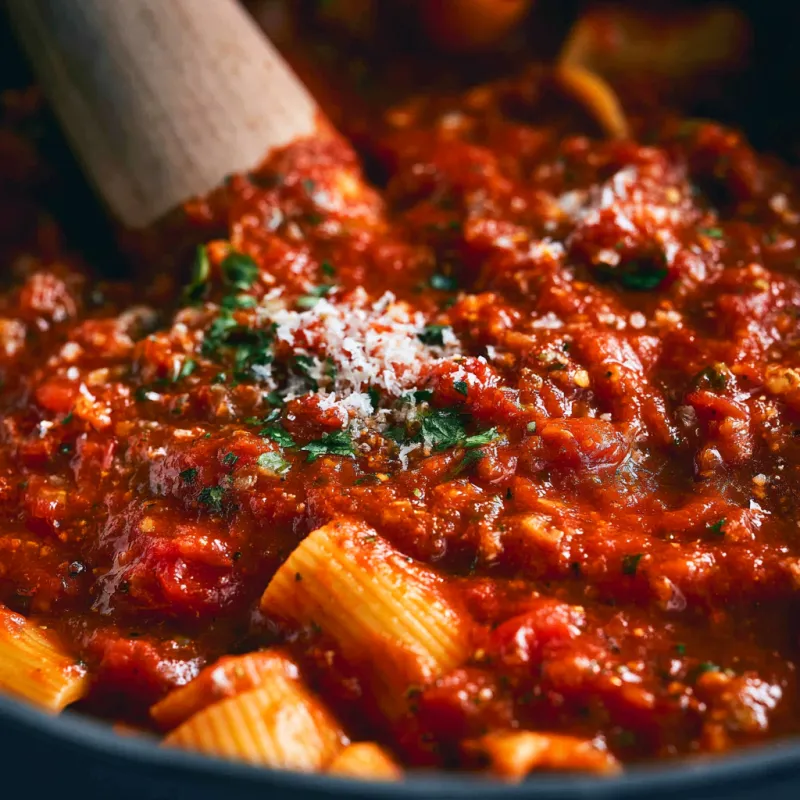
Homemade Marinara Pasta
Ingredients
Equipment
Method
- Bring a large pot of salted water to a rolling boil (about 2 tablespoons salt for 4 quarts water).
- While water heats, place a large 12-inch skillet over medium heat. Add olive oil and swirl to coat.
- Add sliced garlic and red pepper flakes to the oil. Cook, stirring constantly, until garlic is fragrant and just starting to turn golden at the edges — about 45 seconds. Do not let it brown.
- Pour in the crushed tomatoes. Stir in salt and black pepper. Bring to a simmer, then reduce heat to low. Let it bubble gently for 15 minutes, stirring occasionally. The sauce will thicken and darken slightly.
- Meanwhile, add pasta to the boiling water. Cook according to package directions until al dente (usually 8-10 minutes). Reserve 1 cup of pasta water before draining.
- Drain pasta (do not rinse). Add it directly to the skillet with the sauce. Toss well, adding reserved pasta water a splash at a time if the sauce seems too thick. You want it to coat each strand with a glossy sheen.
- Remove from heat. Stir in fresh basil. Taste and adjust salt if needed.
- Serve immediately, topped with grated Parmesan if desired.