Ingredients
Equipment
Method
- Preheat your oven to 375°F (190°C). Position a rack in the middle.
- In a large bowl, combine the sliced peaches, 1/2 cup granulated sugar, brown sugar, cornstarch, lemon juice, cinnamon, nutmeg, and a pinch of salt. Stir gently until the peaches are evenly coated. Let the mixture sit for 10-15 minutes while you prepare the topping.
- In a separate medium bowl, whisk together the flour, 1/2 cup granulated sugar, baking powder, baking soda, and 1/2 teaspoon salt.
- Add the cold butter cubes to the flour mixture. Using a pastry blender or two forks, cut the butter into the flour until the mixture resembles coarse meal with pea-sized butter pieces. Do not overwork — the butter should remain cold.
- Pour the cold buttermilk into the flour-butter mixture. Stir with a fork just until a shaggy dough forms. Do not overmix; the dough will be sticky.
- Pour the peach mixture into the ungreased 9x13-inch baking dish and spread into an even layer.
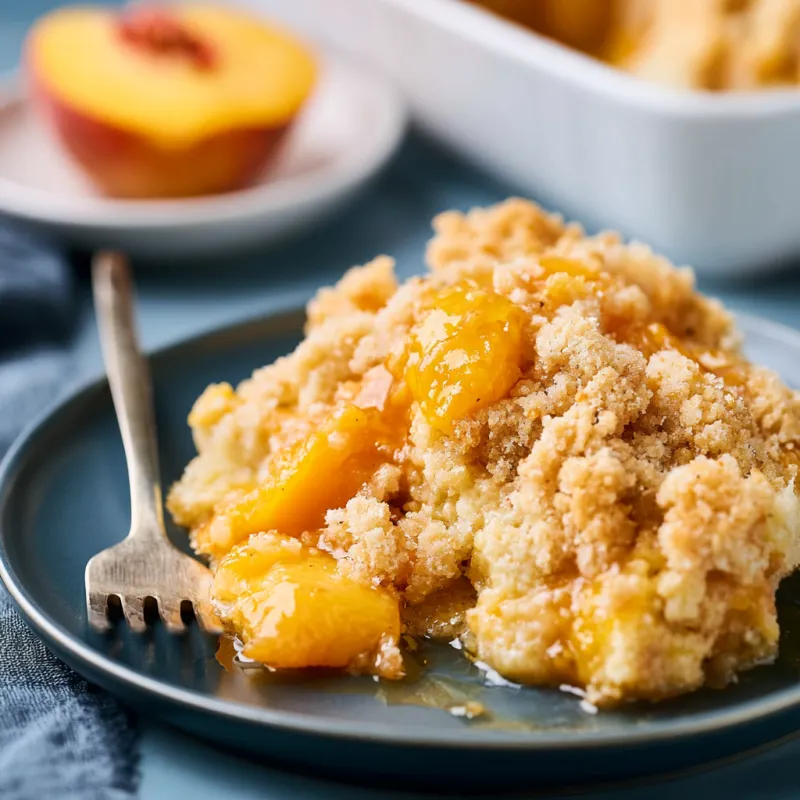
- Drop spoonfuls of the biscuit dough over the peaches, spacing them about 1 inch apart. The dough will spread as it bakes. Sprinkle the top with turbinado sugar for crunch.
- Place the dish on a baking sheet to catch any drips. Bake for 40-45 minutes, until the fruit is bubbling around the edges and the biscuit topping is deep golden brown. If the topping browns too quickly, tent loosely with foil after 30 minutes.
- Let the cobbler cool on a wire rack for at least 15 minutes before serving. This allows the juices to thicken. Serve warm, with vanilla ice cream or whipped cream if desired.
Notes
Storage: Cover leftovers with foil and refrigerate for up to 3 days. Reheat in a 350°F oven for 10-15 minutes. To freeze, assemble the cobbler without baking, wrap tightly, and freeze for up to 3 months. Bake from frozen, adding 15-20 minutes to the baking time. Common allergens: wheat (gluten), dairy (butter, buttermilk). For a dairy-free version, substitute cold coconut oil for the butter and use full-fat canned coconut milk mixed with 1 teaspoon lemon juice in place of buttermilk. For a gluten-free version, use a 1:1 gluten-free flour blend. Always check labels for cross-contamination if needed. For specific dietary concerns, consult a qualified professional.