
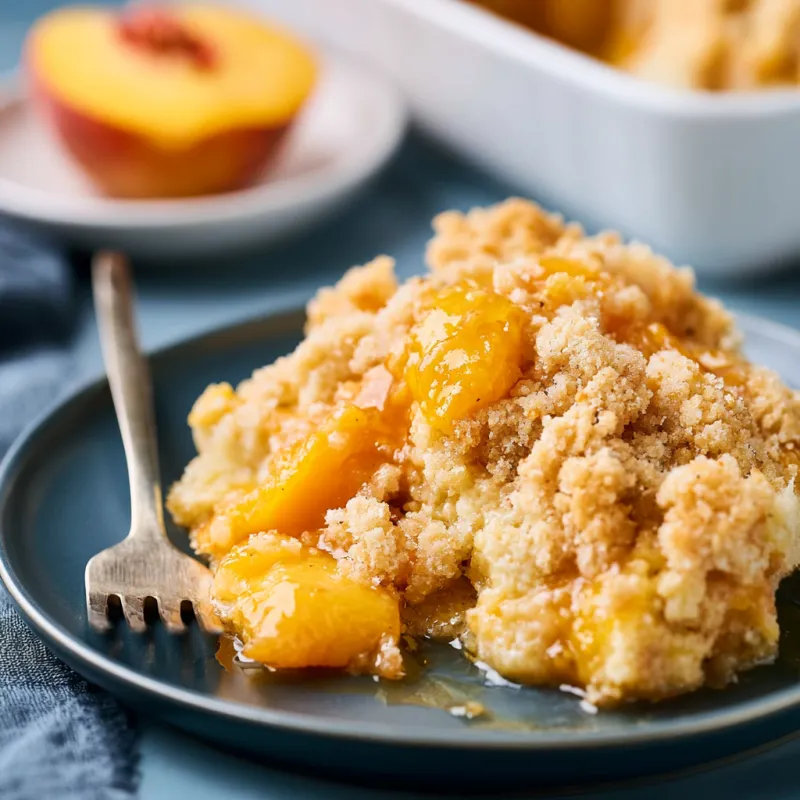
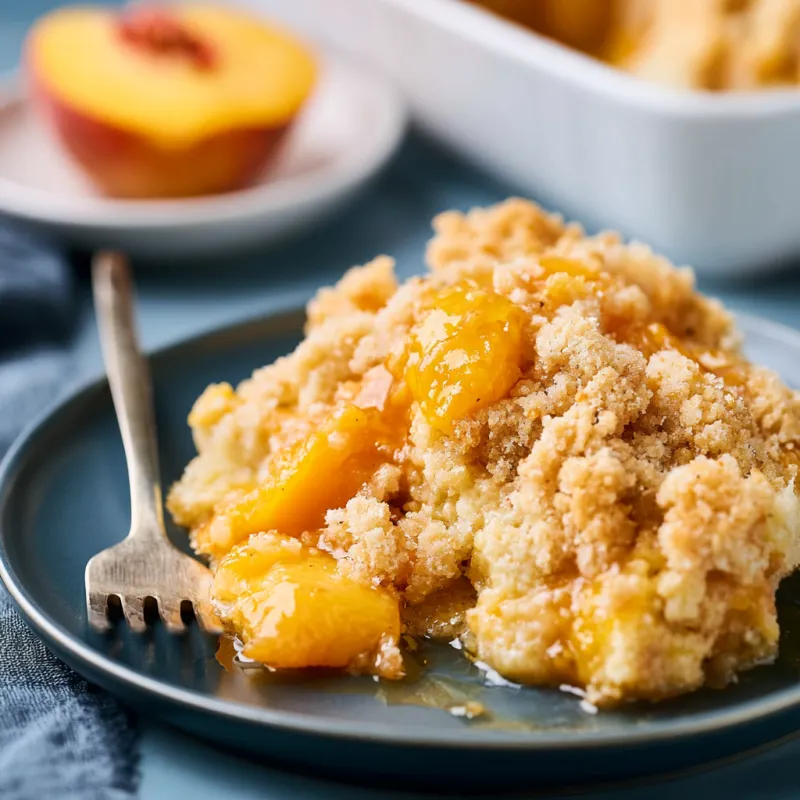
There’s a moment, about 35 minutes into baking, when the kitchen fills with the scent of caramelized peaches and toasted butter. The biscuit topping turns a deep amber, and the fruit syrup starts to bubble up around the edges, thick and glossy. That’s when you know it’s right.

This classic peach cobbler is built on a simple ratio: three parts fruit to one part sugar, plus a tangy buttermilk biscuit that stays tender on the inside and crisp on top. The method matters more than the ingredients list. Here’s how to get it perfect every time.
Choosing the Right Peaches
For the best texture and flavor, use fresh, ripe but firm peaches. They should yield slightly to pressure at the stem end but not feel mushy. Freestone peaches are easiest to slice — the pit comes away cleanly. If you can only find clingstone, just slice around the pit. The skin can stay on or be peeled; I prefer peeling for a smoother texture. To peel easily, score a small X on the bottom of each peach, blanch in boiling water for 30 seconds, then plunge into ice water. The skin slips right off.
The Thickener Balance
Peaches release a lot of juice as they bake. Cornstarch is my thickener of choice because it creates a clear, glossy syrup without clouding the flavor. The ratio is 2 tablespoons cornstarch per 6 cups of sliced fruit. If you use frozen peaches, increase to 3 tablespoons. Let the fruit sit with the sugar and cornstarch for a full 10-15 minutes before baking — this step hydrates the starch and prevents lumps.
Building the Biscuit Topping
Cold butter is non-negotiable. Cut it into cubes and keep it in the fridge until you’re ready. When you cut the butter into the flour, you’re creating small pockets of fat that will steam and separate in the oven, giving you flaky layers. Stop when the mixture looks like coarse sand with a few pea-sized butter bits remaining. Overworking creates a tough biscuit.
Buttermilk adds acidity, which reacts with the baking soda to create lift and a tender crumb. If you don’t have buttermilk, make a quick substitute: add 1 tablespoon lemon juice or white vinegar to a measuring cup, then fill to the 3/4 cup mark with whole milk. Let it sit for 5 minutes before using.
A Note on Pan Size
A 9×13-inch baking dish is ideal. It gives enough surface area for the fruit to cook evenly and the topping to brown. A deeper dish will result in a longer bake time and a risk of undercooked topping. If you use an 8×8-inch dish, reduce the fruit to 4 cups and halve the topping recipe, and expect about 35 minutes of baking.
Visual Cues for Doneness
Don’t rely solely on the timer. Look for these signs: the fruit should be bubbling vigorously around the edges, with thick, syrupy bubbles, not watery ones. The biscuit topping should be deep golden brown, and a toothpick inserted into the center of a biscuit should come out clean or with a few moist crumbs, not raw dough. If the top browns too quickly, tent with foil after 30 minutes.
Let It Rest
This is the hardest step. Let the cobbler cool for at least 15 minutes after it comes out of the oven. The juices need time to set up; if you scoop too early, you’ll get a soupy mess. The rest also allows the biscuit to firm up slightly, so it holds its shape when served.
Takeaway
Classic peach cobbler is about technique, not tricks. Use ripe fruit, keep your butter cold, and trust the visual cues. The result is a dessert that tastes of summer — juicy, spiced, and topped with a biscuit that’s crisp on the outside and soft within. Serve warm with a scoop of vanilla ice cream, and you’ll have exactly what you came for.
Frequently Asked Questions
Can I use frozen peaches instead of fresh?
Yes. Use 6 cups of frozen sliced peaches (no need to thaw). Increase the cornstarch to 3 tablespoons to compensate for the extra liquid, and add 5 minutes to the baking time.
Why is my cobbler topping raw or doughy in the center?
The most common reason is an oven that isn’t hot enough or the dish is too deep. Always preheat fully to 375°F and use a 9×13-inch dish. If your topping is still doughy, the fruit layer may be too thick — spread it evenly and don’t pile the dough too high.
Can I use canned peaches?
Canned peaches work in a pinch, but they are much softer and sweeter. Drain them well, reduce the sugar to 1/4 cup total, and omit the lemon juice. Expect a softer, less structured cobbler.
How do I prevent a soggy bottom crust?
A hot oven (375°F) and placing the dish on the middle rack helps. Also, letting the peach mixture sit for 10-15 minutes before baking allows the sugar to draw out juices, which then thicken with the cornstarch during baking. Do not stir the mixture after it sits.
Classic Peach Cobbler
Ingredients
Equipment
Method
- Preheat your oven to 375°F (190°C). Position a rack in the middle.
- In a large bowl, combine the sliced peaches, 1/2 cup granulated sugar, brown sugar, cornstarch, lemon juice, cinnamon, nutmeg, and a pinch of salt. Stir gently until the peaches are evenly coated. Let the mixture sit for 10-15 minutes while you prepare the topping.
- In a separate medium bowl, whisk together the flour, 1/2 cup granulated sugar, baking powder, baking soda, and 1/2 teaspoon salt.
- Add the cold butter cubes to the flour mixture. Using a pastry blender or two forks, cut the butter into the flour until the mixture resembles coarse meal with pea-sized butter pieces. Do not overwork — the butter should remain cold.
- Pour the cold buttermilk into the flour-butter mixture. Stir with a fork just until a shaggy dough forms. Do not overmix; the dough will be sticky.
- Pour the peach mixture into the ungreased 9x13-inch baking dish and spread into an even layer.
- Drop spoonfuls of the biscuit dough over the peaches, spacing them about 1 inch apart. The dough will spread as it bakes. Sprinkle the top with turbinado sugar for crunch.
- Place the dish on a baking sheet to catch any drips. Bake for 40-45 minutes, until the fruit is bubbling around the edges and the biscuit topping is deep golden brown. If the topping browns too quickly, tent loosely with foil after 30 minutes.
- Let the cobbler cool on a wire rack for at least 15 minutes before serving. This allows the juices to thicken. Serve warm, with vanilla ice cream or whipped cream if desired.